Kings
- This article is about the characters in Super Mario Bros. 3. For other uses, see King.
| Kings | |
|---|---|
 Sprites from Super Mario All-Stars/Super Mario Advance 4: Super Mario Bros. 3 | |
| First appearance | Super Mario Bros. 3 (1988) |
| Latest appearance | Nintendo World Championships: NES Edition (2024) |
| Species | Human |
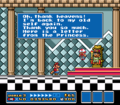
- “Oh thank heavens! I’m back to my old self again. Thank you so much. Here is a letter from the princess.”
- —Kings, Super Mario Bros. 3
The kings[1] are the monarchs of the various lands of the Mushroom World. Seven of them are featured in Super Mario Bros. 3, and each was turned into a different creature by the Koopalings. The kings are unnamed individually, although The Adventures of Super Mario Bros. 3 gave some of them unique identities, and The Super Mario Bros. Super Show! even introduced several similar characters and territories. Like Princess Toadstool, they have Toad helpers.
History[edit]
Super Mario Bros. 3[edit]

In Super Mario Bros. 3, the Koopalings invaded seven kingdoms of the Mushroom World, stealing the royal magic wands and using them to transform their kings into various creatures. With the kings in their vulnerable state, each evil Koopaling then ruled over the world in that king's place, with Boom Boom and Bowser's Minions placed all over the kingdoms. Renowned heroic brothers Mario and Luigi of the Mushroom Kingdom arrived to help them, first starting with Grass Land.
To save a king, the Mario Bros. have to go to his castle, where the Toad pleads the heroes to restore the king by taking the magic wand back from the Koopaling. After that, Mario and Luigi must assault the airship, defeat the Koopaling, and return the king back into his human shape. He thanks the Mario Bros. for saving him, and he delivers a letter from Princess Toadstool enclosed with a "jewel" (or power-up). If the player manages to restore the kings to their human forms while wearing a special suit, then they get different rescue dialog for each different suit. This continues until the brothers reach the forbidden kingdom of Dark Land, where Bowser ended up holding the princess hostage.
In Super Mario Advance 4: Super Mario Bros. 3, if the player defeated Bowser before saving the kings, upon selecting the castle, the player is treated to a cutscene where it shows the Koopaling of the respective world invading the castle, snatching the magic wand and using it to transform the king, and then escaping seconds before Mario arrives. In addition, because Princess Toadstool has already been saved beforehand, the king does not give the player a letter from her.
Grass Land king[edit]
The king of Grass Land wears a jeweled white turban and has a large black mustache and sideburns. In the original game, he wears a green robe over white clothing, while in remakes, he wears red clothing and an indigo-colored cape. In the original game, there are unused tiles depicting him moving his mouth or chin when he speaks, though in the final game, he only blinks. He is turned into a dog that constantly scratches his ear in the original game, and into a Cobrat that slithers back-and-forth in the remakes.
 Super Mario Bros. 3 (transformed)
 Super Mario Bros. 3 (transformed)
 Super Mario Bros. 3 (transformed)
 Super Mario Bros. 3 (normal; with wand)
 Super Mario Bros. 3 (normal; without wand)
 Super Mario Bros. 3 (normal)
 Super Mario Bros. 3 (normal, unused)
 Super Mario Bros. 3 (normal, unused)
 Super Mario All-Stars (transformed)
 Super Mario All-Stars (normal)
 Super Mario Advance 4: Super Mario Bros. 3 (transformed)


Desert Land king[edit]
The king of Desert Land appears to be balding with a white mustache and a small crown. In the original game, he wears an orange robe over white clothes, while in the remakes, his robe takes a slightly more reddish hue, and has slightly brighter orange pants. He is turned into a silkworm that bobs on a thread over his crown in the original game, and a Hoopster that falls off a vine and continues animating on the ground in the remakes.
 Super Mario Bros. 3 (transformed)
 Super Mario Bros. 3 (transformed)
 Super Mario Bros. 3 (normal)
 Super Mario Bros. 3 (normal)
 Super Mario Bros. 3 (normal)
 Super Mario All-Stars (transformed)
 Super Mario All-Stars (normal)
 Super Mario Advance 4: Super Mario Bros. 3 (transformed)
 Super Mario Advance 4: Super Mario Bros. 3 (normal)


Water Land king[edit]
The king of Water Land has a striking facial resemblance to Mario and Luigi and wears a tall crown. In the original game, he wears a green robe over white clothes, while in the remakes, he wears green clothes and a red cape. He is turned into a kappa in the original game, and a medium-sized purple Dino Rhino in the remakes.
 Super Mario Bros. 3 (transformed)
 Super Mario Bros. 3 (transformed)
 Super Mario Bros. 3 (transformed)
 Super Mario Bros. 3 (normal)
 Super Mario Bros. 3 (normal)
 Super Mario Bros. 3 (normal)
 Super Mario All-Stars (transformed)
 Super Mario All-Stars (normal)
 Super Mario Advance 4: Super Mario Bros. 3 (transformed)
 Super Mario Advance 4: Super Mario Bros. 3 (normal)


Giant Land king[edit]
The king of Giant Land wears a turban and pants without a shirt, which are white in the original and tinted orange in the remakes. He also appears thinner in the remakes compared to the original. He is turned into a small orange bipedal dinosaur with plates down his back in the original, and into Donkey Kong Jr. in the remakes.
 Super Mario Bros. 3 (transformed)
 Super Mario Bros. 3 (transformed)
 Super Mario Bros. 3 (transformed)
 Super Mario Bros. 3 (normal)
 Super Mario Bros. 3 (normal)
 Super Mario Bros. 3 (normal)
 Super Mario All-Stars (transformed)
 Super Mario All-Stars (normal)
 Super Mario Advance 4: Super Mario Bros. 3 (transformed)
 Super Mario Advance 4: Super Mario Bros. 3 (normal)


Sky Land king[edit]
The king of Sky Land has a crown and a long white beard. In the original, he has a long nose and the beard is angular, while in the remakes, his nose and beard are more rounded with his mustache becoming more prominent. He wears an orange and white robe in the original game and a red shirt with indigo pants in the remakes. He is turned into a large vulture that flies in-place in the original, and into an Albatoss that flies back-and-forth in the remakes.
 Super Mario Bros. 3 (transformed)
 Super Mario Bros. 3 (transformed)
 Super Mario Bros. 3 (transformed)
 Super Mario Bros. 3 (normal)
 Super Mario Bros. 3 (normal)
 Super Mario Bros. 3 (normal)
 Super Mario All-Stars (transformed)
 Super Mario All-Stars (normal)
 Super Mario Advance 4: Super Mario Bros. 3 (transformed)
 Super Mario Advance 4: Super Mario Bros. 3 (normal)


Ice Land king[edit]
The king of Ice Land appears to be balding and has a crown, a black mustache, and a heavy coat. In the original, he uses unique palettes that gives him peach skin with gray hair and a brown coat, while in remakes he shares his palette with others and has tan skin, blond-yellow hair, and a purple coat over a red suit. He is turned into a seal that balances his crown on its nose in the original and into a Monty Mole that dashes back-and-forth in the remakes.
 Super Mario Bros. 3 (transformed)
 Super Mario Bros. 3 (transformed)
 Super Mario Bros. 3 (normal)
 Super Mario Bros. 3 (normal)
 Super Mario Bros. 3 (normal)
 Super Mario All-Stars (transformed)
 Super Mario All-Stars (normal)
 Super Mario Advance 4: Super Mario Bros. 3 (transformed)
 Super Mario Advance 4: Super Mario Bros. 3 (normal)


Pipe Land king[edit]
The king of Pipe Land has a full beard and wears a horned helmet. In the original, he has pale white skin with an orange beard and black clothes, while in the remake, he has the same tan skin tone as the other kings, a white beard, and a red suit. He is turned into an orange Piranha Plant (with a pose resembling a Venus Fire Trap) with a small pipe in the original, and a Yoshi in the remakes.
 Super Mario Bros. 3 (transformed)
 Super Mario Bros. 3 (transformed)
 Super Mario Bros. 3 (transformed)
 Super Mario Bros. 3 (normal)
 Super Mario Bros. 3 (normal)
 Super Mario Bros. 3 (normal)
 Super Mario All-Stars (transformed)
 Super Mario All-Stars (normal)
 Super Mario Advance 4: Super Mario Bros. 3 (transformed)
 Super Mario Advance 4: Super Mario Bros. 3 (normal)


The Adventures of Super Mario Bros. 3[edit]
The Adventures of Super Mario Bros. 3 featured several characters loosely based on the role of Super Mario Bros. 3's kings, although none of them are directly based on a specific king. They serve as rulers of their specific region, appearing in one episode each. The rulers seen in The Adventures of Super Mario Bros. 3 are:
- Prince Hugo – the new ruler of Giant Land (likely making him different from the king seen in Super Mario Bros. 3)
- The Sultan – the ruler of a palace that may be in Desert Land
- King Mackerel – the ruler of Mertropolis, a domed underwater city
- Wizard King of the West – the wizard of an unknown location that resembles Sky Land
- King Windbag – the ruler of a domain implied to be Ice Land
- Emperor Ed – the ruler of Sky Land
Super Mario Kodansha manga[edit]

- “"スーマリ3には七人も王さまが出てくるからどれがほんものかわからないのよ" ("In Super Mario Bros. 3, there are seven kings, so who knows which one is my real father.")”
- —Princess Peach, Super Mario Kodansha manga
The kings appear in the first manga of the Super Mario Kodansha series: Manga Super Mario Bros. 3 Kanzen Kōryakuhon. All of them are seen in one of the first panels being turned into animals by Bowser and his kids but not all of them are shown throughout the story and not with equal relevance. None of the shown kings' human forms resemble how they appear in game.
The Grass Land King, similar in design to the Mushroom King, is the only one to give Mario Peach's letter after being rescued. The Water Land king is briefly seen in one panel, in his kappa form, celebrating Wendy's defeat. The Giant Land King makes a single-panel appearance, crying for help from his castle in dinosaur form. The Sky Land is not seen, but a Goomba pretending to be a Toad lies that he rewared Mario with a party with booze and bunny girls (in reality, that was one of Bowser's tricks to distract Mario with numerous disguised enemies). The Ice Land King is seen in his human form in one panel, after Mario defeats Lemmy: he has an eighteenth-century wig and small mustache instead of his rodent-like appearance from the games. Lastly, after defeating Ludwig, Mario and Luigi reach the castle and mistake the transformed king for an enemy and beat him up, until the Toad explains the misunderstanding. Returned to his human form, still carrying some injuries from the assault, he warns the Mario Bros. of the dangers of the Dark Land. In his human form, instead of the viking design, he resembles an European king, with shoulder-lenght hair with curly tips and a ruff around the neck.
Another King, a mustached king with both a turbant and a crown, appears in the chapter excluded from the volume, where he illustrates the different messages a ruler says to the heroes depending on the form.
The kings also appear in Super Mario 4-koma Daikōshin in the "7 Kings" strip, in which Peach admits that she thought one of the seven kings was her real father, and not the Mushroom King, mostly hoping it was the Water Land king. Instead of being depicted with their NES cursed forms, like in the first manga, the kings are instead depicted with their SNES cursed forms.
Mario's dad's outfit, as depicted in a painting in Super Mario Land 2 - 6-tsu no Kinka 3, resembles the clothing of the Water Land king, hinting at a possible connection between the two characters.
Yukio Sawada's manga[edit]
The Kings are mentioned at the beginning of both Super Mario Bros. 3 adaptations from Wanpakku Comic and Gakushū Yōchien, but only the Grass Land King appears being turned into a dog. Beside the kings, even their subjects are also turned into animals.
In Super Mario-kun, during the adaptation of Super Mario Advance 4: Super Mario Bros. 3 in volume 30, the Grass Land King appears in his human form greeting Mario. When Larry appears to turn him into a Cobrat, Mario tosses Luigi between them, causing his brother to be turned into a Cobrat. While Mario goes to bring back the wand, the King remains with Luigi.
Gallery[edit]
Artwork[edit]
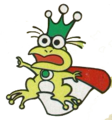 Nintendo Power artwork of the Water Land king
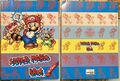 Notebook from Pigna with the Water Land king


Sprites[edit]
 A king's throne in the Japanese version of Super Mario Bros. 3
 A king's throne in the international versions of Super Mario Bros. 3


Screenshots[edit]
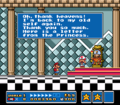 Super Mario All-Stars (Grass Land)
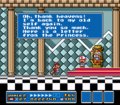 Super Mario All-Stars (Desert Land)
 Super Mario All-Stars (Water Land)


Names in other languages[edit]
The contemporaneous name for each language is listed first. Subsequent names are listed in chronological order for each language, from oldest to newest, and have the media they are associated with in the "notes" column.
| Language | Name | Meaning | Note(s) | Ref. |
|---|---|---|---|---|
| Japanese | Ōsama | King | [2]:2, 24 | |
Kokuō | [2]:2 | |||
| Chinese (Traditional) | 國王 Guówáng | King | [3] | |
| Danish | Konge | King | [4] | |
| Dutch | Koning | King | [5] | |
| Finnish | Kuningas | King | [6] | |
| French | Roi | King | [5][7]:46 | |
| German | König | King | [8][9][7]:26 | |
| Greek | Βασιλιάς Vasiliás | King | [10] | |
| Italian | Re | Kings | [11]:5 | |
| 7 Re | 7 Kings | Super Mario Bros. 3 | [11]:25 | |
| Regnanti del Mondo dei Funghi | Mushroom World's rulers | [15] | ||
| Sovrano | Ruler | Super Mario All-Stars - 25th Anniversary Edition | [13]:15 | |
| I Re | The Kings | Super Mario Bros. Encyclopeida (second edition) | [16] | |
| Korean | 왕 Wang | King | [17] | |
| Norwegian | Konge | King | [18] | |
| Portuguese | Rei | King | [19] | |
| Spanish | Rey | King | [20][7]:86 | |
| Swedish | Kung | King | [21] |
Notes[edit]
- If Mario defeats a Koopaling as Frog Mario, Tanooki Mario, or Hammer Mario, the king says one of the following:
- "Oh me, oh my! You've been transformed! Shall I change you back with this wand?" (to Frog Mario)
- "Thank you, kind raccoon. Please tell me your name." (to Tanooki Mario)
- "Hey you! How about lending me your clothes? No dice?! What a drag." (to Hammer Mario)
- The king of Water Land bears a striking resemblance to Mario. Also, the castle's island resembles Japan, with the castle itself placed where Kyoto, Nintendo's headquarters, would be.
- All of the transformed kings are depicted with generic crowns either on or near them, despite the fact that only four of the non-transformed kings wear crowns.
References[edit]
- ^ 1990. Super Mario Bros. 3 instruction booklet. Nintendo of America (English). Page 5 and 25.
- ^ a b 1988. 『Super Mario Bros. 3 取扱説明書』 (PDF). Kyoto: Nintendo Co., Ltd. (Japanese).
- ^ 瑪利歐歷史|超級瑪利歐兄弟 35週年|任天堂. Nintendo of HK (Traditional Chinese). Retrieved February 8, 2021.
- ^ 1991. Super Mario Bros. 3 Instruction Booklet. Kungsbacka: Nintendo (Danish, Finnish, Swedish). Page 5.
- ^ a b 1991. Super Mario Bros. 3 Handleiding / mode d'emploi. Nederland, Brussels: Nintendo (Dutch, French). Page 31.
- ^ Nintendo-lehti (1990-1994, Finnish)
- ^ a b c d 2003. Super Mario Advance 4: Super Mario Bros. 3 Instruction Booklet (PDF). Großostheim: Nintendo of Europe GmbH (English, German, French, Spanish, Italian).
- ^ 1991. Super Mario Bros. 3 Spielanleitung. Großostheim: Nintendo of Europe GmbH (German). Page 25.
- ^ Matsumoto, Atsuko, Rie Ishii, and Claude Moyse, editors (1992). Der Spieleberater Super Mario Power. Großostheim: Nintendo of Europe GmbH (German). ISBN 3-929034-02-6. Page 28.
- ^ 1990. Super Mario Bros. 3 Βιβλίο Οδηγιών. Alimos: Nintendo (Greek). Page 6.
- ^ a b 1991. Super Mario Bros. 3 Libretto d'Istruzioni. Großostheim: Nintendo of Europe GmbH (Italian). (Archived 29 July 2022 via Mario's Castle by Alessandro "Stormkyleis" Imbesi.)
- ^ 1993. Super Mario All-Stars Libretto di Istruzioni. Florence: Nintendo (Italian). Page 23, 33. (Archived 23 Mar. 2024 via Mario's Castle by Alessandro "Stormkyleis" Imbesi.)
- ^ a b 2010. Super Mario All-Stars – Edizione per il 25º Anniversario – Manuale di Istruzioni. Großostheim: Nintendo of Europe GmbH (Italian). (Archived 29 Apr. 2019 via Mario's Castle by Alessandro "Stormkyleis" Imbesi.)
- ^ Sakai, Kazuya (ambit), kikai, Akinori Sao, Junko Fukuda, Kunio Takayama, Ko Nakahara (Shogakukan), and Marco Figini, editors (2018). "Super Mario Bros. 3" in Super Mario Bros. Enciclopedia. Translated by Marco Amerighi. Milan: Magazzini Salani (Italian). ISBN 889367436X. Page 34.
- ^ Super Mario Bros. 3 | NES | Giochi | Nintendo IT. Italian. Retrieved August 6, 2024 from Nintendo.it.
- ^ Sakai, Kazuya (ambit), kikai, Akinori Sao, Junko Fukuda, Kunio Takayama, Ko Nakahara (Shogakukan), and Marco Figini, editors (2025). "Super Mario Bros. 3" in Super Mario Bros. Enciclopedia (2nd ed.). Translated by Alessandro Apreda. Milan: Magazzini Salani (Italian). ISBN 979-1259575760. Page 34.
- ^ 1990. "슈퍼 마리오 브라더즈 3 사용 설명서". Icheon: Nintendo Co., Ltd. (Korean). Page 4. (Archived 29 Mar. 2007 via Naver by togepi1125.)
- ^ Jeg leser… Nintendo Magasinet nr. 6/7 1991
- ^ «O Mario e o Luigi voltam a entrar em ação quando o Bowser e os seus lacaios roubam varinhas mágicas dos reis do Mushroom World e os transformam em animais.» – 2025. The History of Super Mario Bros.. Nintendo (European Portuguese).
- ^ 1991. Super Mario Bros. 3 Manual de Instrucciones. Madrid: Nintendo (European Spanish). Page 25.
- ^ Back of Swedish instruction booklet of Super Mario All-Stars
| Super Mario Bros. 3 / Super Mario Advance 4: Super Mario Bros. 3 | ||
|---|---|---|
| Protagonists | Mario • Luigi • Princess Toadstool • Toads • Kings | |
| Bosses | Boom Boom • Big Booa • Fake Bowsera • Koopalings (Larry Koopa · Morton Koopa Jr. · Wendy O. Koopa · Iggy Koopa · Roy Koopa · Lemmy Koopa · Ludwig von Koopa) • Bowser | |
| Items | 1-Up Mushroom • 3-Up Moona • Advance Coina • Anchor • Blue Coin • Boomeranga • Cape Feathera • Card • Coin • e-Coina • Fire Flower • Frog Suit • Goomba's Shoe • Hammer • Hammer Suit • Lakitu's Cloud • Magic ball • Magic Wand • Magic Whistle • Music Box • P-Wing • Poison Mushrooma • Starman • Super Leaf • Super Mushroom • Tanooki Suit • Vegetablea | |
| Objects | Main game | ? Block • Beanstalk • Big Block • Bolt Lift • Brick Block • Brick floor • Bridge • Bridge (map) • Buzzy Beetle Shell • Canoe • Cloud Block • Cloud Lift • Coin Block • Coral • Directional Lift • Donut Lift • Drawbridge • Elevator block • Empty Block • Flimsy Lift • Floor • Frozen Coin • Giant Shell • Goal • Green Shell • Gun barrel • Hidden Block • Ice • Ice Block • Island • Jump Block • Lift • Locked Door • Magic Door • Magic Note Block • Magical ball • Mega ? Block • Mushroom Coina • P Warp Door • Pyramid • Quicksand • Red Shell • Rock • Rotary Lift • Semisolid Platform • Spiny Shell • Switch Block • Track • Treasure box • Warp Door • Warp Pipe • Waterfall • White Block • White Block (platform) • Wood Block |
| World-ea | !-Switch • Axe • Balance Lift • Bubble • Control Coin • Dotted-Line Block • Goal Pole • Flipper • Giant Gate • Grass • Jumping Board • Key • Key Door • Power Meter Block • Rock Block • Rotating Block • Roulette Block • Seesaw • Snake platform • Soft sand • Stretch Block • Triangular Block • Vanishing Block | |
| Forms | Small Mario • Super Mario • Fire Mario • Raccoon Mario • Frog Mario • Tanooki Mario (Statue Mario) • Hammer Mario • Invincible Mario • Caped Marioa | |
| Switch Cardsa | 1UP Kinoko ga 3UP Moon ni kawaru! • Blue Green Switch • Luigi Power Up!! • Orange Switch • Sugu ni mantan! Power Meter!! • Teki Power Up! Tokuten x2!! • Timer yukkuri! | |
| Worlds | Grass Land • Desert Land • Water Land • Giant Land • Sky Land • Ice Land • Pipe Land • Dark Land • Warp Zone • World-ea | |
| Locations | Airship (Treasure Ship) • Battleship • Bowser's Castle • e-Coin Castlea • Enemy Course • Fortress • Ghost Housea • Mini-Fortress • Panel (N-Mark Spade Panel · Spade Panel · Start Panel) • Pyramid • Toad's House | |
| Enemies | Main game | Angry Sun • Baby Cheep • Big Bertha • Bloober • Bloober baby • Bloober with kids • Bob-omb • "Boo" Diddly • Boomerang Brother • Boss Bass • Bullet Bill • Buster Beetle • Buzzy Beetle • Chain Chomp • Cheep-Cheep • Colossal Koopa Paratroopa • Dry Bones • Fiery Walking Piranha • Fire Brother • Fire Chomp • Firesnake • Giant Koopa • Goomba • Grand Goomba • Hammer Brother • Hot Foot • Jelectro • Koopa Paratroopa • Koopa Troopa • Kuribo's Goomba • Lakitu • Lava Lotus • Micro-Goomba • Missile Bill • Muncher • Para-Beetle • Para-Goomba • Pile Driver Micro-Goomba • Piranha Plant • Piranhacus Giganticus • Podoboo • Ptooie • Rocky Wrench • Roto-Disc • Scattering Bloober • Sledge Brother • Spike • Spiny Cheep-Cheep • Spiny • Spiny Egg • Stretch • Thwomp • Venus Fire Trap • Walking Piranha |
| World-ea | Amazing Flyin' Hammer Brother • Big Boo • Bony Beetle • Bowser Statue (Super Mario World) • Bumpty • Chargin' Chuck • Flurry • Goomba (Super Mario World) • Hoopster • Hothead • Jumping Piranha Plant • Lil Sparky • Magikoopa • Monty Mole • Para-Goomba (Super Mario World) • Porcupo • Rip Van Fish • Spike Top • Thwimp • Wiggler | |
| Obstacles | Big gun • Bowser Statue • Candy ring • Cannon • Cannonball • Diagonal cannon • Falling spikea • Fire-Bara • Giant cannonball • Lava • Pit • Quartet-cannon • Rocket Engine • Shifting wall • Spike • Tornado • Turtle Cannon | |
| World-e mini-gamesa | Blue Mushroom House • Orange Mushroom House • Red Mushroom House | |
| Music and sound effects | Worlds | "World 1 Map (Grass Land)" • "World 2 Map (Desert Land)" • "World 3 Map (Water Land)" • "World 4 Map (Giant Land)" • "World 5 Map (Sky Land) - In the Sky" • "World 5 Map (Sky Land) - On the Ground" • "World 6 Map (Ice Land)" • "World 7 Map (Pipe Land)" • "World 8 Map (Dark Land)" |
| Courses | "Airship BGM" • "Athletic BGM" • "Bros. Battle" • "Fortress BGM" • "Ground BGM" • "Underground BGM" • "Underwater BGM" | |
| Jingles | "Course Clear" • "Fireworks" • "Game Over" • "Player Down" • "World Clear" | |
| Other | "Ending" • "Fortress Boss" • "King of the Koopas" • "Music Box" • "P Switch BGM / Toad's House" • "Shippo furu toki" • "Slot Game BGM / Memory Game BGM" • "Throne Room" | |
| Miscellaneous | Extra life • Game Over • Mario Bros. • P-Meter • Time Limit | |
| Further info | 39 Super Mario Bros. 3 Valentines • BS Super Mario Collection • Completion • e-Readera • e-Reader cardsa • Fantasic World of Super Mario Bros. 3 • Gallery (Super Mario Advance 4) • Game Sound Museum: Super Mario Bros. 3 • Glitches (Super Mario Advance 4) • Happy Meal • Multimedia • Nintendo Classic Mini: NES developer interview • Nintendo Collector Cards • Nintendo Music (soundtrack) • Power Challenge Trading Cards • Pre-release and unused content (Super Mario Advance 4) • Quick Poll • Quotes • Staff (Super Mario Advance 4) • Super Mario All-Stars (+ Super Mario World · Limited Edition) • Super Mario All Stars Video • Super Mario Bros. 3 (pachinko machine) • Super Mario Bros. 3 Bōken Meiro • Super Mario Bros. 1, 2, 3, Hop! Step! Jump! • Super Mario Bros. 3 ~ Akihabara Electric Circus • Super Mario Bros. 3 -G.S.M.(FC) Nintendo 1- • Super Mario Collection • Super Mario Embroidery World • Super Mario History 1985-2010 • Super Mario World • The Music Man | |
| Adaptations | Super Mario (Manga Super Mario Bros. 3 Kanzen Kōryakuhon · Super Mario: Donkey Kong 2) • Super Mario 4koma Manga Theater (books: 1 · 2 · 3 · 4 · 5 · 6 · 7 · 8 · 10) • Super Mario Bros. 3 (Gakushū Yōchien) • Super Mario Bros. 3 (Wanpakku Comic) • Super Mario Bros. Monogatari • Super Mario-kun (Volumes: 3 · 5 · 30) • The Adventures of Super Mario Bros. 3 | |


