Wall Lakitu
| Wall Lakitu | |||
|---|---|---|---|
 Screenshot from Yoshi's Crafted World | |||
| First appearance | Super Mario World 2: Yoshi's Island (1995) | ||
| Latest appearance | Yoshi's Crafted World (2019) | ||
| Variant of | Lakitu | ||
| |||
Wall Lakitus are enemies in the Yoshi series. They are Lakitu variants that, instead of floating around in Lakitu's Clouds, appear hiding behind walls, waiting for a Yoshi to approach and then quickly launch a Spiny Egg at them. They can be defeated by any method of attack: by being jumped on, by throwing an egg at them, or by swallowing them to turn them into eggs. After a Wall Lakitu is defeated, another will replace it after a short time.
History[edit]
Super Mario World 2: Yoshi's Island / Yoshi's Island: Super Mario Advance 3[edit]

Wall Lakitus first appear in Super Mario World 2: Yoshi's Island and its remake, where they appear as uncommon enemies. They can first be seen in the level "Lakitu's Wall", where they are the main enemy and appear in large numbers throughout. They later reappear in The Cave Of The Mystery Maze and BLIZZARD!!! A Wall Lakitu appears in a hole in the walls, looking around for Yoshi, and upon seeing them, they will aim with a blinking crosshair to indicate where they are firing and quickly launch a Spiny Egg in their direction, which will explode upon contact with the ground. Wall Lakitus are usually found in groups of two or more, making it difficult to evade their projectiles. Aqua Lakitus, another variant of Lakitus found in the game, behave similarly to Wall Lakitus, with the only difference being that they hide in the water. In the Yoshi's Island: Super Mario Advance 3 Player's Guide's Enemy Encyclopedia section, Wall Lakitus are listed under the "Projectilia Ritebakatchia" subheader.[1]
Yoshi Touch & Go[edit]
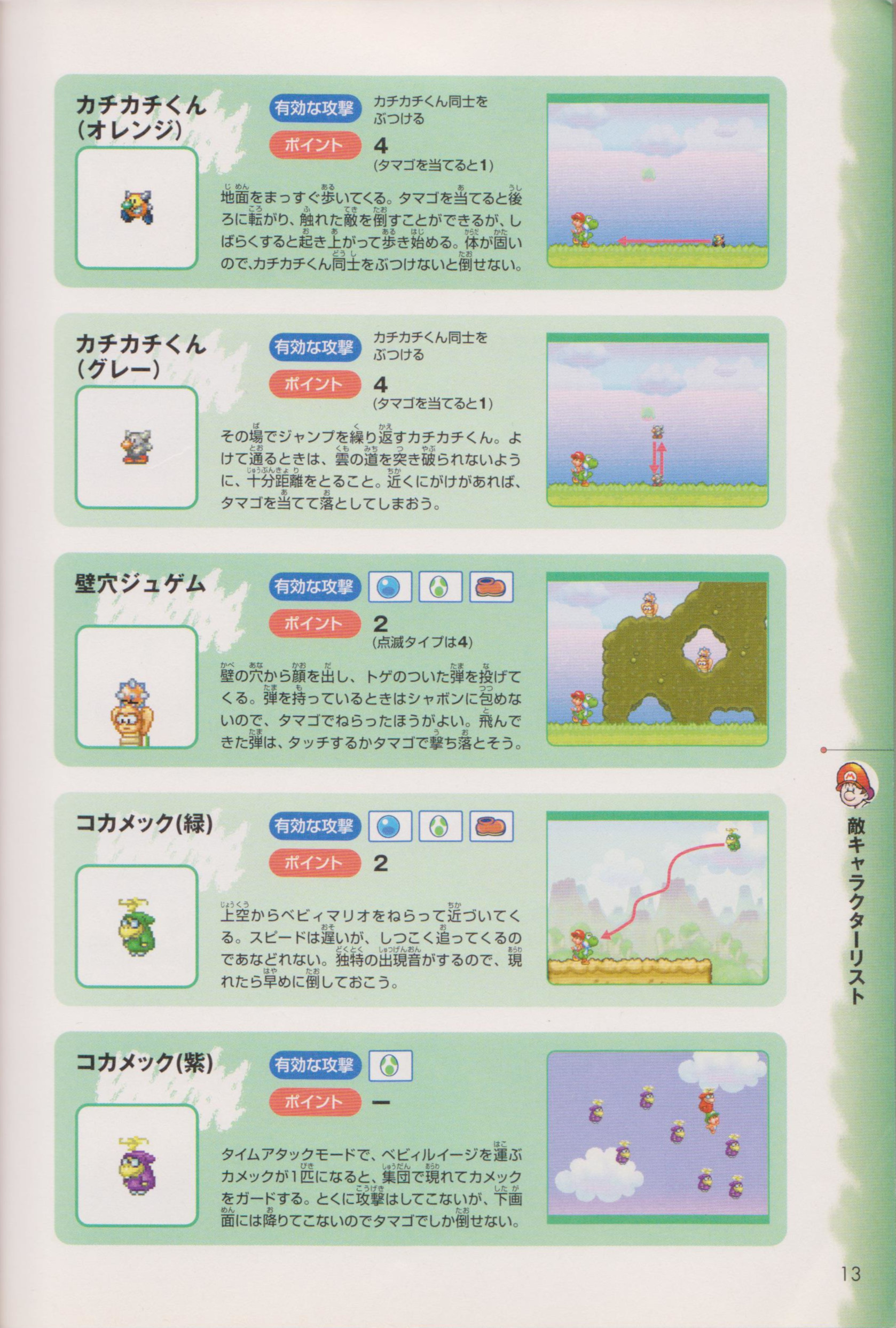
Wall Lakitus appear in Yoshi Touch & Go, where they primarily appear in Marathon Mode. They appear in groups and launch Spiny Eggs at Yoshi. Their Spiny Eggs can be destroyed with eggs, though they cannot be defeated by drawing bubbles around them. The best option is to defeat them by throwing an egg at them, which will give 2 points. Flashing variants also appear; they are worth 4 points.
Yoshi's Island DS[edit]
Wall Lakitus reappear in Yoshi's Island DS, maintaining their appearance and behavior from Super Mario World 2: Yoshi's Island. They first appear in Big Bungee Piranha's Lair and reappear in Castle of Priscilla the Peckish and in Rock 'n' Fall. In the Island Museum, Wall Lakitus appear in the airborne-enemy exhibit.
Yoshi's New Island[edit]

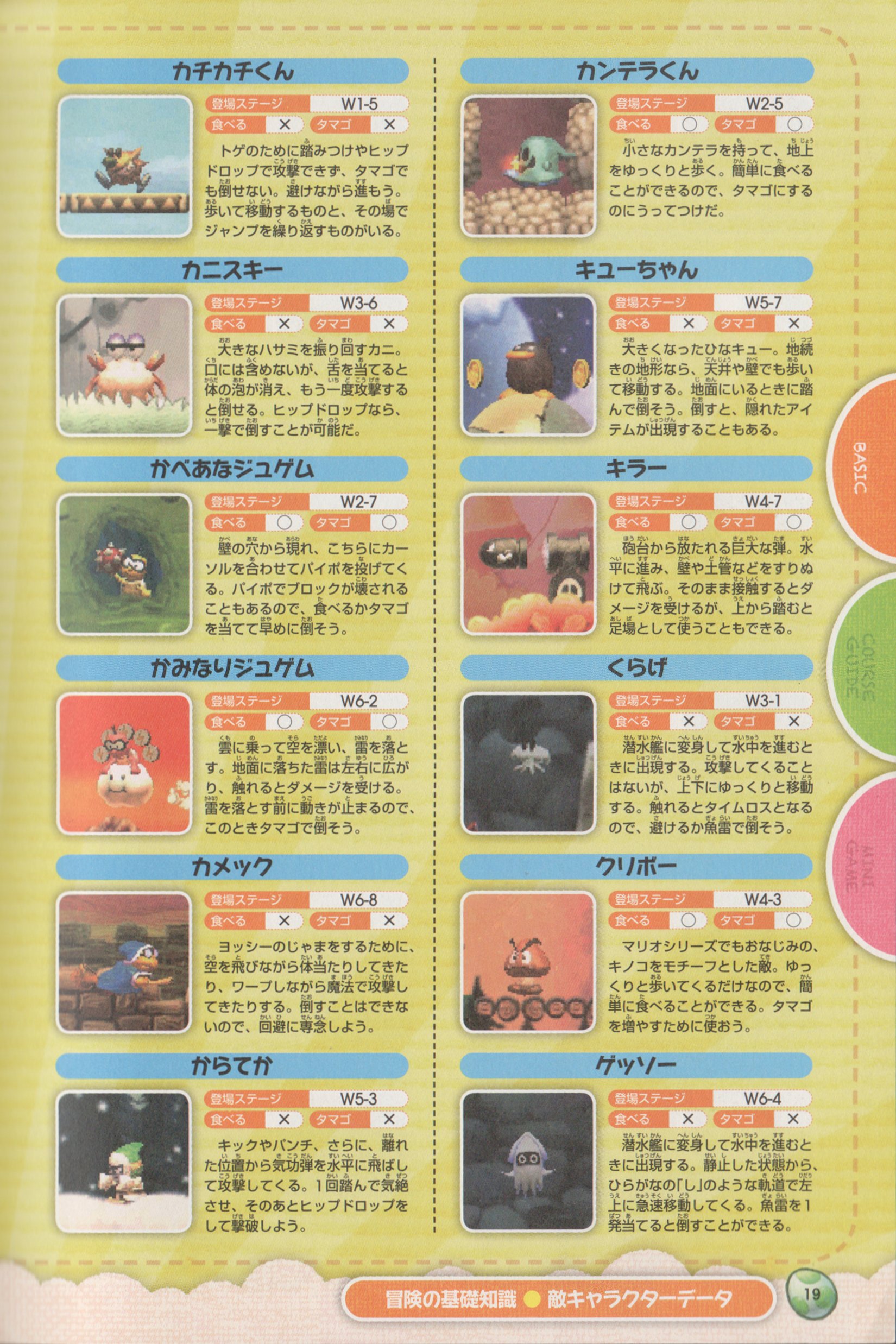
Wall Lakitus appear in Yoshi's New Island. Their behavior is similar to how it was in the previous games, with the differences being that their projectiles travel more slowly and can break through destructible terrain. Additionally, their blinking crosshairs no longer have lines. They only appear in the level Hidey-Hole Hooligans, where they are the main enemy again.
Yoshi's Woolly World / Poochy & Yoshi's Woolly World[edit]

Wall Lakitus appear in Yoshi's Woolly World and Poochy & Yoshi's Woolly World. They behave similarly to previous appearances; however, they have now completely lost their blinking crosshair. In addition to being found in the usual walls, Wall Lakitus also appear on climbable walls, where they will peek out from the bottom or back to throw Spiny Eggs at the Yoshis. They only appear in the levels Scarf-Roll Scamper and Lakitu Peekaboo. After being swallowed and turned into yarn balls, they will be yellow.
Yoshi's Crafted World[edit]

Wall Lakitus appear in Yoshi's Crafted World, only in the level Be Afraid of the Dark. Unlike previous appearances, Wall Lakitus now appear in windows of buildings in the background of the level, rather than in holes, and launch Spiny Eggs toward the Yoshi. Since they are in the background, the only way Yoshi can defeat them is by throwing an egg at them.
Profiles[edit]
Super Mario World 2: Yoshi's Island / Yoshi's Island: Super Mario Advance 3[edit]
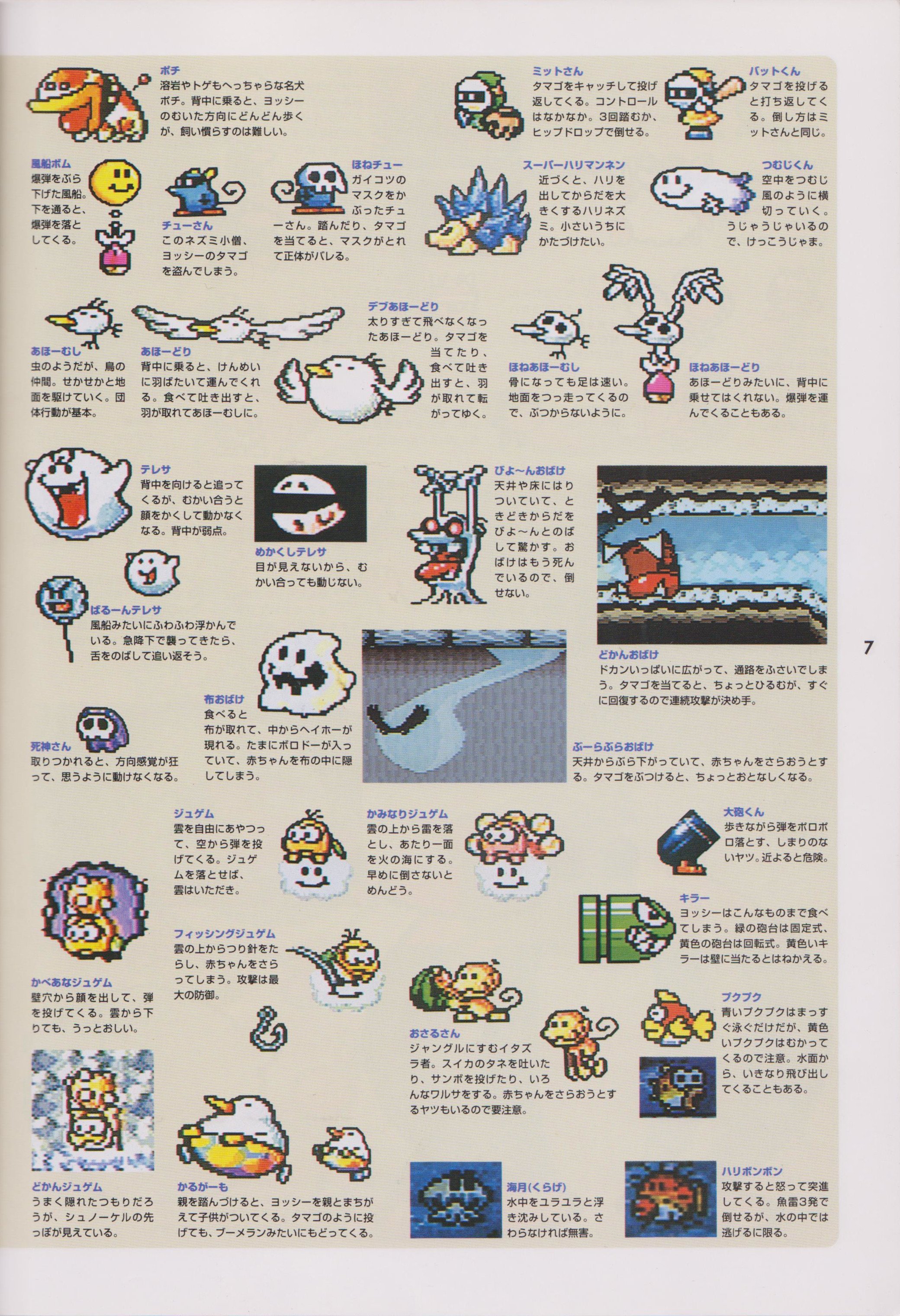
- Shogakukan guide: 壁穴から顔を出し、弾を投げてくる。雲から下りても、うっとおしい。[2] (They show their faces through wall-holes and throw projectiles at you. Even when they come down from the clouds, they are annoying.)
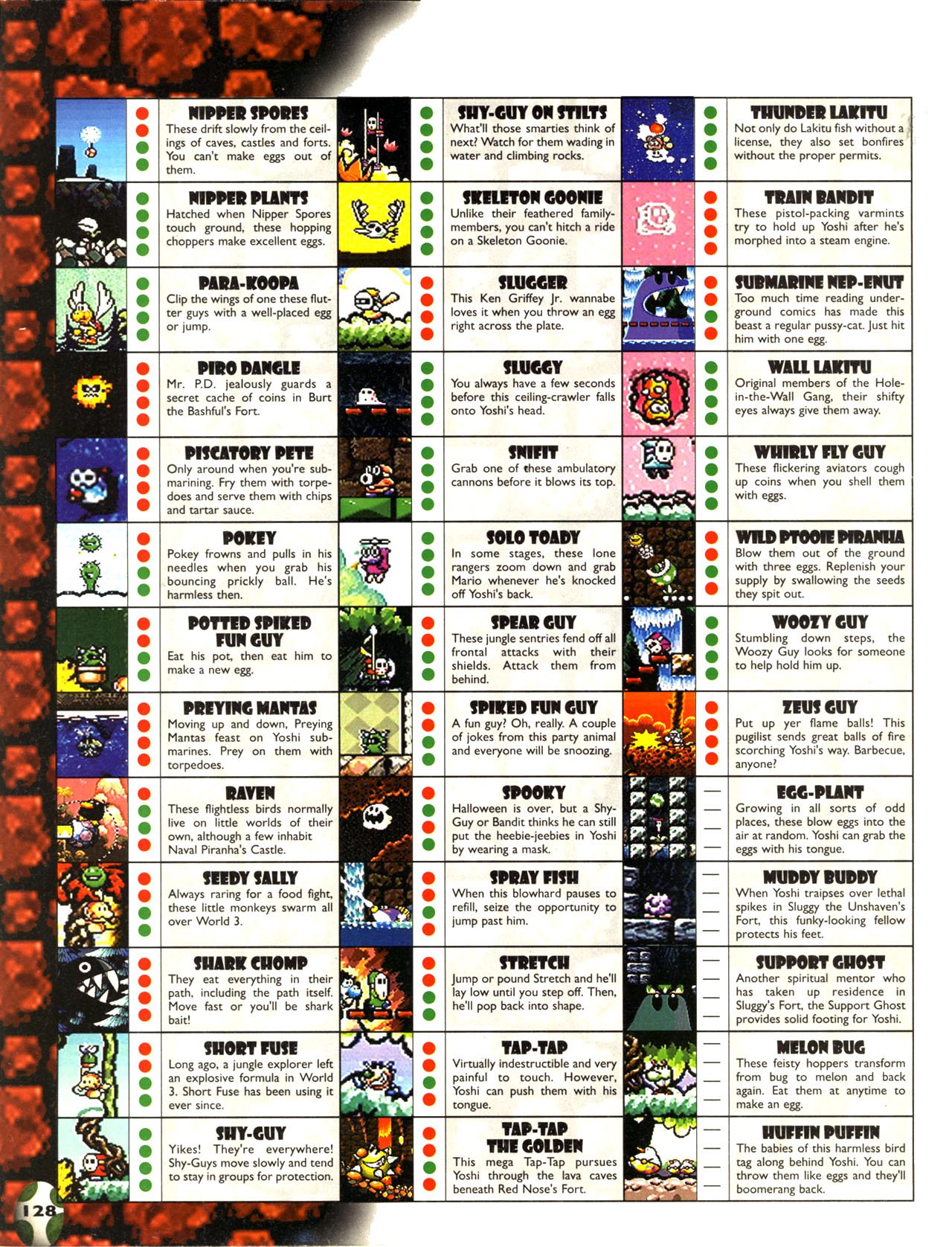
- Player's Guide: Original members of the Hole-in-the-Wall Gang, their shifty eyes always give them away.[3]
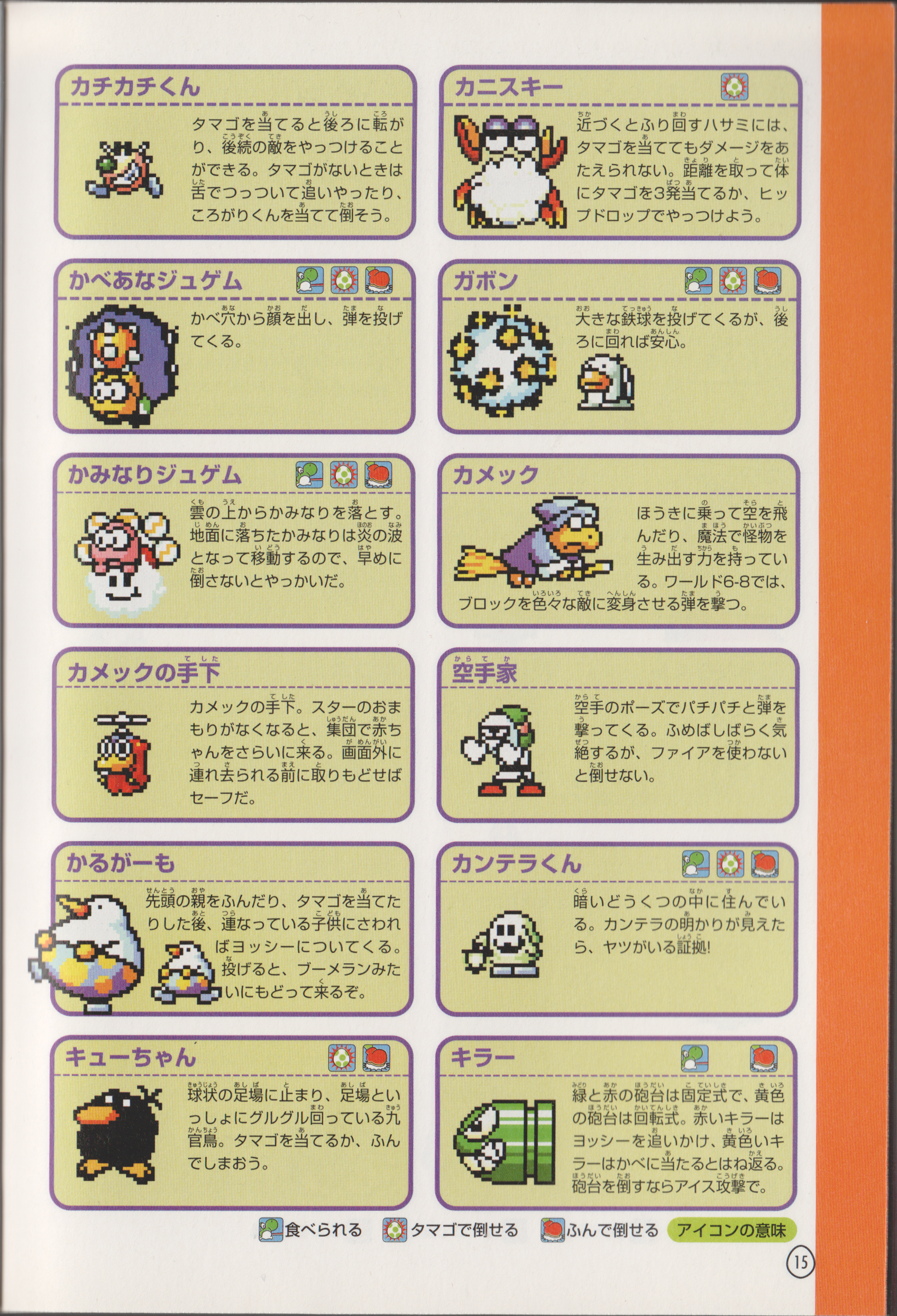
- Shogakukan guide: かべ穴から顔を出し、弾を投げてくる。[4] (They show their faces through wall-holes and throw projectiles at you.)
- Level appereances:
- 2-7: Lakitu's Wall
- 4-2: The Cave Of The Mystery Maze
- 5-1: BLIZZARD!!!
Yoshi Touch & Go[edit]
- Shogakukan guide: 壁の穴から顔を出し、トゲのついた弾を投げてくる。弾を持っているときはシャボンに包めないので、タマゴでねらったほうがよい。飛んできた弾は、タッチするかタマゴで擊ち落とそう。[5] (They emerge from holes in the wall and throw spiked projectiles. Since you cannot wrap projectiles in bubbles when they are held, it is better to aim at them with an egg. Touch the flying projectiles or shoot them down with an egg.)
Yoshi's Island DS[edit]
- Level appereances:
Yoshi's New Island[edit]
- Shogakukan guide: 壁の穴から現れ、こちらにカーソルを合わせてパイポを投げてくる。パイポでブロックが壊されることもあるので、食べるかタマゴを当てて早めに倒そう。[6] (It appears through a hole in the wall and throws a Spiny Egg at you as its cursor hovers over you. The Spiny Eggs may break blocks, so eat it or hit it with an egg to defeat it as soon as possible.)
- Level appereance:
- 2-7: Hidey-Hole Hooligans
Yoshi's Woolly World[edit]
- Level appereances:
- 3-3: Scarf-Roll Scamper
- 4-2: Lakitu Peekaboo
Yoshi's Crafted World[edit]
- Level appereances:
Gallery[edit]
 Super Mario World 2: Yoshi's Island
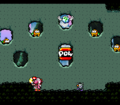 Super Mario World 2: Yoshi's Island


Naming[edit]
Internal names[edit]
| Game | File | Name | Meaning
|
|---|---|---|---|
| Yoshi's Crafted World | Game/Assets/Characters/Enemy/Jugemu | Jugemu | Lakitu; note that regular Lakitus do not appear in this game |
Names in other languages[edit]
The contemporaneous name for each language is listed first. Subsequent names are listed in chronological order for each language, from oldest to newest, and have the media they are associated with in the "notes" column.
| Language | Name | Meaning | Note(s) | Ref. |
|---|---|---|---|---|
| Japanese | かべあなジュゲム Kabeana Jugemu | Wall-hole Lakitu | [2][4][6][7] | |
| Dutch | Wall Lakitu | - | [8] | |
| French (Canada) | Lakitou embusqué | Ambushed Lakitu | [9] | |
| French (Europe) | Lakitu planqué | Hidden Lakitu | [10] | |
| German | Wand-Lakitu | Wall Lakitu | [11] | |
| Felsen-Lakitu | Rock Lakitu | Super Mario World 2: Yoshi's Island | [12] | |
| Italian | Lakimuro | Portmanteau of "Lakitu" and muro ("wall") | [13] | |
| Korean | 벽구멍김수한무 Byeokgumeong Gimsuhanmu | Wall-hole Lakitu | [14] | |
| Spanish (Latin America) | Lakitu emparedado | Walled-in Lakitu | [15] | |
| Spanish (Europe) | Lakitu Emparedado | [16] |
References[edit]
- ^ Williams, Drew (2002). Yoshi's Island: Super Mario Advance 3 Player's Guide. American English. ISBN 1-930206-25-9. Page 17.
- ^ a b Okeya, Noriko, Mitsuharu Orihara, and Yuji Kigen, editors (1995). 『スーパーマリオヨッシーアイランド任天堂公式ガイドブック』. Tokyo: Shogakukan (Japanese). ISBN 4-09-1025-234. Page 7.
- ^ Miller, Kent, and Terry Munson (1995). Super Mario World 2: Yoshi's Island Player's Guide. Nintendo of America (American English). Page 128.
- ^ a b Watanabe, Takashi, Noriko Oketani, Mitsuharu Orihara, Tatsuhiko Mizutani, and Yasushi Nakahara, editors (2002). 『スーパーマリオアドバンス3任天堂公式ガイドブック』. Tokyo: Shogakukan (Japanese). ISBN 4-09-106071-4. Page 15.
- ^ March 22, 2005. 「キャッチ!タッチ!ヨッシー!任天堂公式ガイドブック」 (Catch! Touch! Yoshi! Nintendo Kōshiki Guidebook). Shogakukan (Japanese). ISBN 4-09-106218-0. Page 13.
- ^ a b Iwaya, Kiyotaka, Tatsuhiko Mizutani, Yasuyuki Kato, Junko Fukuda, Kunio Takayama, and Yasushi Nakahara (Shogakukan), editors (2014). 『ヨッシー New アイランド 任天堂公式ガイドブック』. Tokyo: Shogakukan (Japanese). ISBN 978-4-09-106542-1. Page 19.
- ^ Kataoka, Michiaki, Hideyuki Yoshizawa, Hiroshi Shibano, Satoru Watanabe, and Tomoya Sato (2017). 『ポチと! ヨッシー ウールワールドオフィシャルガイド』. Tokyo: Kadokawa (Japanese). ISBN 978-4-04-892795-6. Page 259.
- ^ Herinneringentent (3 Feb. 2017). Poochy & Yoshi's Woolly World by Good-Feel. Nintendo of Europe GmbH (Dutch).
- ^ Théâtre des souvenirs (3 Feb. 2017). Poochy & Yoshi's Woolly World by Good-Feel. Nintendo of America (Canadian French).
- ^ Théatre des souvenirs (26 Jun. 2015). Yoshi's Woolly World by Good-Feel. Nintendo of Europe GmbH (French). (Archived 27 Sept. 2015 via JeuxVideo by marye43.)
- ^ Museums-Pavillon (26 Jun. 2015). Yoshi's Woolly World by Good-Feel. Nintendo of Europe GmbH (German). (Archived via YouTube by Domtendo.)
- ^ Menold, Marcus, John D. Kraft, and Thomas Görg, editors (1995). Der offizielle Nintendo Spieleberater "Super Mario World 2 – Yoshi's Island". Großostheim: Nintendo of Europe GmbH (German). Page 18.
- ^ Teatro dei ricordi (26 Jun. 2015). Yoshi's Woolly World by Good-Feel. Nintendo of Europe GmbH (Italian). (Archived via Mario's Castle.)
- ^ 추억 극장 (4 Mar. 2017). Poochy & Yoshi's Woolly World by Good-Feel. Nintendo of Korea Co., Ltd. (Korean).
- ^ Carpa de los recuerdos (16 Oct. 2015). Yoshi's Woolly World by Good-Feel. Nintendo of America (Latin American Spanish).
- ^ Guías Nintendo (2015). Enemigos. Guía Yoshi’s Woolly World (European Spanish). (Archived April 18, 2024, 12:37:03 UTC via Wayback Machine.)


| Lakitus | |
|---|---|
| Characters | Flight • King Lakitu • Laki • Lakilester • Lakilulu • Lakithunder • Lakitu • Lakitu Bros. • Royal bus driver • Spike Storm |
| Variants | Aqua Lakitu • C. Fishing Boo • Calm Lakitu • Commander Lakitu • Dark Lakitu • Fishing Boo • Fishin' Lakitu • Glam Lakitu • Gold Lakitu • Lakipea • Lakitufo • Lakitu • Lakitu in a Pipe • Lakitu King • Lakitu R • Lakitu trio • Thunder Lakitu • Wall Lakitu |
| Yoshi Touch & Go | |
|---|---|
| Characters | Baby Luigi • Baby Mario • Kamek • Stork • Yoshis |
| Items | Blue Coin • Bubble • Fruit (Apple · Banana · Grape · Melon · Watermelon) • Red Coin • Yellow Coin • Yoshi's Egg |
| Enemies and obstacles | Brier • Bumper • Cheep Cheep • Cloud Drop • Fang • Fly Guy • Goonie • Gusty • Kamek's Toadies • Lakitu • Marutchi • Monty Mole • Needle • Piranha Plant • Propeller Mūcho • Shy Guy • Spiny Cheep-Cheep • Tap-Tap • Toady • Ukiki • Whirly Fly Guy • Wild Ptooie Piranha |
| Music | "Flower Field" |
| Other | Gallery • Multimedia • Staff |