MarioWiki:BJAODN/Canonicity
To quote MarioWiki:Canonicity: "Unlike many other franchises, the Super Mario franchise and its many spin-off series do not have an officially recognized canon. Therefore, arguments over canonicity (canon vs. non-canon) are purely speculative, and are of no importance to wiki articles. Instead of using canonicity to determine the inclusion of various sources in our articles or the manner in which the articles are organized, the Super Mario Wiki opts instead to focus on Nintendo's involvement in a given source."
...If you can believe it, this stance was not held from the wiki's inception, and wouldn't be added until later on. How much later? Well... A bit of what you see below was changed in 2007, but a good portion of it stuck around until 2014.
NOTE: All pages here are listed more-or-less as they were before policy changes that led to either rewrites, trimming, eventual conversion to redirects, or deletion. Since deleted images can't be retrieved after a certain point, a roughly-equivalent image was used for the only image that couldn't be recovered.
MarioWiki:Canonicity[edit]
As with all fictional universes, the Marioverse has a set of canon, or levels of official material. The Super Mario Wiki attempts to create the most accurate articles possible, and will turn to different official materials to help understand conflicting issues. Video games are of the highest canon, especially video games published by Nintendo (usually with the Official Nintendo Seal, as opposed to Mario's Time Machine and Hotel Mario). Both remakes and the original versions have the same level of canon - they are simply alternate versions of the same game. The events depicted in the games take precedent over other official material. This includes instruction manuals, which often have story elements not depicted in the game itself, and official player's guides from Nintendo. Instruction manuals take precedent over player's guides, as manuals are specifically packaged with the game.
Any information that is made up by fans (including fan-made stories and video games) are considered non-canonical. Beta Elements are also non-canonical, as they were not released in the final version of the game.
Comics, cartoons, and movies are difficult to place, so we consider them to be alternate-canon. It is unknown if they should be considered official in the realm of video games, but at the very least each medium has its own canon.
Marioverse[edit]
The Marioverse (not to be confused with the Mushroom Planet) is any place that exists in the same world(s) as Mario. The name is a catch-all term used by the Super Mario Wiki to describe all of the various worlds (and everything in them) that Mario (including his friends and enemies) has visited.
The Marioverse tends to be limited to only game related material (or, anything that Nintendo declares official).
The Marioverse seems to overlap with other dimensions. This is called the Extended Marioverse.
The name is a portmanteau of the words 'Mario' and 'Universe'. With Super Mario Galaxy on its way, we will truly see the full extent of the 'universe' part of the Marioverse. It is possible that the Marioverse contains the Mushroom Universe, or that they are one in the same.
Extended Marioverse[edit]
The Extended Marioverse is a sub-branch of the Marioverse. For example, Link, Samus Aran, and Culex (who are clearly not Mario characters) appear in the Marioverse, while creatures such as Goombas and Piranha Plants appear in other dimensions, such as Link's land of Hyrule.
While Goombas and Piranha Plants are part of the main Marioverse because they appear in almost all of the Mario games, the other examples appear in a select few games (Link – Super Smash Bros. series, Culex – Super Mario RPG hidden boss), perhaps as a cameo (Samus Aran – Super Mario RPG). Thus, we classify these characters and related places in the Extended Marioverse.
"All worlds"[edit]
"All worlds" is a term used in Super Paper Mario to describe the meta-universe of the Mario series. The term refers to all the parallel universes (dimensions) that make up the greater multiverse, including the Mushroom Universe, Earth's universe, Smithy's Factory, the various dimensions of Super Paper Mario, Flipside (a dimension between dimensions) and Flopside, and many other universes. In Super Paper Mario, "all worlds" is the most common phrase used by characters knowledgeable about the existence of multiple dimensions to refer to the meta-universe; other terms include "all dimensions" and "all existence".
The existence of "all worlds," and thus all life in general, was once threatened by The Void, an inter-dimensional "hole" in the time/space continuum created by Count Bleck, in Super Paper Mario. The Void has the potential to consume everything. Ultimately Count Bleck is convinced that such destruction is wrong, and actively works to prevent the end of "all worlds". However, his minion Dimentio usurps control of The Void, and intends to use its power to destroy "all worlds" in order to create an all new meta-universe, one which he wants to rule over like a god. Eventually, Dimentio is stopped by Mario and his allies. The Void disappears and "all worlds" are saved from utter annihilation.
When someone loses all their extra lives and gets a Game Over, their spirit is brought to the afterlife dimension of the meta-universe. This dimension is made up of two opposite but interconnected regions, The Underwhere and The Overthere.
Big Eight[edit]

Big Eight is a colloquial term used by the Super Mario Wiki to describe the eight major characters in the Marioverse. These characters are considered to be of vital importance to the main story of the Marioverse and have prominently appeared in most Marioverse games. As such, their articles are of utmost importance to the Wiki. The Big Eight category is the polar opposite of the Filler Character category.
Note that the Big Eight only contains characters, not species.
Characters in the Big Eight[edit]
- Mario
- Luigi
- Wario
- Toad
- Yoshi
- Princess Peach
- Bowser
- Donkey Kong
Dimension[edit]
Dimensions are separate universes that run parallel to each other. While normally kept distinct from each other, parallel dimensions are interconnected and travel between them is possible in certain circumstances. Many dimensions exist in the Mario series. The following is a list of the different dimensions that have been seen/spoken of:
List of Dimensions[edit]
- The Mushroom Universe is the dimension that the Mario series typically revolves around. This dimension includes the Mushroom World and the galaxies explored in Super Mario Galaxy and Super Mario Galaxy 2.
- The Earth exists in a separate but parallel dimension of the Mushroom Universe. Interdimensional travel can be achieved through special Warp Pipes.
- Shake Dimension, a dimension which is situated in the Ancient Globe in Wario Land: Shake It!.
- The World of Trophies, in which the story mode of Super Smash Bros. Brawl is held.
Super Mario Bros. 2 dimensions[edit]
- Subcon, a dimension heavily influenced by dreams.
- Subspace, a alternative/parallel dimension to Subcon. Can be accessed through Potions.
Super Mario RPG: Legend of the Seven Stars dimensions[edit]
- Vanda, the dimension from which Culex originates.
- Factory, the dimension from which Smithy and his minions come.
Super Paper Mario dimensions[edit]
- The dimension in which Lineland exists.
- The dimension in which Gloam Valley exists.
- The dimension in which The Bitlands exist.
- The dimension in which the Planet Blobule and the surrounding galaxy, Outer Space, exist.
- The dimension in which the Land of the Cragnons exists.
- The dimension in which Sammer's Kingdom exists.
- The Overthere/The Underwhere
- The dimension in which Castle Bleck exists (although it's apparently located in the center of The Void).
- Dimension D
- Flipside and Flopside are described as being "in between dimensions".
The Mushroom Kingdom is referred to as a "distant dimension" on the 256th Catch Card.
Super Smash Bros. Brawl dimensions[edit]
Luigi's Mansion: Dark Moon dimensions[edit]
- ("Other gems from two pre-final revisions of this one include...")
Trivia[edit]
- Although Mario seems unaware of the other dimentions at first in "Super Paper Mario", almost everyone in the Marioverse seems aware of it, and many even travel between them. For example, Ms. Mowz and Lady Bow products exist in The Bitlands.
[...]
- ("...Which was later removed under the pretense that they could be the same dimension as one of the other ones listed.")
Filler Character[edit]
Filler Characters are characters considered to be solely invented to fill a gap in the Marioverse. Although it may be considered a conjectural term, many use it to describe characters who are not important to the Marioverse's storyline.
The Big Eight lists the eight characters who have influenced the Marioverse the most making it the complete opposite of Filler Characters. A common reason why Filler Characters are created is that in Mario Sports games, the existing characters need partners or rivals.
Classifiying a Filler Characters is very hard because it is a very debatable topic, and therefore, there are no official Filler Characters.
Mushroom Planet[edit]
- Not to be confused with World Mushroom or Super Mario Bros. Mushroom World.
- "Mario World" redirects here. For the SNES game, see here.
| Mushroom Planet | |
|---|---|

| |
| First appearance | Super Mario Bros. (1985) |
| Latest appearance | Super Mario 3D World (2013) |
| Inhabitants | Humans, Toads, Koopas, Goombas, etc. |
Mushroom World (Japanese: きのこのせかい), also known as Mario World (Japanese: マリオワールド) is the name of the planet Mario and his friends reside on. The planet is part of the Grand Finale Galaxy, which is one of many galaxies in the universe. Mushroom World is the greater setting of most of the games in the Mario series and sub-series.
The Mushroom Kingdom, Castle of Koopa, and various other lands and kingdoms associated with the Mushroom Kingdom, such as Dinosaur Land, the Beanbean Kingdom, and Sarasaland, all exist on the Mushroom World; and while it has never been made explicit, it is highly likely that locations from closely related series (such as the Donkey Kong and WarioWare series) also exist on the Mushroom World.
Several small galaxies are in orbit around Mushroom World, including the Gateway Galaxy, the Good Egg Galaxy and Bowser Jr.'s Robot Reactor. Galaxies relatively close to Mushroom World on the map of the universe include the Sky Station Galaxy, Honeyhive Galaxy, the Loopdeeloop Galaxy and the Yoshi Star Galaxy.
The relationship between Mushroom World and Earth[edit]

Mushroom World and Earth are almost always believed to be separate planets, though confusion does exist in the form of remarkably similar ecosystems and terrains, several species of animals and obvious human populations on Mushroom World. In other media such as the various cartoon series and comics, Earth and Mushroom World were understood to be different versions of the same planet in separate universes, and Mushroom World was noticeably cartoony and slightly surreal (eg. Pasta Land, Down Under Land). In most sources travel between the two planets is possible through warp pipes, a fact that has remained consistent throughout.
Named lands of Mushroom World[edit]
These are the lands associated with the Mushroom Kingdom and thus the greater Mushroom World. These lands appear in the Mario series of games, as well as some spin-off titles. (The lands marked with * mean they were only shown on The Super Mario Bros. Super Show!)
- Acorn Plains – A grassy plains with the Acorn Tree and slanted mountains.
- Amazon Jungle*
- Angry Aztec – A large desert with many Aztec like features.
- Aqua Land*
- Awazon River – A strange river located in a strange jungle and inhabited by the strange treasure collecting Mask Guys.
- Banana Fairy Island – A island home to the Banana Fairy Queen and Bannana Faries.
- Baseball Kingdom – A small island including nine large baseball stadiums.
- Barrel Volcano – A volcano to the southwest of Bowser's Castle.
- Beanbean Kingdom – The Mushroom Kingdom's closest neighbor, home of the Bean people.
- Bean Valley – A path with orange vegetation and part of the clouds, leading to Nimbus Land.
- Belome Temple – An underground temple which honors the guardian, Belome.
- Big-City – A city where Donkey Kong took Pauline to.
- Big Island – A land inhabited by enormous animals.
- Bloocheep Sea – An underwater basketball court.
- Blooper Beach – The sandy-ocean stage filled with Dolphins, Sushis, and sunshine.
- Bob-omb Factory – Bowser's supersecret factory where he makes most of his evil stuff.
- Boggly Woods – A beautiful forest full of black and white trees, placed north of Rogueport.
- Boo Woods – A dark, spooky, haunted woods and the location of Luigi's Mansion.
- Boo's Horror Castle – The haunted castle stage filled with terrible ghosts and worse decorating.
- Boo's Mansion – A large haunted mansion located in Forever Forest. It is home to Lady Bow and Bootler.
- Booster Hill – A large hill next to Booster Tower.
- Booster Pass – A small area guarded by some of Booster's loyal henchmen.
- Booster Tower – An amusement tower that is home to Booster.
- Bowser Station – A space station that was one of Bowser's many bases.
- Bowser's Castle – The cloudy, volcanic homeland of the Koopas and Bowser's headquarters.
- Bubble Lake – A lake that is south of Toad Town.
- Car Land*
- Castaway Bay – A bunch of islands all connected to make 1 big island.
- Caveman Land*
- Cavi Cape – A small cave located far southeast of Toad Town.
- Cheep Cheep Beach – A large beach that includes a town of huts and a small jungle it is inhabited by Crabs and Cheep Cheeps.
- Chill 'n' Char Island – A frozen island with a blazing volcano.
- Cloud Land*
- Club 64 – A restaurant located at the Toad Town port.
- Coconut Mall – A large mall that was used as a race track.
- Coal Mines – A large mine that lies inside a mountain close to Moleville.
- Cramalot*
- Creepy Steeple – A building located at the end of the Twilight Trail.
- Crime Land*
- Crocodile Isle – The home island of the Kremling race.
- Crystal Canyon – A canyon full of gleaming crystals.
- Crystal Palace – A large palace located on top of Shiver Mountain it is home to the Crystal King and Duplighosts
- Daisy Hills – A village with windmills that resembles an iconic Dutch landscape, used as a race track.
- Desert – A desert where Donkey Kong took Pauline to.
- Desert Kingdom*
- Desert Hill – An ancient desert kingdom dotted with ruins.
- Diamond City – A bustling island metropolis home to many humans.
- Dimble Wood – A huge forest home to many Wigglers and other creatures. Broque Monsieur's shop is also located here.
- Dinosaur Land, which includes Yoshi's Island – Continent that is home to the Yoshis.
- DK's Stone Statue – A small jungle where Donkey Kong was turned to stone by a Dry Bones.
- DK's Treetop Temple – A large jungle with some huge ruins.
- DK's Jungle Ruins – An ancient temple to explore and collect bananas, but not Z-Bananas.
- Donkey Kong Island – The home island of the Kongs.
- Donkey Kong Jungle – A dense jungle with many vines.
- Down Under Land*
- Dry Dry Desert – A large desert that is always very hot.
- El Desert Land*
- Evershade Valley – A large valley populated with friendly ghosts.
- Fire Mountain – A lava-filled mountain.
- Forest – A forest where Donkey Kong took Pauline to.
- Forest Maze – A large forest labyrinth.
- Frosted Glacier – A snowy area that takes place at a constellation-filled night.
- Ghost Island – A haunted island full of foggy forests and deep marshes.
- Ghoulish Galleon – A haunted pirate ship with a Dry Bones crew.
- Grate Guy's Casino – A secret casino run by Grate Guy.
- Grand Canal – A Venice-themed waterway town.
- Grass Land – A large and lush prairie country located somewhere near the Mushroom Kingdom.
- Gritzy Desert – A large desert with the Koopaseum in the middle of it.
- Gusty Gulch – A small wasteland where a village of Boos lies.
- Hawaii Land*
- High-High Island – A very tall desert island.
- Horror Land – A spooky, Boo-filled forest.
- Iceberg – An iceberg where Donkey Kong took Pauline to.
- Iced Land – Mushroom World's shimmering polar lands.
- Ice Game Room – A cold casino located in the Snow Area.
- Isle Delfino and the surrounding islands – One of the world's most popular tourist destinations which is possibly located on the equator[citation needed]. Other islands in the shape of various aquatic creatures, such as a crab, jellyfish, etc. are located around Isle Delfino.
- Isle o' Hags – The home land of Banjo, Kazooie and Tiptup.
- Jungle – A jungle where Donkey Kong took Pauline to.
- Jungle Land*
- K. Lumsy Island – A very small island of the coast of Donkey Kong Island were K. Lumsy lives.
- Kalimari Desert – A large desert with a system of train tracks going through it.
- Kero Sewers – A ghost-infested sewer.
- Kingdom of Youth*
- Kitchen Island – A pirate-filled island that Wario journeyed through to find an enormous solid gold statue of Princess Peach.
- Koopa Troopa Beach – A large rock-filled beach that was used as a race track.
- Koopa's Tycoon Town – A big town with many skyscrapers and buildings it is home to many Koopa Troopas and Goombas.
- Koopa Village – A small village, home to several friendly Koopa Troopas, such as Kooper and Kolorado.
- Kremlantis – A submerged island with amazing ruins and temples.
- Land's End – The area before the Land ends, with the exit being a beanstalk leading up to Nimbus Land.
- Land of Ice*
- Land of Romance*
- Lava Land*
- Lavalava Island – A large tropical island located in the middle of the sea.
- Layer Cake Desert – A desert featuring Moai statues, giant cakes and melting ice creams.
- Linguine Empire*
- Lost Island – An island of jungles and ruins.
- Lost World - a hidden world located near the Northern Kremisphere.
- Luigi's Engine Room – A large engine room with lots of Warp Pipes and other regular rusty pipes.
- Luigi's Garden – A small garden that is owned by Luigi. It was used as a golf course.
- Magma Mine – The volcano stage that keeps ruining Bowser's mine carts with molten-lava explosions.
- Mario Land – An island owned by Mario but briefly taken over by Wario.
- Mario Party World – A place where Mario and his friends have their parties.
- Mario Toy Company – The place where Mini Mario and other toys are made.
- Mario's Rainbow Castle – A castle located high in the clouds.
- Maze Woods – A forest where Wario got lost in easily while chasing the Black Sugar Pirates.
- Marrymore – A marriage resort.
- Mekanos – A small island located at the Northern Kremisphere, it is overrun with factories, pipelines, warehouses and lumber mills.
- Meringue Clouds – A sky world with puffy, meringue-like clouds.
- Midas River – A river with discarded Barrels, fish, and Coins.
- Midas Fall – A large waterfall that Kero Sewers is connected to.
- Moleville – A town populated by Moles.
- Monkey Mines – A large mine located on Donkey Kong Island.
- Monstro Town – A cliff-side town inhabited by reformed monsters and a Toad woman named Monstermama.
- Mt. Lavalava – A large volcano located on Lavalava Island.
- Mushroom Kingdom – One of the largest kingdoms on the planet, the Mushroom Kingdom is a frequently troubled but beautiful land home to Mario and Luigi and ruled by Princess Peach.
- Mushroom Valley – A court that takes place on a cliff with large mushrooms.
- Mushroom Village – A small village located on a river bank in the original Mario Party
- Mushroom Woods*
- Music Box World – A large world inside a music box with 4 different sections.
- Mystic Forest – A strange forest world.
- Mythis*
- Neon Heights – A high-class skyscraper above the city.
- Nimbus Land – A kingdom in the clouds, high above the surface of the planet.
- Northern Kremisphere – The closest mainland to Donkey Kong Island.
- North Pole*
- Ocean World*
- Pagoda Peak – A Chinese-like mountain.
- Paradise – A small desert tropical island Bowser escapes to.
- Pasta Land*
- Peach Beach – A beach with a small village and a dock, possibly located in Isle Delfino.
- Peach Circuit – A race track that is on the outskirts of Peach's Castle.
- Petal House – A small house owned by Petal Guy.
- Pi'illo Island – An island populated by Pi'illos and Brocks.
- Pineapple Kingdom – A small kingdom where many Pineapples grow.
- Pipe Maze – A small island group covered in warp pipes of all shapes and sizes.
- Pipe Vault – A system of tunnels set in the style of the Super Mario Bros. underground levels.
- Pirate World*
- Plack Beach – A beach filled with what appears to be rotting teeth, located far southeast of Toad Town and east of Cavi Cape.
- Pyramid Park – A desert Egyptian-style.
- Rap Land*
- River World*
- Robo Land*
- Rock-Candy Mines – A mountainous area with tall, pillar-like mountains.
- Rocky-Valley – A valley where Donkey Kong took Pauline to.
- Rogueport – A rough-and-tumble town on the outskirts of the Mushroom Kingdom.
- Rose Way – A path with many Treasure Boxes.
- Rose Town – A Toad populated town where ♥♪!? acquired his doll form "Geno" used in Super Mario RPG: Legend of the Seven Stars.
- Rotunda Land*
- Royal Tennis Academy - An island inhabited by humans that play tennis in Mario Tennis.
- Sarasaland – A neighboring land of the Mushroom Kingdom ruled by Princess Daisy.
- Sayonara*
- Sea Caves – A cave leading to a small sea area at the end.
- Sea Side – The land's coastal areas.
- Seaside Town – A coastal, resort village.
- Shamrock Kingdom*
- Sharewood Forest*
- Shiver City – A small snowy town populated by Bumpties.
- Shroom City - An island-wide city in Mario Party Advance.
- Shroom Ridge – A large mountain range that was turned into a highway.
- Snow World*
- Sockhop Land*
- Soda Jungle – A thick forest of giant perportions, similar to the Forest of Illusion and Big Island.
- Sparkling Waters – An ocean with sparkling water geysers.
- Spooky House – A ghostly mansion.
- Spiny Desert – A large desert filled with many desert enemies (Pokeys, Kleptos, etc.)
- Sprixie Kingdom – A land very similar to the Mushroom Kingdom inhabited by the Sprixies and ruled by the Sprixie Princess.
- Spy Land*
- Starbeans Café – A cafe owned and ran by Professor Elvin Gadd.
- Starborn Valley – A snowy valley, where Star Kids are born.
- Star Haven – The city of the Stars, situated high in the sky (possibly in orbit) of the Mushroom World and home of the Star Spirits and the powerful Star Rod.
- Star Hill - A mystical hill, where wishes come true.
- Star Hill - Location of the Star Shrine. Situated north of Princess Peach's Castle.
- Sudden Death Valley*
- Sunken Ship – A ship sunk in the sea by King Calamari.
- Sun Sun Island – A sunny beach-like island where there was a "giant banana" on top of its mountain.
- Super Mini Mario World Theme Park – A theme park made by the Mario Toy Company.
- Swiss Cheese Alps*
- Syrup Castle – A castle belonging to the pirate, Captain Syrup.
- Tadpole Pond – A pond that is home to Frogfucius and many Tadpoles.
- The Dump – A muddy soccer field.
- The Sand Tomb – A desert stadium surrounded by ruins.
- The Sky – The vast blue sky of Mushroom World is home to a kingdom in the clouds.
- The Vice – A very large soccer stadium.
- The Wastelands – An icy land that has a soccer stadium.
- Thunder Island – A dangerous island with wind gusts that can blow you off it.
- Timber's Island – A small island home to Timber the tiger and many of his friends.
- Toad Road – The grasslands stage where cool breezes blow across the hills.
- Toad Town – The capital of the Mushroom Kingdom, home to many Toads and to Princess Peach's castle.
- Tower – A tall building with Donkey Kong's face on it.
- Tower of Yikk – A large mechanical buit by Yikk's ghost.
- Town – A town-themed world where Wario chased the Black Sugar Pirates through.
- Turtlevania*
- Twilight City – A dark city of technology.
- Twilight Town – A town where it is always evening.
- Twilight Trail – A depressing road that goes through a scary set of spooky woods. At the end is the Creepy Steeple.
- Vibe Island – A strange island that gives off odd emotional powers.
- Vim Factory – A large factory built by the Shroobs where they extract Vim from Toads.
- Victoria*
- Vista Hill – A large hill that is connected to the bridge of Bowser's Castle.
- Waluigi's Island
- Waffle Kingdom – A large faraway kingdom once ruled by the mighty (but now extinct) Luffs.
- Wario's Castle – A castle owned by Wario
- Wario's Carnival – A large carnival owned by Wario.
- Wario's Woods (place) – A forest that was taken over by Wario.
- Wiggler's Garden – A large garden owned by a Wiggler.
- Wild West*
- Windmillville – A Netherlands-themed place, where there are many windmills.
- Windy Mill – A large windmill located in the Gusty Gulch.
- World-e
- Yoshi Circuit – A large island shaped like Yoshi, it was used as a race track.
- Yoshi's Island – The native island of the Yoshis.
- Yoshi's Tropical Island – A big island full of huge fruits and many palm trees.
Worlds distinct from Mushroom World[edit]
The following is a list of planets separate from Mushroom World. (The planets marked with * mean they were only shown on The Super Mario Bros. Super Show!)
Other worlds in the universe[edit]
- Jewelry Land – A faraway kingdom protected by twelve magical gems.
- The Shroob Planet, the home planet of the Shroobs, is a world far away from Mushroom World.
- In Super Mario Galaxy and Super Mario Galaxy 2, Mario travels to different galaxies containing many other (often small) planets. These galaxies are spread throughout the universe.
- The Mushroom Colonists' Planet* is a desert planet located somewhere in the universe. The barren planet was colonized by Mushroom People from Mushroom World.
- Planet Bomber is the home planet of Bomberman and the Bombermen.
- Quirk*, home planet of the Quirks, another planet located somewhere in the depths of the universe.
- Future Fun Land is Wizpig's home planet far from Mushroom World.
- Planet Plantaen, home of the banana alien Xananab is distinct from Mushroom World.
- Rainbow Road in Mario Kart is located outside the Mushroom World.
Worlds in other dimensions[edit]
- Earth is Mushroom World's "double" in a parallel universe. It can sometimes be accessed via Warp Pipes. It is in our Dimension.
- In Super Paper Mario, Flipside, a place "between dimensions" is explored by Mario as well as other characters, and also Flopside, Flipside's counterpart, which is equally explored by Mario & Co. This game also contains an entire planet that exists in a different dimension: Planet Blobule. In fact, the game contains many other dimensions distinct from Mario's dimension. There is also a cloud that will make Mario and Co go to the top of the overthere stair, and Mario and Co will bounce in space showing a planet that could be the Mushroom World.
- The lands of Wario: Master of Disguise are in an alternate TV dimension that can be reached via the Telmet.
- The various worlds traveled to in DK: Jungle Climber, such as Glass Maze, Toy Box and Veggie Patch, exist in different dimensions.
- In Wario Land: Shake It!, a universe named the Shake Dimension is contained within an ancient globe located in a museum somewhere on Mushroom World.
- The Factory is the home universe of the Smithy Gang, and can be accessed via Exor.
- Subcon is a dimension that exists in Mario's dreams.
- Subspace Dimensions that exist in giant purple balls in Super Smash Bros. Brawl. Subspace is created via the explosion of Subspace Bombs or a firing of the Dark Cannon.
Gallery[edit]
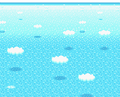 The surface of the planet as seen in Super Mario World 2: Yoshi's Island.
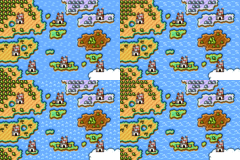 The Mushroom World from Super Mario Advance 4: Super Mario Bros. 3.
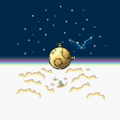 The surface of the planet during the battle with Raphael the Raven, also from Yoshi's Island.
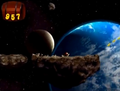 The Mushroom World and The Moon in Donkey Kong Jungle Beat.


Names in other languages[edit]
| Language | Name | Meaning | Note(s) | Ref. |
|---|---|---|---|---|
| Chinese | 蘑菇世界 Mógu Shìjiè | ? | ||
| Dutch | Champignon Wereld | ? | ||
| German | Mushroom Welt | ? | ||
| Italian | Mondo dei Funghi | ? | ||
| Korean | 버섯의 세계 Beoseos-ui Segye | ? | ||
| Portuguese | Mundo da Cogumelos | ? | ||
| Russian | Грибной Мир "gribnoi mir" | ? | ||
| Spanish (Latin America) | Planeta de los Hongos | ? | ||
| Spanish (Europe) | Mundo de las Setas | ? |
Mushroom Universe[edit]
| Mushroom Universe | |
|---|---|
| First appearance | Super Mario Bros. |
| Latest appearance | Super Mario Galaxy |
| Greater location | "All worlds" |
| Ruler | Rosalina (overseer) |
| Inhabitants | Humans, Toads, Koopas, etc. |
The Mushroom Universe (also known colloquially by its denizens as the "universe") is the name of the universe Mario lives in. Specifically it is the dimension Mario's home planet Mushroom World is located (as well as his home galaxy, the Grand Finale Galaxy). Rosalina, also from Mushroom World, watches over and protects the entire universe. The Mushroom Universe is one of many dimensions that make up the meta-universe. The name "Mushroom Universe" was mentioned in the Super Mario Bros. Super Show! episode "Stars in Their Eyes." In the episode, Mario asked "Where in the Mushroom Universe are we?" while being chased by Space Troopas.
According to various sources, such as the cartoon series The Adventures of Super Mario Bros. 3, the Mushroom Universe is a distinct but parallel dimension to the universe of the "Real World" (or Earth) resides in. However, there are rifts in the space-time continuum (often in the form of Warp Pipes) that all people to travel between dimensions.
During the events of Super Mario Galaxy, Bowser and his Koopa Troop attempted to take over the entire Mushroom Universe. Using the power of the last Grand Star, Bowser even started to create his own galaxy in the center of the universe to serve as the foundation of a "great galactic empire." With Princess Peach by his side, Bowser intended to rule over every region of the Mushroom Universe for all of time. Bowser was eventually stopped by Mario, who rescued the Grand Star from Bowser's Galaxy Reactor. However, the instability that resulted from releasing the Grand Star caused the galaxy to collase onto itself, creating a supermassive black hole that threatened to destroy the entire universe. In fact the Mushroom Universe was destroyed, in a fashion. The Lumas were able to prevent the complete annihilation of the universe by flying into the center of the black hole and sacrificing themselves. The Mushroom Universe was indeed destroyed by the black hole, but the sacrifice of the Lumas allowed the Mushroom Universe to be reborn again. The entire universe was broken apart but quickly reconstituted by the Lumas. All galaxies, planets, and indeed all of life was destroyed and reborn. The entire universe was completely remade, very similar to the original but not exactly the same. As Rosalina told Mario at the birth of the new universe: "...And so the cycle of life continues. But the cycle never repeats itself in quite the same way. So...you'll see." After waking up on a new Mushroom World, Mario realized Rosalina's words and proclaimed "Welcome...welcome new galaxy!"
- ("Anyways, if you're wondering why this wiki doesn't really care much for "canon", uh, this is your Exhibit A. And as of writing this (2025), people are still cleaning up confusing writing that stems from this period of time, and likely will for a long, long time." -Camwoodstock (talk))

