False wall
| False wall | |
|---|---|
 Screenshot from New Super Mario Bros. U | |
| First appearance | Super Mario World 2: Yoshi's Island (1995) |
| Latest appearance | New Super Mario Bros. U Deluxe (2019) |
False walls[1] (also known as Concealing Walls)[2] are nearly ubiquitous terrain elements of New Super Mario Bros. Wii, New Super Mario Bros. U, and New Super Luigi U. They look like normal walls, except the player can go behind them, revealing hidden alcoves often featuring a Star Coin or a Warp Pipe. A spotlight that makes false wall tiles transparent appears around the player while they walk behind one.
False walls are often hinted at by a distinct indent. In fortresses, they are very distinguishable from regular walls as they are always a different color. They are particularly prominent in Ghost Houses.

False walls also appear in the Yoshi franchise, dubbed fake walls in Yoshi's New Island, appearing in Super Mario World 2: Yoshi's Island, Yoshi's New Island, and Yoshi's Woolly World and its Nintendo 3DS port, functioning similarly to how they function in the New Super Mario Bros. series.
Gallery[edit]
It has been requested that more images be uploaded for this section. Remove this notice only after the additional images have been added. Specifics: Screenshots from the Yoshi series
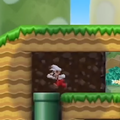
A false wall in World 1-1 from New Super Mario Bros. Wii
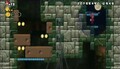
A false wall in World 1-
 Tower from New Super Mario Bros. Wii
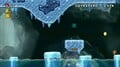
A false wall in World 3-3 from New Super Mario Bros. Wii
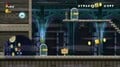
A false wall in World 3-
 Ghost House from New Super Mario Bros. Wii
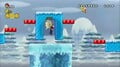
A false wall in World 3-4 from New Super Mario Bros. Wii
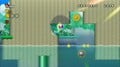
A false wall in World 4-1 from New Super Mario Bros. Wii
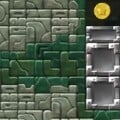
A false wall in World 4-
Tower from New Super Mario Bros. Wii
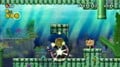
A false wall in World 4-4 from New Super Mario Bros. Wii
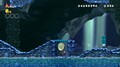
A false wall in World 6-2 from New Super Mario Bros. Wii
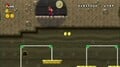
A false wall in World 6-4 from New Super Mario Bros. Wii
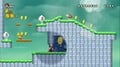
A false wall in World 7-5 from New Super Mario Bros. Wii
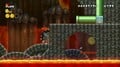
A false wall in World 8-2 from New Super Mario Bros. Wii
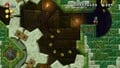
A false wall in Crushing-Cogs Tower from New Super Mario Bros. U

A false wall in Spike's Spouting Sands from New Super Mario Bros. U
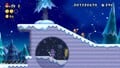
A false wall in Spinning-Star Sky from New Super Mario Bros. U
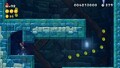
A false wall in Freezing-Rain Tower from New Super Mario Bros. U
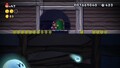
A false wall in Swaying Ghost House from New Super Mario Bros. U

A false wall in Painted Swampland from New Super Mario Bros. U
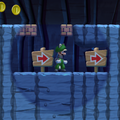
A false wall in Crooked Cavern from New Super Luigi U

A false wall in Spike's Seesaws from New Super Luigi U

A false wall in Bowser Jr. Showdown from New Super Luigi U


Names in other languages[edit]
| Language | Name | Meaning | Note(s) | Ref. |
|---|---|---|---|---|
| Japanese | 見えない壁 Mienai Kabe |
Invisible wall | [3] | |
| French | Passage secret | Secret way | [4] | |
| Italian | Parete invinsibile | Invisible wall | [5] |
Notes[edit]
- False walls that do not feature the spotlight effect are technically possible but unused.[6]
References[edit]
- ^ Stratton, Steve (2012). New Super Mario Bros. U: PRIMA Official Game Guide. Roseville: Prima Games. ISBN 978-0-307-89690-2. Page 6, 10, 43, 45, 51, 65, 67, 70, 81, 83, 84, 92, 98, 99, 103, 104, 108, 110, 111, 117, 131, 136, 146, 151, 152, 157, 172, 175–177, 179, 192, 214, 217, 219.
- ^ Roberts, Rachel, and Cardner Clark, editors (2018). Super Mario Bros. Encyclopedia: The Official Guide to the First 30 Years (First English Edition). Translated by William Flanagan and Zack Davisson. Milwaukie: Dark Horse Books. ISBN 978-1-50670-897-3. Page 149, 215.
- ^ Sakai, Kazuya (ambit), kikai, Akinori Sao, Junko Fukuda, Kunio Takayama, and Ko Nakahara (Shogakukan), editors (2015). 『スーパーマリオブラザーズ百科: 任天堂公式ガイドブック』. Tokyo: Shogakukan (Japanese). ISBN 978-4-09-106569-8. Page 151, 217.
- ^ Ardaillon, Joanna, and Victoria Juillard-Huberty, editors (2018). Super Mario Encyclopedia. Translated by Fabien Nabhan. Toulon: Soleil Productions (French). ISBN 978-2-3020-7004-2. Page 149, 215.
- ^ Sakai, Kazuya (ambit), kikai, Akinori Sao, Junko Fukuda, Kunio Takayama, Ko Nakahara (Shogakukan), and Marco Figini, editors (2018). Super Mario Bros. Enciclopedia. Translated by Marco Amerighi. Milan: Magazzini Salani (Italian). ISBN 889367436X. Page 151, 217.
- ^ Tilesets Pallete. Zenith. Retrieved July 4, 2025.

