PipeProject:Foreign Media/Drafts/El Mundo de Nintendo
| El Mundo de Nintendo | |
|---|---|

| |
| Publisher | Network Publicidad |
| Original language | Spanish (Latin America) |
| Issues |  19 (18 main, 1 special) 19 (18 main, 1 special) |
| Release dates | March 18, 1990–March 24, 1991[1][2] September 23, 1990[3] September 23, 1990[3] |
This page needs publication improvement. Specifically:
- Expand the "Development and history" and "Content" sections
El Mundo de Nintendo, also known as Boletín coleccionable del Mundo de Nintendo (both stylized in all-caps), was a Mexican newsletter created by Gus Rodríguez and Pepe Sierra, at the request of Jorge Nogami. It is the precursor to the Mexican Club Nintendo magazine, which would come out several months after El Mundo de Nintendo's discontinuation. The newsletter ran for a little more than a year, running from March 18, 1990, to March 24, 1991. A compilation of the first 10 issues would be released near the end of its lifespan, titled El Mundo de Nintendo: Edición Especial. Its cover uses a colored version of the artwork used on the front of the 12th issue.
El Mundo de Nintendo primarily covered Nintendo Entertainment System games, with occasional coverage of Game Boy games, and in the 13th issue, the release of Super Mario World was covered, although no further information about the Super Nintendo Entertainment System (named by its Japanese name in the issue, the Super Famicom) was revealed in the newsletter.
From the 4th issue forwards, El Mundo de Nintendo clarified that it was free, warning readers in the 16th issue not to be deceived by people who sold it.
Development and history[edit]
Guz Rodríguez and Pepe Sierra, two advertising executives and gamers, founded the Network Publicidad agency in 1987. The following year, they acquired an NES, along with Super Mario Bros. and The Legend of Zelda, back when these games were relatively unknown in Mexico. Following the purchase, they became passionate about Nintendo and their works.[4]
In 1989, Jorge Nogami was about to open an official Nintendo store in Mexico City. He called Gus and Pepe to advertise Nintendo products for him. Instead of advertising through radio or newspapers, they decided to publish a biweekly newsletter, which would be titled El Mundo de Nintendo. The newsletter started with four pages and two inks, was letter-sized, folded in three, and had a limited amount of photos and images, as most of them had to be done by hand.[5]
El Mundo de Nintendo quickly became popular at the store, expanding to six pages and three inks by the eighth issue, with special editions of some games, including Super Mario Bros. 3, also being made. Towards the end of its run, two new members, nicknamed Axy and Spot, joined the team, adding a section titled "Warp Zones", alongside Jesús Medina "Chucho" and Adrián Carbajal "Carqui".
The newsletter would be imported to the United States starting with the 10th issue, with its first membership cards being sent to John A. Sakaley III, a former vice president of Nintendo of America, and his daughter, Melissa Ann Sakaley.[3]
Content[edit]
Despite its limited number of pages, El Mundo de Nintendo features a variety of sections, with varying levels of recurrency, which are listed below:
- El buzon[sic] de Nintendo: This section appeared in every issue and consists of questions sent by readers to the newsletter, which were then replied to by the staff.
- No pierdas el control: This section promoted various controllers for the Nintendo Entertainment System, appearing in most issues until the ninth issue, returning briefly in the fifteenth issue with an advertisement for the Light Boy, an add-on for the Game Boy.
- Secretos: Appearing in all issues except for the 8th one, as the name implies, this section contains obscure tips for various games, which were submitted by readers.
- Lo nuevo: Appearing in the first 6 issues, as well as the 10th and 11th issues, this section features various news, primarily releases of games. It would later evolve into the Anuncios section by the 15th issue with a similar purpose, although this name already appeared in the 12th issue, with the section last appearing in the 17th issue.
- ¿De que se trata?[sic]: Appearing in most issues, this section talks about recently released games.
- Mas alla del juego[sic]: Introduced in the 2nd issue and appearing often until the 9th issue, with a brief return in the 15th one, this section has varied content, such as giving life advice and applying it to video games.
- La fuente de tu creatividad: Introduced in the 6th issue and appearing in most issues ever since, this section features discoveries made by the staff in various games. This title is also used as the tagline for the newsletter. From the 9th issue onwards, this section would become a Q&A section, although the section would still be related to video game secrets.
- Descubrimientos: Appearing only in the 11th, 12th, 16th, 17th and final issues, this section had a similar functionality to the "Secretos" section, although it was emphasized in its first appearance that discoveries should have been original before being submitted, as opposed to coming from a book or magazine.
- Warp Zones: Introduced in the 15th issue and appearing in the following issues, this section, similar to the "Secretos" section, showcased various secrets and tips, detailing how they are achieved. This section is likely named after the Warp Zones in Super Mario games.
Gallery[edit]
[edit]
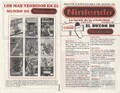 Num. 1, Year 1 (March 18–April 1, 1990)
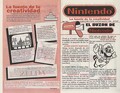 Num. 6, Year 1 (June 10–24, 1990)
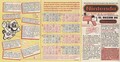 Num. 8, Year 1 (August 1, 1990)
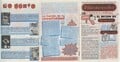 Num. 10, Year 1 (September 23, 1990)
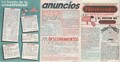 Num. 12, Year 1 (November 4, 1990)
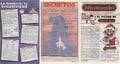 Num. 14, Year 1 (December 19–23, 1990)
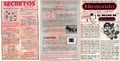 Num. 15, Year 1 (December 30, 1990)
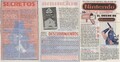 Num. 16, Year 1 (January 20, 1991)
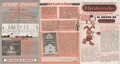 Num. 17, Year 1 (February 17, 1991)
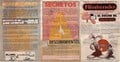 Num. 18, Year 2 (March 24, 1991)
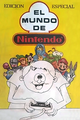 El Mundo de Nintendo: Edición Especial


Unique artwork[edit]
 Artwork of a Super Mushroom
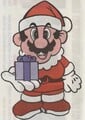 Artwork of Mario dressed like Santa Claus
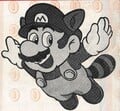 Artwork of Racoon Mario with a Coin background
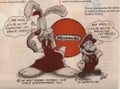 Artwork of Mario and Roger Rabbit


Miscellaneous scans[edit]
![Coverage of Super Mario Bros.'s Minus World in the "Mas alla del juego[sic]" section](https://mario.wiki.gallery/images/thumb/f/f6/El_Mundo_de_Nintendo_Minus_World.jpg/75px-El_Mundo_de_Nintendo_Minus_World.jpg) Coverage of Super Mario Bros.'s Minus World in the "Mas alla del juego[sic]" section
Coverage of Super Mario Bros.'s Minus World in the "Mas alla del juego[sic]" section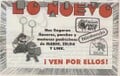 An advertisement featuring a Mario keychain in the "Lo nuevo" section
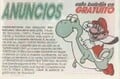 Coverage of Super Mario World's release in the "Anuncios" section
![Coverage of Super Mario Bros.'s Minus World in the "Mas alla del juego[sic]" section](/File:El_Mundo_de_Nintendo_Minus_World.jpg)


Names in other languages[edit]
| Language | Name | Meaning | Note(s) | Ref. |
|---|---|---|---|---|
| Spanish (Latin America) | El Mundo de Nintendo | The World of Nintendo | [1] | |
| Boletín coleccionable del Mundo de Nintendo | Collectable World of Nintendo newsletter | [1] |
Notes[edit]
- Despite being an officially licensed newsletter, El Mundo de Nintendo occasionally promoted unlicensed products, such as Tengen's port of Shinobi and Camerica's Freedom Stick. Despite this, in the 13th issue, the newsletter advised against buying pirate cartridges, such as a 42-in-1 cartridge mentioned by a reader.
See also[edit]
References[edit]
- ^ a b c March 18, 1990. El Mundo de Nintendo (Num. 1, Year 1). Network Publicidad. Retrieved July 1, 2026.
- ^ March 24, 1991. El Mundo de Nintendo (Num. 18, Year 2). Network Publicidad. Retrieved July 1, 2026.
- ^ a b September 23, 1990. El Mundo de Nintendo (Num. 10, Year 1). Network Publicidad. Retrieved August 13, 2026.
- ^ January 1996. Club Nintendo (Mexican magazine) (Year 5, Num. 1). Editorial Televisa. Page 6. Retrieved July 1, 2026.
- ^ December 2004. Club Nintendo (Mexican magazine) (Year 13, Num. 12). Editorial Televisa. Page 65. Retrieved July 1, 2026.

