Club Nintendo (Mexican magazine)
| Club Nintendo | |
|---|---|
.jpg)
| |
| Publisher | Editorial Televisa[1] |
| Original language | Spanish (Latin America) |
| Issues |  276 276 326 326 326 326 326 326 326 326 326 326 |
| Release dates | December 8, 1991–December 2014[1] January 1991–February 2019[?] January 1991–February 2019[?] January 1991–February 2019[?] December 8, 1991–February 2019[?] January 1991–February 2019[?] |
.jpg)
Club Nintendo, shortened to CN or ClubNin and stylized as "C◆L◆U◆B Nintendo" or "CLUB◆◆◆ NINTENDO", was the official magazine of Nintendo for Mexico and the rest of Latin America. It was created by Gustavo "Gus" Rodríguez and José "Pepe" Sierra Monroy. Editorial Televisa was its publisher until February 2019, where due to financial problems of the editorial, its publication was immediately stopped for those Latin American countries where it was still published (Venezuela, Colombia, Peru, Ecuador, Argentina, and Chile in monthly physical format), adding to its digital version.
In December 2011, the magazine celebrated its 20th anniversary and in December 2014 they published their last issue in monthly physical format in Mexico.[1]
Club Nintendo is the longest-running discontinued official Nintendo-related magazine and the third longest-running magazine overall, after the still active Nintendo DREAM and Famitsu.
Development and history[edit]


In 1987, two advertising executives and gamers, Gus Rodríguez and Pepe Sierra, formed an agency called Network Publicidad. In 1988, they acquired an NES along with Super Mario Bros. and The Legend of Zelda, when these were not very well-known in Mexico, and thus began their love for Nintendo and its works.[2]
In 1989, Jorge Nogami, about to open an official Nintendo store in Mexico City, called Gus and Pepe to do some advertising for him. Instead of making ads for radio and newspapers, they decided to publish a bi-weekly newsletter called El Mundo de Nintendo (The World of Nintendo), which contained information about the best-selling titles, tips and tricks. The newsletter started with four pages and two inks, was letter-sized, folded in three and included almost no photos or images since most had to be done by hand.[3]
The newsletter became so popular in the store that it grew to six pages and three inks by the eight issue, and special editions of some games such as Super Mario Bros. and Super Mario Bros. 3 were also made. Some time later, two new members nicknamed Axy and Spot joined the team (contributing with a section called Warp Zones), as were Jesús Medina "Chucho" and Adrián Carbajal "Carqui".
In July 1991, Teruhide Kikuchi, a Japanese executive from Itochu (formerly C. Itoh & Co.), called Network Publicidad and Ediciones Continentales to create a magazine to inform about and promote Nintendo products. As additional support, Itochu subcontracted the company Gamela for the official distribution of Nintendo's products and that by itself gave to the company a certain public perception as Nintendo's Latin American HQ. [4]
Gamela began to work on a prototype to show to Kikuchi, choosing the one made by Network Publicidad since Ediciones Continentales was planning to make a hobby magazine. Thus, the meetings for the magazine's creation began, where some names were proposed for it such as Universo Nintendo, Nintendo Juegos, Nintendomanía (this one used later for a Saturday-only TV program on 1995 presented by Gus Rodríguez), Mariolandia and El Club de Nintendo[5], which was Kikuchi's final choice. Thus, on December 8, 1991, the first issue of the magazine came out under the name Club Nintendo.
During the first years the magazines were stapled together, covers were airbrushed on cardboard four times the original size, pictures of the games were taken with a camera directly from the monitor with the Game Boy's games were photocopied from the screen, other images were hand-drawn and maps were drawn on albaneno paper with a stylograph and colored with markers.
Over time, the magazine underwent several changes in style and format, it began to be bound, more pages were added, new sections began to appear and special editions began to be released. In addition, the magazine organized several parties, meetings, tournaments and attended many events such as the CES, the E3 and the EGS. They also usually give away consoles, games and other items related to Nintendo or the magazine during special events or promotionals posted in the magazine.
It was with the issue of December 2014 (Super Smash Bros. for Nintendo 3DS / Wii U on the cover) that the magazine stopped its monthly publishing for Mexico's market; meanwhile in countries like Chile or Peru continued this format of publishing until its cancellation in February 2019. An issue was planned for March 2019 with Yoshi's Crafted World as the main article, but it was canceled too.
With this, the magazine ended with a record of 263 issues and more than 13 special editions.
Nintendo staff such as Satoru Iwata, Shigeru Miyamoto, Charles Martinet, Masahiro Sakurai, Hideki Konno, Takashi Tezuka, Goro Abe, Eiji Aonuma, Yoshio Sakamoto, and Reggie Fils-Aimé have had direct contact with the magazine and its editors.[6][7][8] Charles Martinet has also made frequent appearances in the magazine, such as for the presentation event for New Super Mario Bros. Wii during the 2008 Nintendo Tour, a video game tour that took place in the three main Mexican cities: Mexico City, Monterrey, and Guadalajara.[9][10][11]
Content[edit]
The magazine had various sections that disappeared or returned with some regularity. Some examples are:
- DR. MARIO: Column of questions sent by mail, traditional or electronic, with answers by Dr. Mario himself. This section began in the first issue, though instead of being a Q&A section, it was about the NES video game that lent its name to the section.[12]
- CN Retos: A competitive section in which records, challenges or feats were set to be overcome by the magazine's staff, in addition to announcing those already accomplished (with screenshots as evidence) by readers of the magazine.
- El Ojo del Cuervo: This section is more cinema-focused, and discusses popular films, historical or otherwise, that may have had an influence on or connection to video games, whether from Nintendo or third-party developers in general.
- Canales Nintendo: Where the content of WiiWare's games is summarized.
- CN Profile: A detailed summary of Nintendo-related characters.
- Mariados: Where readers sent their questions regarding secrets or parts of video games that are difficult to overcome or discover.
- Curso Nintensivo: Full and complete guides to beat games the best possible.
- El Control de los Profesionales: Section that talked about video games at a deeper and more technical level, approaching them from a more ethical perspective.
- Información Clasificada: Section with extra and unpublished information about video games in general, which was mostly provided by Nintendo Power.
- S.O.S. - Servicio Organizado de Secretos: Several lists of video games with tricks to obtain unlockable content.
- Un Vistazo a Japón: Section dedicated to the culture of Japan, things such as manga, anime, or video games that are popular there and/or that have never been released outside that market.
- Los Años Maravillosos: Section dedicated to remembering Nintendo's consoles from the past and some of their most memorable games.
- Galería CN: Where readers can send their fanarts by traditional mail.
- Uno con el Control: Video game reviews and analysis, evaluating gameplay, graphics, story, and overall ratings.
- Centro de Entrenamiento: Guides, tricks, and tips for overcoming difficult levels, finding secrets, or mastering specific game mechanics.
- Cementerio de Videojuegos: A section dedicated to readers who are "retro" collectors and to lesser-known, old video games.
- ¿Qué hay dentro de...?: Educational section whose purpose is to perform a virtual disassembly of a videogame, console, accessory, or peripheral to show its functionality and internal components and explain what each one is used for.
- A Favor y En Contra: Analysis of the positive and negative aspects of a video game with brief opinions from several readers of the magazine.
- Wario Awards: This section, presented by Wario, features video games released on Nintendo consoles that are considered poorly made or awful. Wario constantly boasts about himself and how well-made his games are, whether they are from his own franchise or those in which he appears as a guest.
List of Super Mario game reviews[edit]
Gallery[edit]
Logos[edit]
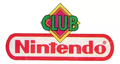 First logo (December 1991 - October 1994)
 Second logo (November 1994 - June 1995)
 Third logo (July 1995 - June 1998)
 Third logo, variation inspired by Super Mario World 2: Yoshi's Island (October 1995)
 Fourth logo (July 1998 - June 2002 / September 2002 - March 2003)
 Fifth logo, variation inspired in Donkey Kong Land (January 2001)
 Sixth logo (July 2002 - August 2002)
 Seventh logo (April 2003 - December 2003)
 Eighth logo (January 2004 - November 2012)
 Ninth logo (December 2012 - November 2013)
 Tenth logo (December 2013 - April 2017)

_-Ver._2.png)
_-Ver._2.png)
_-Ver._2.jpg)
.png)

.png)
_-1.1.png)

.png)

[edit]
1990s[edit]
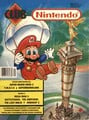 Year 1, Issue no. 1
(December 1991)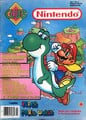 Year 1, Issue no. 2
(January 1992)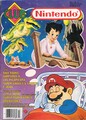 Year 1, Issue no. 3
(February 1992)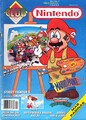 Year 1, Issue no. 11
(October 1992)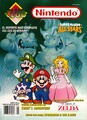 Year 2, Issue no. 8
(August 1993)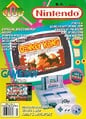 Year 3, Issue no. 5
(May 1994)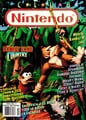 Year 3, Issue no. 11
(November 1994)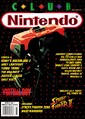 Year 4, Issue no. 7
(July 1995)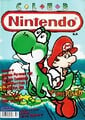 Year 4, Issue no. 10
(October 1995)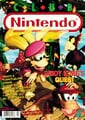 Year 4, Issue no. 12
(December 1995)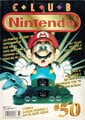 Year 5, Issue no. 1
(January 1996)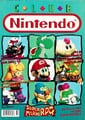 Year 5, Issue no. 2
(February 1996)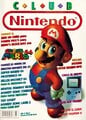 Year 5, Issue no. 7
(July 1996)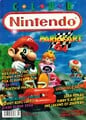 Year 6, Issue no. 1
(January 1997)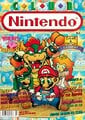 Year 6, Issue no. 4
(April 1997)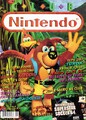 Year 6, Issue no. 8
(August 1997)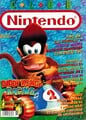 Year 6, Issue no. 11
(November 1997)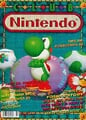 Year 7, Issue no. 2
(February 1998)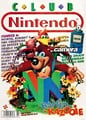 Year 7, Issue no. 6
(June 1998)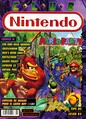 Year 8, Issue no. 2
(February 1999)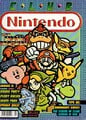 Year 8, Issue no. 4
(April 1999)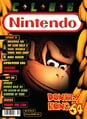 Year 8, Issue no. 12
(December 1999)
.jpg)
.jpg)
.jpg)
.jpg)
.jpg)
.jpg)
.jpg)
.jpg)
.jpg)
.jpg)
.jpg)
.jpg)
.jpg)
.jpg)
.jpg)
.jpg)
.jpg)
.jpg)
.jpg)
.jpg)
.jpg)
.jpg)
2000s[edit]
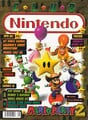 Year 9, Issue no. 1
(January 2000)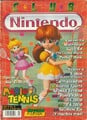 Year 9, Issue no. 9
(September 2000)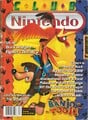 Year 9, Issue no. 12
(December 2000)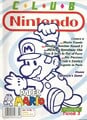 Year 10, Issue no. 1
(January 2001)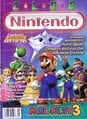 Year 10, Issue no. 5
(May 2001)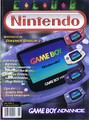 Year 10, Issue no. 6
(June 2001)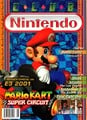 Year 10, Issue no. 8
(August 2001)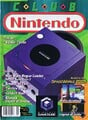 Year 10, Issue no. 10
(October 2001)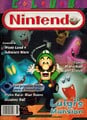 Year 10, Issue no. 11
(November 2001)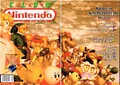 Year 10, Issue no. 12
(December 2001)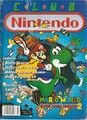 Year 11, Issue no. 3
(March 2002)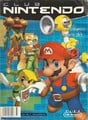 Year 11, Issue no. 7
(July 2002)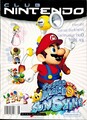 Year 11, Issue no. 8
(August 2002)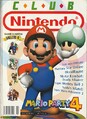 Year 11, Issue no. 10
(October 2002)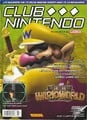 Year 12, Issue no. 5
(May 2003)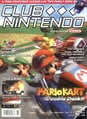 Year 12, Issue no. 11
(November 2003)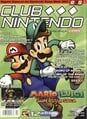 Year 12, Issue no. 12
(December 2003)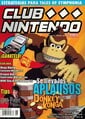 Year 13, Issue no. 8
(August 2004)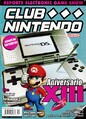 Year 13, Issue no. 12
(December 2004)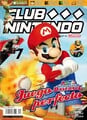 Year 14, Issue no. 9
(September 2005)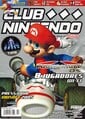 Year 14, Issue no. 10
(October 2005)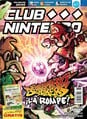 Year 14, Issue no. 11
(November 2005)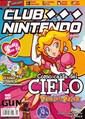 Year 15, Issue no. 2
(February 2006)
.jpg)
.jpg)
.jpg)
.jpg)
.jpg)
.jpg)
.jpg)
.jpg)
.jpg)

.jpg)
_-_Cover.jpg)
.jpg)
.jpg)
.jpg)
.jpg)
.jpg)
.jpg)
.jpg)
.jpg)
.jpg)
.jpg)
.jpg)
.jpg)