Inphant Islet
| Inphant Islet | |
|---|---|

| |
| Appears in | Mario & Luigi: Brothership (2024) |
| Greater location | Concordia |
| Inhabitants | Toad |
Inphant Islet is a location in Mario & Luigi: Brothership. It is found in the central Brrrning Sea, but is only accessible after showing a fished-up message in a bottle to the explorer brothers on Allsand Island as a part of the "The Left-Behind Toad" sidequest. The islet houses a maze of Warp Pipes, as well as a sign written by "Prof. Pipe".
If visited while the "The Left-Behind Toad" sidequest is active, a trapped red Toad expresses confusion and frustration with the islet's maze when Mario and Luigi first arrive on the islet. After being spoken to twice, the Toad will return to Shipshape Island with Mario and Luigi. A block at the Toad's position creates a new Warp Pipe when struck that offers easy exit from the maze.
If visited after the route to Wayaway Island is discovered and the sidequest has expired, the Toad will not be present.
Items in objects[edit]
| Item | Location | Image |
|---|---|---|
 2x 2x Gold Medallion, Speed and Stache Beans |
Inside the presents at the end of the maze. | .png)
|
Profile[edit]
- In-game description: "An island that seems like it's got a lot of... something."
Gallery[edit]
 Map icon
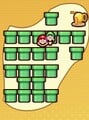 The map of Inphant Islet
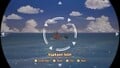 Inphant Islet sighted through the Big Cannon
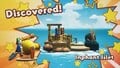 Inphant Islet being discovered
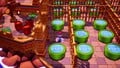 Warp Pipes on the island


Naming[edit]
"Inphant" is a mutation of "infant". Like other islets in the game, its name references its small size.
Names in other languages[edit]
| Language | Name | Meaning | Note(s) | Ref. |
|---|---|---|---|---|
| Japanese | カンボア島 Kanboa-jima | Partial anagram of「赤ん坊」(akanbō, "baby") + "island" | [1] | |
| Chinese (Simplified) | 稚幼岛 Zhìyòu Dǎo (Mandarin) Jihyau Dóu (Cantonese) | Anadrome of "幼稚" (yòuzhì / yaujih, "young") + "island" | [?] | |
| Chinese (Traditional) | 稚幼島 Zhìyòu Dǎo (Mandarin) Jihyau Dóu (Cantonese) | Anadrome of「幼稚」(yòuzhì / yaujih, "young") + "island" | [?] | |
| Dutch | Ietwad | From ietwat ("somewhat") and wad ("mudflat") | [?] | |
| French (Europe) | Îlot Bouttshou | "Islet" + rough phonetic of bout de chou ("little one") | [2] | |
| German | Stöps | Clipping of Stöpsel ("nipper") | [?] | |
| Italian | Pietruzza | Pebble | [3] | |
| Korean | 비이베섬 Biibe-seom | Anagram of "베이비" (beibi, "baby") + "island" | [?] | |
| Spanish (Latin America) | Islote Rorra | Baby Islet | [?] | |
| Spanish (Europe) | Islote Prieto | Tight Islet | [?] |
References[edit]
- ^ SA GAMES CHANNEL (November 22nd, 2024). マリオ&ルイージRPGブラザーシップ!スナバッカ島で兄からトルニタラン島にいる弟を連れて帰る~カンボア島に残されているキノピオを船島に連れて帰る (35:37). Retrieved January 3rd, 2025.
- ^ Balade sur des ilots - Mario & Luigi : L'épopée fraternelle #23. By OcariKnights on YouTube.
- ^ Mario & Luigi: Fraternauti alla carica - LIVE #6 by Mariuigi Khed on YouTube. Retrieved on January 3rd, 2024.

