List of internal fonts
It has been requested that more images be uploaded for this article. Remove this notice only after the additional images have been added. Specifics: Illustrate all fonts listed
- Main article: List of fonts
This is a list of internal typefaces and fonts used in games and related media within the Super Mario franchise.
Official fonts[edit]
Classic Super Mario font[edit]
.png)

The classic Super Mario font is an uneven sans-serif typeface designed by Nintendo in 1988. It is used for the logos and, later, interfaces of Super Mario games from Super Mario Bros. 3 to Mario & Sonic at the London 2012 Olympic Games.
The first version of the font was introduced in Super Mario Bros. 3. It lacked a fully defined character set, which led to many different interpretations. It would receive a more refined look with the release of Super Mario World, as this would become the basis for it later on. Starting with Mario Kart 64, it would received updated variations overtime.
A second version was made with the international release of Super Mario World. It was mostly used for logos in Western releases of some games, as well as having usage in other media. It was also used in most games of the Mario Discovery Series for in-game logos and display text.
A third version of the font was designed following the release of Mario Power Tennis, being near identical to the original with minor differences. It would take over as the primary version from then on. In particular, the font does not have a consistent design for Japanese hiragana, katakana, or kanji. This remained the case for the font even after the overhaul, likely inciting the shift over to the modern Super Mario font.
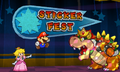
Used in tandem with other fonts throughout the 2000's, it was fully replaced with the modern font with the release of Super Mario 3D Land, being last seen on the logo for Mario & Sonic at the London 2012 Olympic Games, albeit an early logo for Paper Mario: Sticker Star used a design partially based on this typeface before being changed to the modern Super Mario typeface for the final release.
Despite being retired by 2012, a similar design based on this typeface continues to be used for the Western logo for the Mario & Luigi series, though with some modifications since Dream Team (notably a different "G" and ampersand both resembling the modern typeface).
- First version
 Super Mario Bros. 3 (Japanese)
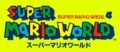 Super Mario World (Japanese)
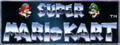 Super Mario Kart (Japanese)
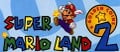 Super Mario Land 2 - 6 Golden Coins (Nintendo Magazine System logo)
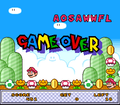 UNDAKE30 Same Game
 Mario's Tennis (Japanese)
 Mario Clash (Japanese)
 Super Mario RPG: Legend of the Seven Stars (Japanese)
 Mario Kart 64
 Early logo for Paper Mario
 Paper Mario
 Super Mario 64 DS


- Second version
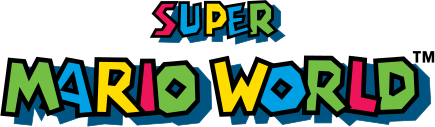 Super Mario World
 In-game logo for Super Mario World
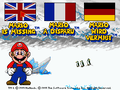 Mario is Missing! (PC)
 Mario is Missing! (SNES)
 Mario is Missing! (NES)
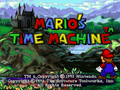 Mario's Time Machine (PC)
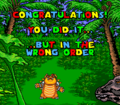 Mario's Time Machine (SNES)
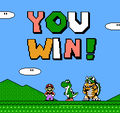 Mario's Time Machine (NES)
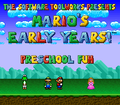 Mario's Early Years! Preschool Fun (SNES)
 Mario Clash
 Preliminary logo for Mario Superstar Baseball


- Third version
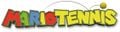 Early logo for Mario Power Tennis
 Mario Power Tennis (Japanese)
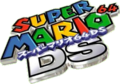 Super Mario 64 DS (Japanese)
 Mario Party 8 (Japanese)
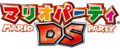 Mario Party DS (Japanese)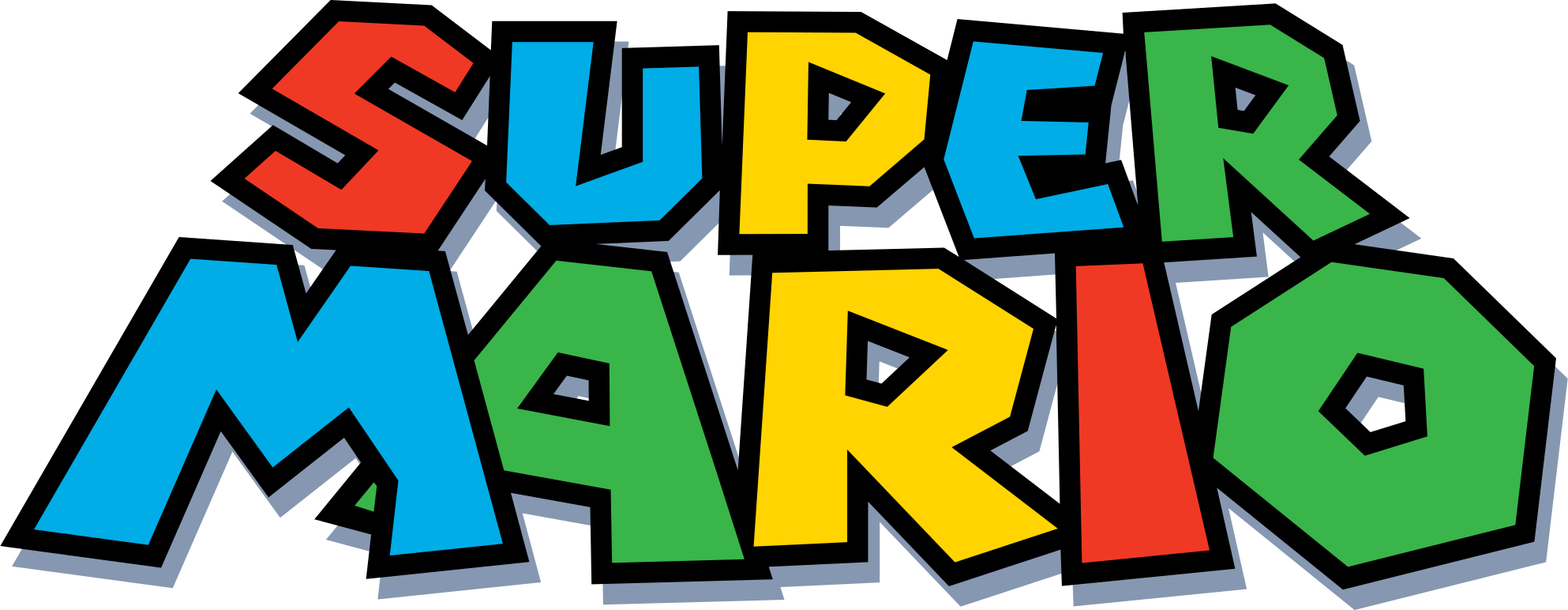


Modern Super Mario font[edit]


The modern Super Mario typeface is an uneven sans-serif typeface designed by Nintendo in the early 2010s. It was experimented with by Nintendo in the lead up to the release of the Nintendo 3DS and Wii U, with the first use of the modern font appearing in the North American spine art and instruction booklet of Super Mario Galaxy 2. Early versions appeared in games such as Mario Sports Mix, featuring a character set closer to the classic font. The font in its current form was officially introduced with the release of Super Mario 3D Land in 2011 and has since become the singular Super Mario typeface, used for logos, menus, HUDs, and other text across the Super Mario franchise.
The font is officially called "MARIO Font" and was created in collaboration with Fontworks, a foundry whose fonts are often used in Nintendo games. Unlike the previous font, this font has full character sets for hiragana and katakana, as well as some kanji and Cyrillic characters. The font has been revised at least three times; the latest known revision of the font is version 3.203, revised on August 20, 2019.[1]
This font has at least two designs for Chinese: the earlier version used for the Chinese logos for Mario Party 9 and Paper Mario: Sticker Star, and the current version, used for the Chinese logos for Paper Mario games since The Origami King and the Nintendo Switch remake of Super Mario RPG. A Korean version also exists, first used for the Korean logo for Mario Party 8.
 Mario Sports Mix logo with the early colors
 Preliminary logo for Super Mario 3D Land, featuring the final font but with classic colors
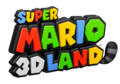 Logo for Super Mario 3D Land
 Logo for Mario Chase (Nintendo Land)
 Logo for Super Nintendo World
 English/international logo for The Super Mario Bros. Movie
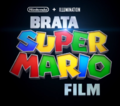 Slovene logo for The Super Mario Bros. Movie with the "SUPER MARIO" in the modern font, which is also used for the Lithuanian and Vietnamese logos
 English/international logo for The Super Mario Galaxy Movie
 Mario & Sonic
 Japanese logo for Yoshi's Crafted World
 Japanese logo for Yoshi and the Mysterious Book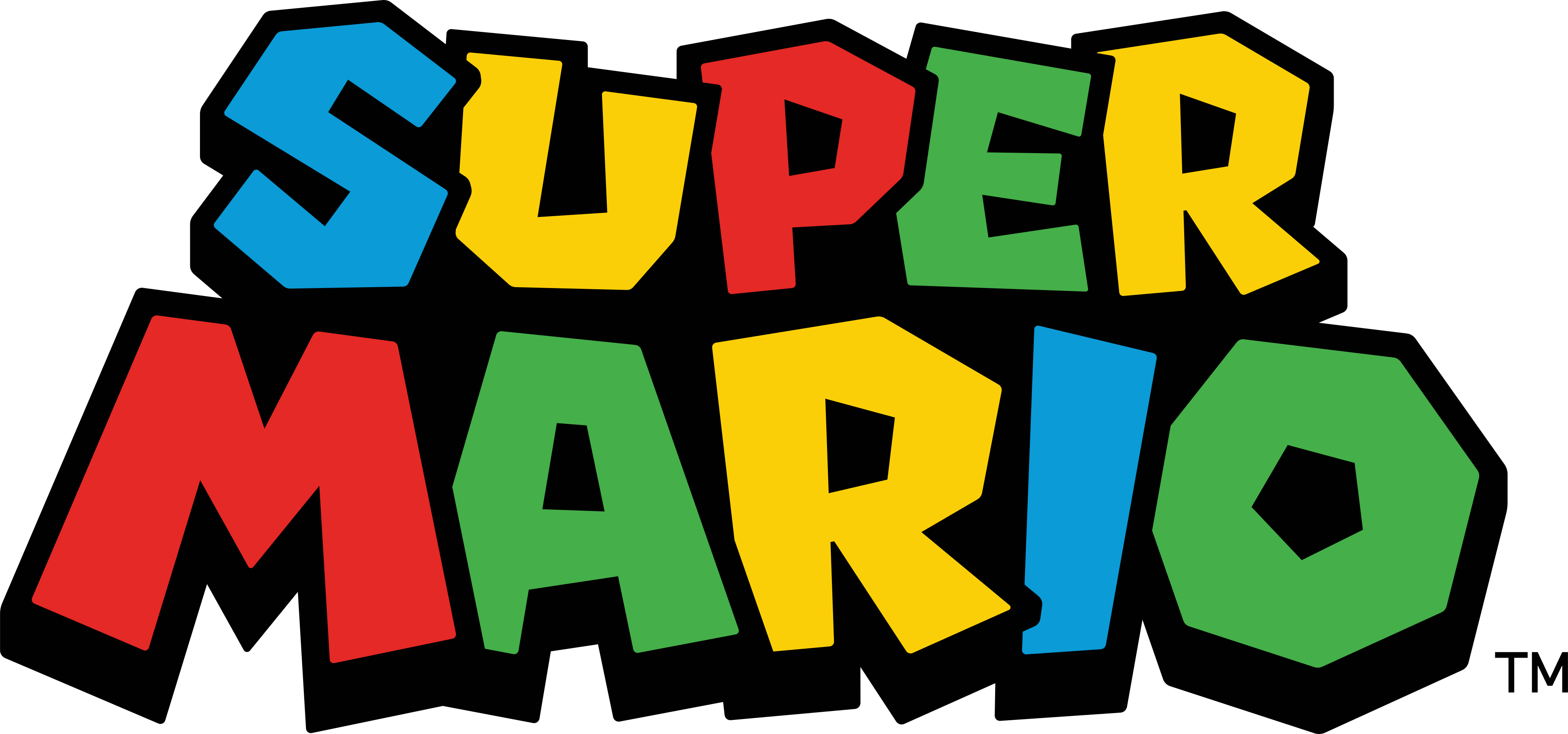
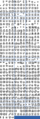 All characters in the modern Super Mario font
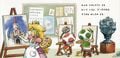 Nintendo's recruitment book 2020
![Lettering seen in the May 2023 game update trailer for the Game Boy Advance – Nintendo Classics application[2]](https://mario.wiki.gallery/images/thumb/4/45/GBA-NSO_trailer_2023-05_screenshot_-_available_may_26.jpg/120px-GBA-NSO_trailer_2023-05_screenshot_-_available_may_26.jpg) Lettering seen in the May 2023 game update trailer for the Game Boy Advance – Nintendo Classics application[2]
Lettering seen in the May 2023 game update trailer for the Game Boy Advance – Nintendo Classics application[2] Mario's name
 Donkey Kong's name
 Luigi's name
 Cat Mario's name
 Toad's name
 Bowser's name
 Peach's name
 Traditional Chinese logo for Mario Party 9, featuring the first version of the Chinese font
 Simplified Chinese logo for Paper Mario: Sticker Star, featuring the first version of the Chinese font
 Traditional Chinese logo for Paper Mario: Sticker Star, featuring the first version of the Chinese font
 Simplified Chinese logo for Paper Mario: The Origami King, featuring the current version of the Chinese font
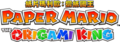 Traditional Chinese logo for Paper Mario: The Origami King, featuring the current version of the Chinese font
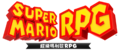 Traditional Chinese logo for the Nintendo Switch remake of Super Mario RPG, featuring the current version of the Chinese font
 Traditional Chinese logo for the Mario Dōjō event held at Nintendo Live 2023 HONGKONG and Nintendo Live 2023 TAIPEI
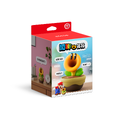 Hong Kong packaging for the Talking Flower figurine
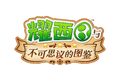 Simplified Chinese logo for Yoshi and the Mysterious Book
 Traditional Chinese logo for Yoshi and the Mysterious Book
 Korean logo for the Nintendo Switch remake of Super Mario RPG
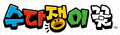 Korean logo for the Talking Flower figurine


![Lettering seen in the May 2023 game update trailer for the Game Boy Advance – Nintendo Classics application[2]](/File:GBA-NSO_trailer_2023-05_screenshot_-_available_may_26.jpg)


Korean Super Mario typeface[edit]
The Korean Super Mario typeface is an uneven sans-serif typeface designed by Nintendo of Korea around 2007. It is used for the Korean logos for various Mario games, starting with the Korean version of Super Mario 64 DS, and is generally used for the Korean logos for the Paper Mario series, and formerly, the Mario Party and Mario & Sonic series. It is often used in tandem with the classic and modern-style Mario typefaces mentioned above as well as the classic HUD font.
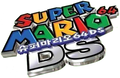 Korean logo for Super Mario 64 DS
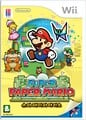 Korean box art for Super Paper Mario
 Korean logo for Mario Party 8
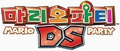 Korean logo for Mario Party DS
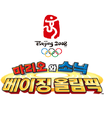 Korean logo for Mario & Sonic at the Olympic Games
 Korean logo for Mario & Sonic at the Olympic Winter Games
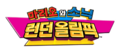 Korean logo for Mario & Sonic at the London 2012 Olympic Games
 Korean logo for Mario Party 9
 Korean logo for Paper Mario: Sticker Star
 Korean logo for Mario Party: Island Tour
 Korean logo for Mario & Luigi: Paper Jam
 Korean logo for Mario & Sonic at the Rio 2016 Olympic Games (Nintendo 3DS)
 Korean logo for Mario & Sonic at the Olympic Games Tokyo 2020
 Korean logo for Paper Mario: The Origami King
 Korean logo for Paper Mario: The Thousand-Year Door (Nintendo Switch)


Modern Super Mario Bros. typeface[edit]
The modern Super Mario Bros. typeface is first seen in New Super Mario Bros.. This is based on the in-game logo for Super Mario Bros., which was in turn used as the logotype for the Super Mario All-Stars version of Super Mario Bros., as well as Super Mario Bros. Deluxe.
It is geometrical with vertical stems with circular joints for shapes such as "A" and "M" and horizontal strokes that end before meeting left-hand vertical stems. A small version of its glyphs is used for the "SUPER" text in games using the Super Mario Bros. name, and Super Mario Bros. Wonder introduces a lowercase set of characters for the font.
Other than every New Super Mario Bros. game logo as well as Puzzle & Dragons: Super Mario Bros. Edition and Super Mario Run, it is also seen in Mario Super Sluggers and Super Mario Bros. Wonder for display text, as well as in WarioWare Gold for the Super Pyoro logo and The Super Mario Bros. Movie for the Super Mario Bros. Plumbing logo. It is also used for the year number in the Enemy Debut Year news in Nintendo Today!. A similar font is used for the logos for Mario Club, 1-UP Studio, and Nintendo Cube.
 New Super Mario Bros.
 The preliminary logo for New Super Mario Bros. used a design drawn from Super Mario Bros. Deluxe
 Mario Super Sluggers
 Puzzle & Dragons: Super Mario Bros. Edition
 Super Mario Run
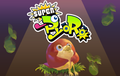 WarioWare Gold
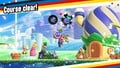 Lowercase characters, as seen in Super Mario Bros. Wonder
 Super Mario Bros. Plumbing
 Mario Club
 1-UP Studio
 Nintendo Cube


Classic HUD font[edit]

This design was used from Super Mario 64 until Mario and Donkey Kong: Minis on the Move, appearing throughout games on the Nintendo 64, Game Boy Advance, GameCube, Nintendo DS and Wii. Some of its distinct features are the pointed, obelisk-shaped "A", the flat, wide "E", and the overall stocky, top-larger-than-bottom measures, giving it a more whimsical appearance if compared to earlier Super Mario typefaces, which were designed in the opposite way.
This typeface was primarily used for in-game text outside of dialogue (i.e HUDs and menus). Given the lack of standardization on the first Super Mario typeface, this one was also often used for placeholder logos, at times when new characters for the first font could not be drawn. It was also used for the logo of Super Mario Sunshine, Dance Dance Revolution: Mario Mix and Super Princess Peach. Additionally, it is used for page numbers and playable characters' names in the American and Australian instruction booklets for Mario Party 6. A design similar to the lowercase S from this typeface is used for the "Yoshi's" in the logo for Yoshi's Fruit Cart in Nintendo Land.
Variations:
- Prior to Super Mario Sunshine, the "R" was different.
- In the Mario Party 6 instruction booklet, the "B" is different.
- In Nintendo DS games, namely Super Mario 64 DS, Yoshi Touch and Go, Mario Kart DS, and New Super Mario Bros., the primary menu font is a more pixelated variant.
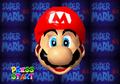 Super Mario 64 "Press Start" screen
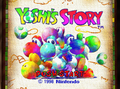 Yoshi's Story "Push Start" screen
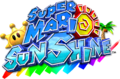 Super Mario Sunshine logo
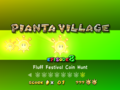 Super Mario Sunshine
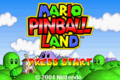 Mario Pinball Land "Press Start" screen
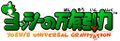 Yoshi Topsy-Turvy Japanese logo
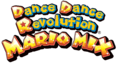 Dance Dance Revolution: Mario Mix logo
 Super Princess Peach logo
 Artwork of Lakitu for Mario Kart DS ("Final Lap")
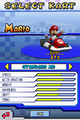 Mario Kart DS
 Preliminary logo for Super Mario Galaxy
 Super Mario Galaxy
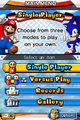 Mario & Sonic at the Olympic Games (Nintendo DS)
 Mario Super Sluggers
 Super Mario Galaxy 2
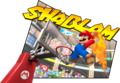 Mario Sports Mix


Paper Mario font[edit]
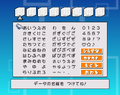
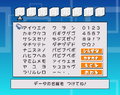
A design similar to the classic HUD design above, used for in-game display text and in some cases, the logos in Paper Mario games up to Paper Mario: Sticker Star.
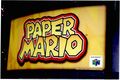 Preliminary logo for Paper Mario
 Paper Mario Japanese logo
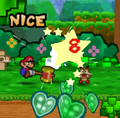 Paper Mario
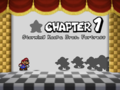 Paper Mario
 Paper Mario: The Thousand-Year Door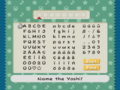
 The Letter "p", an item in Paper Mario: The Thousand-Year Door
 The Character ン, an item in Paper Mario: The Thousand-Year Door
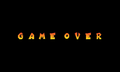 Super Paper Mario
 The heads-up display for Flipside Tokens in Super Paper Mario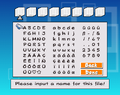
 Paper Mario: Sticker Star
 Paper Mario: Sticker Star
_EN_-_Paper_Mario.jpg)


Super Mario Maker typeface[edit]

The Super Mario Maker font is a geometric sans-serif typeface first designed by Nintendo in 2015. It is used for the interface in Super Mario Maker, Super Mario Maker for Nintendo 3DS, and Super Mario Maker 2. It is also used for the logo for the Super Mario Bros. 30th Anniversary. The initial variant of the font was titled "MARIO30th" and lacked lowercase characters. It was revised in 2018 to include lowercase letters; this new version is named "MARIOMAKER". The latest revision of the font is version 1.3, revised on November 28, 2018.[1]
Super Mario Odyssey typeface[edit]
The Super Mario Odyssey font is a geometric sans-serif typeface first designed by Nintendo in 2017. It is used for display text in Super Mario Odyssey and its corresponding Nintendo Sound Clock: Alarmo theme. A digitized version of the font, named Moon Get!, was created by DaFont user MaxiGamer and published in 2018.

Mario Kart World typeface[edit]

The Mario Kart World font is used for the interface in Mario Kart World. It is a ragged, italic typeface that has full sets of hiragana, katakana, Greek, and Cyrillic characters, as well as all modified Latin characters that could be inserted using the Nintendo Switch 2 keyboard.
Mario Party Hudson[edit]

Mario Party Hudson is used for large text in all Hudson Soft-developed Mario Party installments, including text for Dice Block rolls, coin transactions, timers, board and minigame title cards, minigame announcements and HUD elements (such as placement and Star/coin counts), among others. It appears much more sparingly in Mario Party 8, used for dice rolls, coin transactions, in-scene text during minigames and in Puzzle Pillars. It is also used in Dance Dance Revolution: Mario Mix.
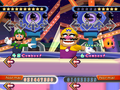 Dance Dance Revolution: Mario Mix
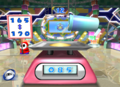 Mario Party 8


Mario Party Textbox[edit]

Mario Party Textbox is used for the interface in the English version of Mario Party.
Mario Party Textbox FR/DE[edit]

Mario Party Textbox FR/DE is used for the interface in the French and German versions of Mario Party.
Mario Party 2/3 Textbox[edit]

Mario Party 2/3 Textbox is, as the name implies, used for the interface in Western versions of Mario Party 2 and 3.
Mario Party 4-7 Textbox[edit]

Mario Party 4-7 Textbox is, as the name implies, used for the interface in Western versions of Mario Party 4, 5, 6, and 7, as well as Dance Dance Revolution: Mario Mix and the European version of Mario Party 8, including button icons in all versions. It is based on MS Gothic, MS P Gothic, and/or MS UI Gothic.
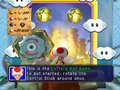 Mario Party 4
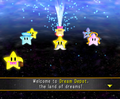 Mario Party 5
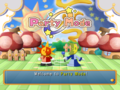 Mario Party 6
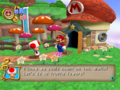 Dance Dance Revolution: Mario Mix
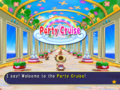 Mario Party 7


Mario Party 8 Textbox[edit]

Mario Party 8 Textbox is, as the name implies, used for the interface in the American version of Mario Party 8. It is based on DF Pop Mix.
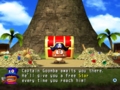 Mario Party 8

Super Mario 64/Mario Party Textbox JP[edit]

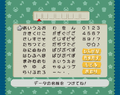
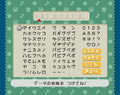
Super Mario 64/Mario Party Textbox JP is, as the name implies, used for the interface in the Japanese versions of Super Mario 64 and the first seven games in the Mario Party series. However, in Western versions, it remains for the word "Using" in the Mushroom Bank in Mario Party, for certain uses of numbers in Mario Party 2, for entering a file name in Mario Party 3, for the credits in both Mario Party 2 and 3, and (in English only) for the "Point Total" and "Points Earned" text on the Decathlon Park leaderboard in Mario Party 6.
The GameCube-era variant of the font is less pixelated than the Nintendo 64-era variant.
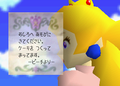 Super Mario 64
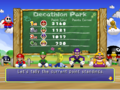 Mario Party 6
.png)

Diddy Kong Racing typeface[edit]

An uneven typeface is used for the interface of Diddy Kong Racing and its Nintendo DS remake.
Mario Golf/Mario Tennis (Nintendo 64) typeface[edit]
An uneven typeface is used in Mario Golf and Mario Tennis. It has several differences between the two games, most noticeable with the lowercase "y".
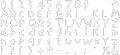 Mario Golf
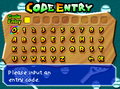 Mario Tennis


Dr. Mario typeface[edit]
An uneven sans-serif typeface was used in Dr. Mario titles from Dr. Mario Online Rx until Dr. Luigi.
WarioWare typeface[edit]

A rounded typeface was used in the WarioWare series from WarioWare, Inc.: Mega Microgame$! to WarioWare: D.I.Y. Showcase. Despite no longer being used as the interface font by then, it was still used for the countdown of the Bomb until WarioWare Gold, and it was additionally used for the timer in Puck 'er Up in WarioWare: Get It Together!.
Geometrical WarioWare typeface[edit]

A geometrical typeface was used in WarioWare, Inc.: Mega Party Game$!, WarioWare: Smooth Moves, and WarioWare: D.I.Y. Showcase.
Donkey Konga typeface 1[edit]
A sans-serif display typeface was used in the Donkey Konga series.
Donkey Konga typeface 2[edit]
An uneven typeface was used for the interface in the Donkey Konga series in western languages.


Nintendo Labo typeface[edit]
A geometric sans-serif typeface was used for the logo and some text for Nintendo Labo.

Rabbids typeface[edit]

A typeface used for the Rabbids series, officially named "Rabbids" and designed by OMSE Type, is used for the interface in Mario + Rabbids Sparks of Hope for display text in western and Russian languages.
Unofficial fonts[edit]
Super Mario Brothers[edit]


Super Mario Brothers[3] is an unofficial font made to replicate the look of the classic Super Mario font, first published as early as 2000. An edited and outlined version of the font called Chlorinap was published in 2005.[4] The font was used in Mario vs. Donkey Kong 2: March of the Minis for the victory screen, and also in the end screen of the game's demo version. It is also used for some display text in Mario vs. Donkey Kong: Minis March Again! in western languages.
Super Mario 256[edit]
Super Mario 256 is an unofficial font designed to replicate the modern Super Mario typeface, and was created by DaFont user fsuarez913.[5] The typeface was first published online in 2012, and quickly became widespread.[6] Compared to the font it imitates, Super Mario 256 is slightly bolder and wider, and several characters are drawn at different angles.
Despite its nature as an unofficial fan project, Super Mario 256 has made its way into official media on multiple occasions. In particular, the covers for Super Mario Manga Mania and Super Mario Compact Disco – 35th Anniversary Edition, the LEGO Super Mario set "Nabbit at Toad's Shop", the logo for LEGO Super Mario Goal and the in-game score, a few social media advertisements for Super Mario 3D World and the Nintendo Switch remake of Super Mario RPG, the European uploads of the Mario & Luigi: Brothership song "Yo-Ho, Bro!" except the Nintendo UK one,[7] and the Japanese Square Enix strategy guide for Super Mario RPG on Nintendo Switch feature the typeface.[8]
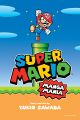 The cover for Super Mario Manga Mania
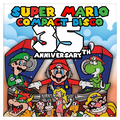 Album cover for Super Mario Compact Disco – 35th Anniversary Edition
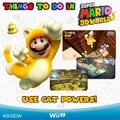 Graphic promoting Super Mario 3D World
 LEGO Super Mario. Super Mario 256 is seen in the sign reading "SHOP".
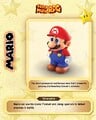 Character card promoting the Super Mario RPG remake
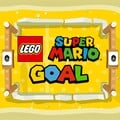 Icon for LEGO Super Mario Goal, using the font for the word "GOAL"


New Super Mario Font U[edit]
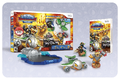
New Super Mario Font U is an unofficial font designed to replicate the modern Super Mario typeface, and was created by DaFont user Michael B., first published in 2013 and quickly became widespread.[9] It is used for the "BOWSER" text on the box of Skylanders: SuperChargers Racing. It is also used for the display text of character names in the US commercials for Mario Party: Star Rush,[10] and the teaser trailer for The Super Mario Bros. Movie .
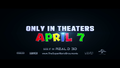 "APRIL 7" lettering in the teaser trailer for The Super Mario Bros. Movie


References[edit]
- ^ a b MARIO Font GitHub repository
- ^ Nintendo of America (May 19, 2023). Game Boy Advance – May 2023 Game Updates – Nintendo Switch Online + Expansion Pack. YouTube. Retrieved May 19, 2023.
- ^ Super Mario Brothers Font. Fontspace. Retrieved February 26, 2025.
- ^ Chlorinap. DaFont. Retrieved June 30, 2024.
- ^ fsuarez913 | dafont.com. dafont.com. Retrieved January 31, 2024. (Archived February 1, 2024, 02:16:18 UTC via Wayback Machine.)
- ^ Super Mario 256 - comments | dafont.com. dafont.com. Retrieved January 31, 2024. (Archived July 18, 2012, 19:28:26 UTC via Wayback Machine.)
- ^ Nintendo DE (November 27, 2024). Yo Ho, Bro! Ein Schunkel-Shanty – Mario & Luigi: Brothership (Nintendo Switch). YouTube (German). Retrieved November 27, 2024. The typeface is used for the line "Mario and Lui—geez!"
- ^ @MikeLuckas (January 31, 2024). Post. X. Retrieved February 9, 2024. (Archived January 9, 2024, 17:50:57 UTC via archive.today[deprecated link].)
- ^ DaFont. (2013) New Super Mario Font U. https://www.dafont.com/new-super-mario-font-u.font. Retrieved January 16, 2025.
- ^ vini64 (November 3, 2020). Mario Party: Star Rush - Commercials collection. YouTube. Retrieved June 13, 2025.

