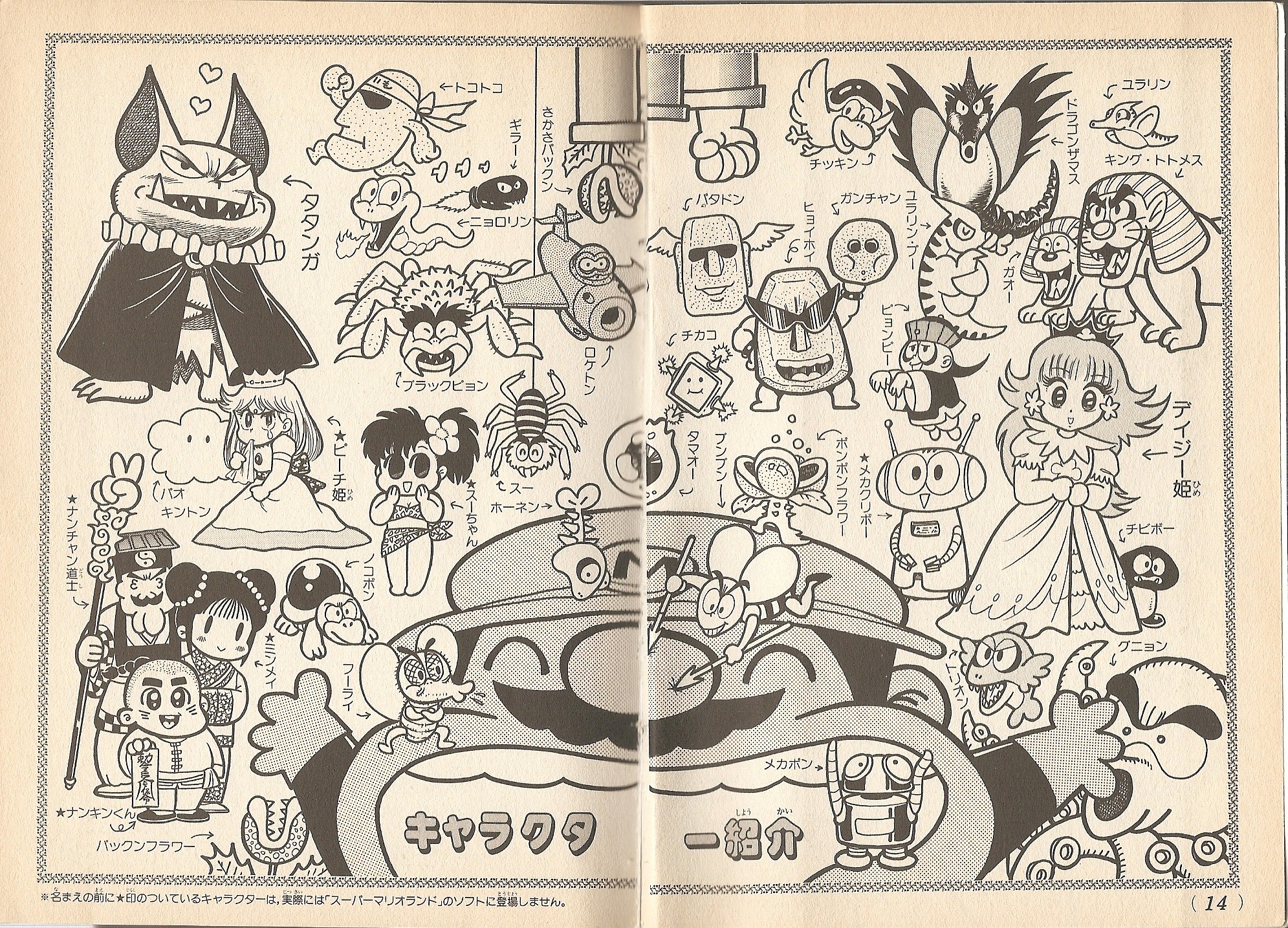
Honen
- "Bone Fish" redirects here. For the recurring enemies in the Super Mario franchise, see Fish Bone.
- Not to be confused with Honebon.
| Honen | |||
|---|---|---|---|
 Artwork from Super Mario Land | |||
| First appearance | Super Mario Land (1989) | ||
| Latest appearance | Super Mario Kodansha manga ("Walkthrough 2 (Muda Kingdom) - Launch! Marine Pop!!") (1989) | ||
| Variant of | Torion | ||
| |||
Honen,[1] also known as Honhen[2] or Bone Fish,[2] are enemies in Sarasaland that appear in Super Mario Land. According to the game's instruction manual, they are the skeletons of Torion eaten by Tatanga.
History[edit]
Super Mario Land[edit]
Honen jump vertically out of the waters of the Muda Kingdom at regular intervals. They are one of two undead enemies to appear in the game, the other being Pionpi. They can easily be defeated by stomping on their heads or by simply standing above them; while Superballs will not work on them, a Marine Pop missile will. Defeating one is worth 100 points. Honen appear in World 2-1 and World 2-3.
Honen are one of the few variants of enemies to appear before the base enemy, with the level introducing them being two levels before the Torion's debut level (World 2-3).
Super Mario Kodansha manga[edit]
In the Super Mario Land volume of the Super Mario Kodansha manga, Tatanga creates three Honen after eating some Torion that dared to make jokes about his relationship with Daisy, which he then sends to Muda Kingdom. While avoiding two of the Honen, Mario is bitten by the third one on the bottom. The pain makes him jump out of his pants, leaving him naked and exposed, flustering Mecha Kuribō (who is Princess Peach in disguise). Mario then retrieves his overalls and stomps on the enemy.
Super Mario Land Kessen Meiro[edit]
In Super Mario Land Kessen Meiro, two Honen appear in the Muda Kingdom sea maze.
Profiles[edit]
Super Mario Land[edit]
- Instruction booklet description:
- English:
The skeleton of a Torion after it's been eaten by Tatanga. It always flies vertically up from the water. A superball can't stop it. - Other languages:
- German:
Dies ist das Skelett eines Fisches, der von Tatanga gefressen worden ist. Es treibt stehend im Wasser und widersteht sogar Superkugeln. - Italian:
Questo è lo scheletro di un Torion dopo essere stato battuto da Tatanga. Vola sempre fuori dall'acqua in senso verticale. Una Super Palla non basta per fermarlo.[3]
- German:
- English:
- Game Boy Player's Guide description: Beware the Bone Fishes when they leap from the sea!
- Nintendo 3DS Virtual Console manual:
- English:
This skeleton of a Torion after it has been eaten by Tatanga always flies up vertically from the water. It can't be defeated by a Superball. - Other languages:
- Italian:
Secondo una teoria, questa sarebbe la forma assunta dal Torion dopo esser stato mangiato da Tatanga. Esce dall'acqua volando verticalmente e non può essere sconfitto usando le Superball.[4]
- Italian:
- English:
Perfect Ban Mario Character Daijiten[edit]
| ホーネン (JP) / Honen (EN) | |||
|---|---|---|---|

| |||
| Original text (Japanese) | Translation | ||
| ゴースト |
Tribe | Ghost clan | |
| しぶとい | Disposition | Stubborn | |
| ランド1 | Game appearances | Land 1 | |
タタンガに |
Full of energy, even when bony It is said to be a Torion that was eaten by Tatanga and became a skeleton. Even when they become bones, they still leap out of the sea with great force. Superballs will not work, but you can knock it down by stepping on it from above. | ||
Gallery[edit]
 Alternative art from Super Mario Land
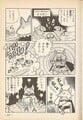 Tatanga creates the Honen in Super Mario Land
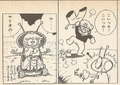 Mario stomping a Honen, leaving him exposed, in Super Mario Land
 Super Mario Land (Club Nintendo magazine)
 Sprite from Super Mario Land


.png)


Names in other languages[edit]
| Language | Name | Meaning | Note(s) | Ref. |
|---|---|---|---|---|
| Japanese | ホーネン Hōnen | Derived from「骨」(hone, "bone") and「トリオン」(Torion, "Torion") | [6][7][8] | |
| Dutch | Honen | - | [9]:33 | |
| French | Honen | - | [9]:15 | |
| German | Honen | - | [11] | |
| Italian | Honen | - | [3][4][12][13] | |
| Spanish | Honen | - | [14][15] |
References[edit]
- ^ 1989. Super Mario Land instruction booklet. Nintendo of America (English). Page 15.
- ^ a b 1991. Nintendo Game Boy Player's Guide. Nintendo of America (English). Page 5.
- ^ a b 1990. Super Mario Land Manuale di Istuzioni. Florence: Nintendo (Italian). Page 15. (Archived 4 Feb. 2024 via Mario's Castle by Alessandro "Stormkyleis" Imbesi.)
- ^ a b 2011. Super Mario Land (Electronic Manual). Nintendo of Europe GmbH (Italian). Tab 14.
- ^ 1994. 「パーフェクト版 マリオキャラクター大事典」 (Perfect Ban Mario Character Daijiten). Shogakukan (Japanese). Page 204.
- ^ 1989. 『スーパーマリオランド取扱説明書』. Kyoto: Nintendo Co., Ltd. (Japanese). Page 17.
- ^ Motoyama, Kazuki (17 Aug. 1989). Super Mario Land, Super Mario, vol. 1. Tokyo: Kodansha (Japanese). ISBN 4-06-313103-3. Page 15.
- ^ Sakai, Kazuya (ambit), kikai, Akinori Sao, Junko Fukuda, Kunio Takayama, and Ko Nakahara (Shogakukan), editors (2015). "Super Mario Land" in『スーパーマリオブラザーズ百科: 任天堂公式ガイドブック』. Tokyo: Shogakukan (Japanese). ISBN 978-4-09-106569-8. Page 47.
- ^ a b 1990. Super Mario Land mode d'emploi / Handleiding. Nederland, Brussels: Nintendo (French, Dutch).
- ^ Club Nintendo, editors (1990). "Super Mario Land" in Club Nintendo Classic. Großostheim: Nintendo of Europe GmbH (Dutch). Page 8.
- ^ 1990. Super Mario Land Spielanleitung. Großostheim: Nintendo of Europe GmbH (German). Page 15.
- ^ Sakai, Kazuya (ambit), kikai, Akinori Sao, Junko Fukuda, Kunio Takayama, Ko Nakahara (Shogakukan), and Marco Figini, editors (2018). "Super Mario Land" in Super Mario Bros. Enciclopedia. Translated by Marco Amerighi. Milan: Magazzini Salani (Italian). ISBN 889367436X. Page 47.
- ^ Sakai, Kazuya (ambit), kikai, Akinori Sao, Junko Fukuda, Kunio Takayama, Ko Nakahara (Shogakukan), and Marco Figini, editors (2025). "Super Mario Land" in Super Mario Bros. Enciclopedia (2nd ed.). Translated by Alessandro Apreda. Milan: Magazzini Salani (Italian). ISBN 979-1259575760. Page 47.
- ^ Club Nintendo, editors (1990). "Super Mario Land" in Club Nintendo Classic. Großostheim: Nintendo of Europe GmbH (European Spanish). Page 8.
- ^ 2011. Super Mario Land (Electronic Manual). Nintendo of America (Mexican Spanish). Page 14.