
List of rumors and urban legends

There have been several rumors, misconceptions, and urban legends regarding production history, fictional details, and gameplay elements within the Super Mario franchise. This article is a list of the history of Super Mario rumors and details the extent to which they are true. Each section is supported by one or more references that detail the spread or debunking of their respective topics.
While the origins of some rumors remain a mystery, others stem from unsourced edits on articles on sources such as Wikipedia or the Super Mario Wiki, misinterpretation of legitimate information, fan works being seen out of context, jokes and speculation being taken as fact, and miscommunication between Nintendo and its marketing departments and licensees.
Production
Donkey Kong's name origin
The origin of Donkey Kong's name has been the subject of several conflicting explanations over time. One popular myth states that the original Donkey Kong game was intended to be titled "Monkey Kong", and was actually named "Donkey Kong" due to either a mistranslation[1] or typo.[2] However, the words monkey and donkey are completely different from each other in Japanese, so it is unlikely to be a translation error. Additionally, while typos resulting in popular names do exist, the accuracy of the latter claim is questionable considering the conflicting viewpoints surrounding it.
Another explanation states that donkey was used to avoid copyright issues with the character King Kong. The etymology of the word "donkey" can be traced back to the word ass, which can also mean fool, with the word fool traditionally being the opposite of the word king. This may suggest that the name "Donkey Kong" was intended as a subversion of "King Kong", and a way to refer to the movie and character without violating copyright law. However, Nintendo was sued by Universal Pictures in 1982 for the exact reason that Donkey Kong was too similar to King Kong. Notably, a written statement produced in 1983 regarding this lawsuit states that Nintendo employee Shinichi Todori came up with the name "Donkey Kong" towards the end of May 1981.[3]
Shigeru Miyamoto, the creator of Donkey Kong, has claimed multiple times that he found the name from a Japanese-English dictionary when looking for something "stubborn" or "stupid".[4][5] Another variation of the story claims that "donkey" was popular Japanese slang for "crazy" in the 80's.[6] While "donkey" is not usually considered to be an adjective or a synonym of those terms, the animals themselves are often associated with stubborn traits. In an interview published in 2016, Miyamoto stated that he was informed by Nintendo of America staff that "donkey" does not mean "stupid" as the dictionary said, but that he ignored their feedback, as he liked the sound of the name "Donkey Kong".[7]
Usage of the name "Jumpman"

Due to Mario initially being referred to as "Jumpman" in the non-Japanese arcade version of Donkey Kong, it is sometimes believed that he was not given the name of "Mario" until the release of Donkey Kong Jr., the game produced immediately after Donkey Kong. This theory is supported by the name "Jumpman" being common throughout English material related to the game, appearing in its operation manual[8] and several graphics containing instructions for play, including a page, card, and banner.
While no Japanese material included the name "Mario" until Donkey Kong Jr. as the theory states, a flyer with story information was released to arcades internationally, in which the protagonist was referred to as "little Mario" in its English localization, proving that he was known as "Mario" to the public before games other than Donkey Kong had released. All subsequent ports of Donkey Kong to home consoles removed the name "Jumpman" in favor of "Mario", with the exception of Arcade Archives: Donkey Kong on the Nintendo Switch.
Inspiration for the Super Mushroom
Some rumors have questioned the origin of the Super Mushroom, suggesting that it was inspired by real-world drugs such as the magic mushroom[9][10] or Amanita muscaria.[11] While the spores of the latter species look similar to the Super Mushroom and other items such as the 1-Up Mushroom, no evidence has confirmed that this was an intentional design decision.
On June 19, 2015, the nonprofit organization NPR published an interview with Shigeru Miyamoto, the creator of Mario, in which he mentioned the story Alice in Wonderland in relation to the origin of mushrooms in Super Mario games.[12] However, in an earlier Iwata Asks interview, he stated that there was no influence from Alice in Wonderland, simply citing "a relationship between mushrooms and magical realms".[13] This more generic explanation also appears in an interview from October 2010 in the magazine Famitsu, in which Miyamoto describes that "you see people in folk tales wandering into forests and eating mushrooms all the time".[14]
An article on the website for the newspaper The Guardian contains an unsourced claim that Miyamoto drew inspiration from "enchanted foodstuffs in myths and folklore" to create the Super Mushroom.[15]
Gunpei Yokoi being the creator of Wario and Daisy
Due to being the most notable member of Nintendo's former Research & Development 1 department and having a role as producer for many of their games, Gunpei Yokoi is often attributed as the sole creator of its franchises and characters up to his departure. This has led fans to credit Yokoi for the creation of the characters Princess Daisy and Wario, two main characters of R&D1's Super Mario Land games.[16][17][18] In reality, Yokoi has never been credited as a character designer in any of the games he was involved with, and no report done during Yokoi's lifetime or modern interviews with former R&D1 staff stated he created any characters for its games.
While no specific creator has been attributed to Princess Daisy, Satoru Okada, the director of Super Mario Land, would be a more likely candidate, as well as Hirofumi Matsuoka or Masahiko Mashimo, graphic designers for the game. Hiroji Kiyotake, director and graphic designer for Super Mario Land 2 - 6 Golden Coins, is the creator of Wario, as stated by multiple interviewees in a 2004 interview in the magazine Nintendo DREAM;[19] he is also credited as the original designer of Wario throughout the WarioWare series.
Purple Yoshi Game Boy Advance tech demo

On August 11, 2000, IGNpocket posted a news article promoting the at-the-time new IGN message boards. This article notes an exclusive screenshot is being hosted on their "Handheld Boards", which was provided by a Japanese correspondent.[20] The high quality image appears to be a Game Boy Advance game featuring a Purple Yoshi in gameplay that appears similar to Yoshi's Safari.
In reality, the screenshot originates from a section about the then-upcoming Game Boy Advance in the July 2000 issue of Famitsu 64+, which states that the image was created by the magazine's editorial department to show how the system's games could have looked like.[21] The initial IGNpocket article was also skeptical of the screenshot, correctly noting that it may be a mock-up of what a Game Boy Advance game could be.[22][23]
Shigeru Miyamoto's opinions on Donkey Kong Country

In 2001, author Steven Kent published the book The Ultimate History of Video Games, in which he discussed the development of Super Mario World 2: Yoshi's Island. On page 518, the book details that Shigeru Miyamoto, the creator of Donkey Kong, became frustrated after the original graphical style of Yoshi's Island was rejected for having "not enough punch" compared to the pre-rendered graphics of Donkey Kong Country. Alluding to an interview he conducted with Miyamoto and Tim Stamper, the director of Donkey Kong Country, Kent stated that "Miyamoto was a bit hard on Stamper", and included a quote from Miyamoto saying "Donkey Kong Country proves that players will put up with mediocre gameplay as long as the art is good".[24] This created the rumor that Miyamoto disliked the Donkey Kong Country series.
The interview in question originates from the May 1995 issue of the magazine Electronic Games. However, according to Frank Cifaldi, founder of the Video Game History Foundation, the supposed quote from Miyamoto is not present in the magazine.[25] This led to doubts as to whether Miyamoto said it at all, or if it was merely a false memory from Kent.[26] Of note is that the alleged quote is extremely similar to a line from Cranky Kong in the manual for Donkey Kong Land.
Following the announcement of Donkey Kong Country Returns at E3 2010, the gaming website IGN conducted an interview with Miyamoto in which he alluded to the rumor and declared it to be false, saying, "And apparently recently some rumor got out that I didn't really like that game? I just want to clarify that that's not the case, because I was very involved in [the game's production]."[27]
Donkey Kong Country 2 for the Virtual Boy

On August 10, 2001, in response to a letter sent to Rare's Scribes website about a Donkey Kong Country game on the Virtual Boy, Rare employee Leigh Loveday stated that a Virtual Boy port of Donkey Kong Country 2: Diddy's Kong Quest had been in development, but that it "didn't get very far".[28]
However, an article on the DK Vine fan website showcased that subsequent statements were made by former Rare artist Steven Hurst and, more notably, engineer Paul Machacek, employees who worked on the project. They clarified that there were no concrete plans for any Donkey Kong Country game on the system, and that what Loveday referred to was a short demo to test the capabilities of the Virtual Boy, which consisted of a short stretch of land featuring reused Donkey Kong Land and Battletoads graphics. No evidence suggests this demo was ever planned to become a full game, and DK Vine assumed that it was ultimately scrapped after it became clear that the Virtual Boy was a commercial failure.[29]
Super Mario FX
A rumor suggests that a 3D platformer named Super Mario FX was in development during the lifetime of the SNES, which would have used the Super FX chip to display 3D graphics. Variants of this rumor claim that the game became, or was otherwise the inspiration for, Super Mario 64.
An article on the fan site SNES Central by Evan G elaborates that there is no proof that such a game was in development.[30] Early claims regarding the topic surfaced on video game forum websites, such as the Lost Levels forum in 2004.[31] These theories were supported by a feature on the gaming website IGN in 2007 claiming that "Miyamoto spent years trying to build a fully 3D Mario platformer for the SNES before he finally admitted the technology just wasn't there for him".[32] While IGN did not list a source, the Wikipedia page for Super Mario 64 at the time had referenced an interview with Miyamoto in the January 1996 issue of Nintendo Power, which IGN may have misconstrued. Miyamoto stated that "I first had the idea to do a 3-D Mario game when I was working on Star Fox. That was five years ago".[33] As Star Fox released on the SNES and used the Super FX chip to display full 3D graphics, this may have led to the conclusion that Miyamoto was referring to a 3D Super Mario title using the same hardware, even though he never specified that the idea was for any console in the interview. Additionally, this interpretation would suggest that Miyamoto was developing a title for the SNES years after the Nintendo 64 hardware had begun development, as 'Project Reality', the codename for the console, was announced in August 1993, only about half a year after Star Fox was released.
In their article, Evan G details that they contacted Dylan Cuthbert, the designer of the Super FX chip and lead programmer of Star Fox, who confirmed that no 3D Super Mario platformer was in development for the SNES, and that "Super Mario FX" was actually a codename for the chip itself.[34]
Peeka and Lahla in the Japanese version of Paper Mario: The Thousand-Year Door


In Paper Mario: The Thousand-Year Door, there is a regional difference involving the Boo sisters Peeka and Lahla. In the Japanese release, they both wear a headband with fake bunny ears resembling the Playboy Bunny, the icon of the adult magazine Playboy, but international releases replace the bunny ears with cat ears. This change was likely made to avoid a reference to adult headgear and/or out of legal concern, as the Playboy Bunny is a copyrighted icon. The game's Nintendo Switch remake has them wear cat ears in all regions.
Many wikis, such as The Cutting Room Floor and the Super Mario Wiki, originally listed that only Peeka underwent this change, giving the incorrect implication by omission that Lahla has cat ears in the original Japanese version. This was potentially due to Lahla not being a mandatory character to see to complete the game, meaning that Lahla wearing bunny ears may have gone unnoticed for an extended period of time. In reality, both sisters wear identical accessories in all versions, and several wiki pages were edited to reflect this once it was discovered.[35]
Yoshiaki Koizumi and Donkey Kong Country
In February 2005, Donkey Kong Jungle Beat producer Takao Shimizu and co-director Yoshiaki Koizumi conducted an interview with the official Nintendo Online Magazine in Japan regarding the game.[36] An English translation of the interview was produced by the fan website N-Sider, and was shared by the gaming website IGN as part of a partnership between the two websites. One of the questions in the interview was about the game characters, and the English translation stated Koizumi's answer as "All the characters outside of Donkey Kong and the banana are completely original. We don't really feel the past look of Donkey Kong was fresh enough for today. We really gave our new development team the chance to really create something unique and stylish."[37] Due to its dismissive implications, this statement was the subject of substantial negative backlash from Donkey Kong fans.
As recorded on the DK Vine fan website, a post by the Super Mario Wiki Twitter account in April 2019 prompted DK Vine informant Johnnie Kong to translate the text themselves.[38] In doing so, he uncovered a more accurate interpretation of Koizumi's statement: Koizumi chose to use a mostly original cast because the tone of the game was very "uncharacteristic" compared to that of previous Donkey Kong titles; he also hoped Jungle Beat would represent the "personality" of the newly-formed EAD Tokyo team.[39] The gaming news website Source Gaming would verify this interpretation by sharing their own translation on Twitter shortly after this.[40]
Notably, N-Sider translations of Japanese material have been found to contain mistranslations and forgery.[41]
French title of the Donkey Kong Country television series
The earliest accessible edit to the Wikipedia page for the 1996 Donkey Kong Country television series states that the original French version was titled La Planète de Donkey Kong (translated as "Planet Donkey Kong").[42] In May 2010, the text was edited to say "Created by France 2 and Nelvana, it was originally titled 'La Planète de Donkey Kong' ('The Planet of Donkey Kong' in English translation)."[43] This sentence, and the introductory paragraph it came from, would be copied verbatim across multiple summaries of the TV series on different English databases.[44][45] The mistake was also cited as fact on an edit made to the series' page on the Donkey Kong Wiki fan site.[46]
"La Planète de Donkey Kong" actually refers to a programming block (later renamed to "DKTV") which aired from 1996 to 2001 exclusively in France, and hosted the Donkey Kong Country series alongside a large number of other children's programs. As with other regions, the Donkey Kong Country cartoon itself was named "Donkey Kong Country" when it aired in France and Québec, with some ads and TV listings shortening the title to simply "Donkey Kong".[47]
- "Mario Dies" redirects here. For failure scenarios commonly perceived as "death" in popular culture, see Game Over.


On September 16, 2007, shortly before the release of Super Mario Galaxy, a post about the game's logo art was made to the forum site NeoGAF.[48] It noted that some letters of the logo contained a small twinkle; if these letters are singled out and read together, the result is "UR MR GAY" (You are Mr. Gay). This led some to suggest that the twinkles may be a hidden message created by the logo artist.[49]
In Super Mario Galaxy 2, these sparkles are still present in the game's logo, but have been rearranged. They now spell out "UR MI AY", although this can be interpreted as "YA, I M, R U?" (Yeah, I am, are you?) if read backwards.[50] The preliminary logo of Super Mario Odyssey contains similar sparkles, which spell out "MARIO DYS" (interpreted by some as "Mario dies").[51] In the logo for The Super Mario Galaxy Movie, the sparkles have been rearranged again, resulting in the spelling "HE MR GY" (He is Mr. Gay).[52]
It is most likely that all four logos simply arrange the twinkles to be aesthetically pleasing, with any "messages" being entirely unintentional.
Super Mario Galaxy DS

On December 9, 2007, a video showcasing a downloadable, Nintendo DS version of Super Mario Galaxy was uploaded to YouTube.[53] The footage showed a hidden galaxy unlocked by collecting all 121 Power Stars as both Mario and Luigi and feeding them all to a Hungry Luma, which would allow the player to access the Nintendo DS version of the game using the Download Play feature. The player used the stylus to control Mario, and both brothers were shown in the game's galaxies simultaneously, implying a co-op mode. The video also stated that each Power Star collected in the Nintendo DS version would be redeemable for 10 Wii Points on the Wii Shop Channel.
About ten days after the video's release, an article on Engadget proved the footage to be fabricated by discovering a shorter but cleaner version of the same video on the video site Stage6. The video was posted by psycho3ler, the username of Pablo Belmonte, who had previously created a hoax video of a "Nintendo ON" console in 2005 (the original Super Mario Galaxy DS video even showed a Nintendo ON planet, adding credibility to this theory).[54] Belmonte himself would later upload a high-quality version of the video, explaining in the description that it was created for a school project involving designing a viral video.[55]
Norton AntiVirus: Dr. Mario

In 2008, Symantec Corporation announced a new version of their Norton AntiVirus software. Subtitled the "Gaming Edition", it used less computer resources to make it easier to play video games while the antivirus was running. However, when an article about the software was published to gaming site Kotaku on November 11, 2008, it was accompanied by a picture of a different software, labeled Norton AntiVirus: Dr. Mario.[56] No text in the article mentioned or alluded to Dr. Mario nor this image.
Other news websites would later republish the image;[57] some mistakenly stated that the software was directly related to Dr. Mario, likely due to them interpreting the image as the official art created for the software.[58] While the Gaming Edition version of Norton AntiVirus was officially published, it did not contain any connection to Nintendo nor the Super Mario franchise.
The original source of the image remains unknown. Due to the lack of evidence, it is most likely that the art was fabricated using image-editing software and presented to Kotaku as a genuine product, leading it to be spread and believed as such by other news outlets and their readers.
Larry Koopa's namesake
On April 30, 2010, the Official Nintendo Magazine in Great Britain published an article to their website stating the name origins of the Koopalings, with Larry Koopa said to be named after the talk show host Larry King.[59] This was contested by former Nintendo of America employee Dayvv Brooks, who named all of the Koopalings during the production of Super Mario Bros. 3. According to Brooks, Larry is named after a musician like his siblings, in this case the inspiration being Larry Mullen, Jr., the drummer for the rock band U2.[60]
However, on December 29, 2015, the gaming site Kotaku published an interview with Brooks contradicting his previous statement. Brooks asserted that all of the Koopalings were named after real-world figures except Larry, stating that "there’s no real-world equivalent—he’s not Larry Mullen Jr. from U2 or Larry King—he just looked like a Larry."[61]
Yoichi Kotabe's involvement in Super Mario 3D Land
On August 10, 2012, an edit was made to the Wikipedia page for the long-time Super Mario artist Yoichi Kotabe stating that his latest work was for Super Mario 3D Land as an illustrator.[62] This claim may have inspired an unsourced edit to the same page on the Super Mario Wiki on September 7, 2012 stating that Kotabe had returned from retirement to draw the artwork for Princess Peach's letters in that game.[63] While both claims were eventually removed, other websites cited the error as fact.[64][65]
While the art style of the letters is similar to Kotabe's Super Mario artwork, his name is not listed in the staff credits for Super Mario 3D Land, nor is he mentioned in the two Iwata Asks interviews dedicated to the game.[66][67] The artwork was actually drawn by current Super Mario artist Shigehisa Nakaue, who does appear in the credits of the game and was credited under "Illustrations" for it by the January 2012 issue of the Japanese magazine Nintendo DREAM. Nakaue also appears in the in-game credits of Super Mario 3D World, Mario Kart 8, and Mario Party: Star Rush.
Donkey Kong 64 only requiring the Expansion Pak to fix a memory leak
On May 28, 2013, former Rare employee Chris Marlow published a Let's Play video of Conker's Bad Fur Day in which he shared an anecdote revealing that Donkey Kong 64 was allegedly not initially planned to support the Expansion Pak RAM expansion. Marlow explained that Rare found a memory leak to occur after a short amount of playtime and, as they were unable to pinpoint the exact cause of the issue before release, were forced to bundle the Expansion Pak with the game as a quick fix.[68] The story was immediately picked up by video game news websites,[69] and was presented as fact on the Super Mario Wiki page for Donkey Kong 64.[70]
Mark Stevenson, a developer of Donkey Kong 64, would deny this claim in a November 2019 interview, stating that Rare's management instructed the game's developers to support the Expansion Pak early in development to accommodate advanced graphical effects[71] (dynamic lighting was specifically cited as a feature that made use of the Expansion Pak in another interview with Stevenson[72]). He added that while Donkey Kong 64 did contain a game-breaking bug during development, it only affected one revision of the Nintendo 64 hardware, and was eventually resolved. Stevenson speculated that these two stories were likely conflated into one, creating the memory leak rumor.[71]
"Wii Music U" patent


On May 22, 2014, the United States Patent and Trademark Office approved a patent application filed by Nintendo describing a music-based game using the Wii U GamePad.[73] The user Rösti created a thread on the video game forum NeoGAF about the patent, speculating that it was related to a sequel or follow-up to the Wii game Wii Music.[74] In response to this thread, video game news websites ran articles stating that a sequel to Wii Music was rumored to be in development.[75]
In reality, the patent did not pertain to a sequel to Wii Music or any other standalone game, but instead a small feature in Game & Wario. The Cluck-A-Pop mode features a series of prizes in toy capsules labeled with the name Bugband, and each one is a sound test where each layer of a song is represented by characters which the player can isolate, remove or interact with from the Wii U GamePad screen. This matches the description and images found on the patent.
Another indicator that the patent was for Game & Wario is that the inventors listed are Goro Abe and Takehiko Hosokawa, the director and assistant director of the game, respectively. Both worked for Nintendo SPD rather than Nintendo EAD, the developer of Wii Music, and neither had any involvement in Wii Music. Goro Abe is also listed as the inventor on several other patents filed around this time, all of which clearly describe aspects of Game & Wario: one patent application is for the Pirates minigame,[76] another describes Disco,[77] and a third depicts Bowling.[78]
Origin of the Super Mario Bros. ROM file for Wii Virtual Console

In March 2016, Frank Cifaldi presented a talk at GDC 2016 discussing the challenges of distributing older video games. During the talk, he showcased two ROM files of Super Mario Bros. from different sources. One was downloaded from a ROM site while the other was from the Wii Virtual Console. Frank highlights the iNES header present in both ROM files and explains that iNES is a header format that originates from unofficial software emulation in the late 1990s.[79] On January 19, 2017, Eurogamer published an article claiming that Nintendo downloaded a ROM file of Super Mario Bros. from the internet and sold it back on the Wii Virtual Console.[80][81]
While Nintendo does use the iNES header format, it is not because Nintendo downloaded ROM files from the Internet. Sometime in the late 1990s, Nintendo hired Japanese developer Tomohiro Kawase, who was a contributor to iNES. Along with the help of Hideaki Shimizu, they would both develop an official Famicom/NES emulator for the Nintendo 64, which used ROM files that contained iNES headers. The use of iNES headers would carry over to future emulators developed by Nintendo, used in Virtual Console and Nintendo Classics - Nintendo Switch Online.[82]
Mario Party: Star Rush cover artwork


In June 2016, shortly after Mario Party: Star Rush was announced during E3 2016, a post on Twitter was made joking about Nintendo reusing art from cans of Campbell's Spaghetti-Os. The tentative cover art of the game appeared to be based off of artwork used on cans from a Super Mario promotion between Campbell's and Nintendo.[83] This post quickly gained popularity and was shared by several popular gaming websites,[84][85][86][87][88] giving off the impression that the artwork was directly taken from the can.
However, the original artwork used on the can is simply stock promotional artwork. Before the announcement of Nintendo's collaboration with Campbell's in late November 2013,[89] the art had made many prior appearances. It was used on a standee[90] and banner images used on gaming news websites[91][92] advertising "The Nintendo Experience", an event where customers could access playable demo versions of Wii U games, including Mario Kart 8 and Super Mario 3D World, at select Best Buy locations on June 12 and June 15 of 2013.[93] It was then used for a small advertisement image on the Wii U website[94] and the webpage the image linked to[95] promoting a similar "Nintendo Experience Tour" event held at Simon Mall locations from August 31 to November 3 of 2013. Other uses of the art include the official Super Mario Brothers 2013 Wall Calendar, which was released on August 1, 2012;[96] a Facebook application designed for use during E3 2013;[97] a generic banner image besides the Nintendo logo used as press material in news stories since 2015;[98][99][100][101] a set of three Nintendo eShop gift cards;[102] on the North American,[103] British,[104] and Italian[105] varations of Nintendo's child-oriented websites, including Play Nintendo and Nintendo Kids Club; and under a "Shop By Character" section of the home page of the Nintendo Online Store.[106]
Additionally, the original stock art has been featured on products that have continued to be sold after the soup cans and Mario Party: Star Rush, such as a travel case for the Nintendo DS family of systems,[107][108] a "Step Into Reading" children's book by the publisher Penguin Random House,[109] Super Mario fruit snacks by Kellogg's,[110] file folders[111][112] and a special trading card[113] sold by Yamada Denki, various wholesale party favors and decorations,[114][115][116][117][118][119][120][121] and an email sent to Nintendo Account users on their birthday. Beginning in 2025, a new render which updates Mario and Luigi replaced the old artwork in the birthday emails.
The placeholder stock art would be replaced with an original scene for the game's final box art.
Gallery of stock art appearances
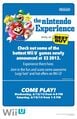 Informational image for the Best Buy event
 Banner image for the Best Buy event
 Promotional standee for the Best Buy event
 Advertisement image for the Simon Mall event
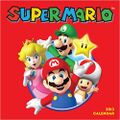 Calendar
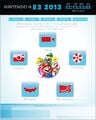 Facebook application
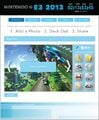 Facebook application


