The 'Shroom:Issue 103/Critic Corner


Director's Notes
Written by: Crocodile Dippy (talk)

The spooky season has arrived! The day of summoning ghouls and gaining joules, of hexing your neighbourhood bully and aliens bursting from your tummy, of horrible jokes and bangin' tokes. OK, maybe that last one is just me. Feelin' good, man. Anyway, this used to be one of my least favourite holidays back when I was an edgy contrarian kid/teen that thought they were better than everyone else because they didn't go with the flow of public opinion, but having grown up a little bit and becoming one with the meme, I'm all about that Halloween fever, baby. The spooky scary skeletons, the pumpkins, the doot doots, the whole lot of it! It's always an exciting time, I find, although I didn't pick out a costume because I shelled out half a grand on Rock Band 4 and desperately need to save up my money again. Bloody Australia Tax, amirite?
Anyway, most of the sections you see before you are spoopy-themed in one way or another, even if in a comical way, including a brand new section being done by none other than our Strategy Wing director, Stooben Rooben (talk)! From now on, he'll be writing The Stoob Tube, a review section covering all manner of television series; old, new, live-action, animated, good, bad, the whole lot! He has written easily the largest application section I have ever received in my time as Critic Corner director, which is a bit daunting to read at first glance, but trust me, it's well worth checking out from start to finish.
Outside of all that, I guess all else I can say is don't forget to vote for the Critic Corner section of the month, and also check out the Scavenger Hunt we're holding for this issue! Thank you for your time, and keep up the good readin', for if you stop reading us... we'll die. All of us. Just some food for thought.
Section of the Month
| Critic Corner SECTION OF THE MONTH | ||||
|---|---|---|---|---|
| Place | Section | Votes | % | Writer |
| 1st | Location, Location | 8 | 44.44% | Time Turner (talk) |
| 2nd | Character Review | 6 | 33.33% | Yoshi876 (talk) |
| 3rd | Crocodile Style Reviews | 2 | 11.11% | Crocodile Dippy (talk) |
| 3rd | Book Reviews | 2 | 11.11% | FunkyK38 (talk) |
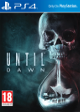
Figure it'd be an idea if I actually started posting shit here, so here it goes; the winner of the September Section of the Month for Critic Corner was Time Turner (talk) for his second section with the team, a Location, Location section negatively overviewing the chilly Super Mario 64 location, Cool, Cool Mountain. Good on him for already making a name for himself so early! Runners-up were Yoshi876 (talk) in second place for his Character Review of the Tiki Tak Tribe, where he inadvertently picked a fight with me, as if he'd ever win that duel; and in third-place, the only other two sections tied. These were my very own section Crocodile Style Reviews, which covered the horror release Until Dawn, and FunkyK38 (talk) for her Book Review on Neil Patrick Harris' unique interactive autobiography. Thank you for voting, and don't forget to do the same this month at the bottom of the page! It'd be much appreciated.
Dippy lives, she dies... she lives again, in her review of Mad Max.
[read more]
The ghosts come after Yoshi876 for his review of some spooky Super Mario 64 foes.
[read more]
Time Turner warns you not to ask for whom the bell tolls; it tolls for thee.
[read more]
Stooben hunts the monsters that stalk the 'Shroom in this supernatural review.
[read more]
Shoey's Shoetacular Reviews
Written by: Marshal Dan Troop (talk) (edited by Nabber (talk))

Has it been two months already? Wow, I guess that means I should probably review a game before Dippy tracks me down and kills me. So anyways, this month I shall review a Nintendo classic, Pikmin 2, which was originally released for the Gamecube and relatively recently released on the Wii. Now, I’m going to be upfront: the Pikmin series is probably my favorite Nintendo series. However, I found myself not liking Pikmin 3 too much, especially when comparing to Pikmin 2. Why this is, I don’t know, although I suspect that it was partially due to the lack of familiar enemies as well as the fact that I didn’t automatically know what to do. So I decided to play Pikmin 2 again and see if it still held up. "Does it?", you might ask. Well, I can’t tell you now - that would make the whole review pointless now wouldn’t it?
Pikmin 2 takes place immediately after the original Pikmin, with our brave hero Captain Olimar returning home to planet Hocotate ready to go back to his simple life. BUT WAIT - it turns out that his employer, Hocotate Freight, has incurred quite a bit of debt thanks to losing a batch of golden pikpik brand carrots to a ravenous space rabbit. Startled by this, Captain Olimar drops a bottle cap that he had brought back from Earth as a souvenir for his son. The Hocotate Ship picks up this bottle cap and reveals that it is worth 100 pokos (more than a year’s salary). So now our brave hero (and his new sidekick Louie) must journey back to land of the Pikmin to collect treasures to alleviate the debt of Hocotate Freight. I think this a decent set up for Pikmin 2, and while it’s not the best plot ever, it’s humorous gets the job done. And with that done let’s move onto the gameplay.
Pikmin 2 is a real-time strategy game where you take command of a little army of plant-based creatures and use them to defeat enemies and find treasures. The game is also split into two different sections, consisting of an overworld and a series of caves. On the overworld, the player has to use time management as the days only last about 15 minutes. In these sections, the player needs to unlock the cave sections, replenish their Pikmin supply, and gather treasures. The caves act more like dungeons, with each cave having multiple levels that the player must explore, gather treasures, and at the end of each cave (except for the first) fight a boss. Defeating the boss gives the player a special treasure that will help them. One notable thing to point out is that unlike the overworlds, the caves don’t have a time limit due to their strong magnetic fields. You also are unable to replenish Pikmin in these caves (outside of changing the colors of the Pikmin you already have), so you have to be very cautious in the caves. Now that we know the essentials of the gameplay, let’s move onto the way the game controls.
The Wii version of Pikmin 2 uses motion controls to aim your Pikmin. I’m going to be honest, I don’t like motion controls. I consider them to be a useless gimmick, and the reason I never bought Skyward Sword was because it was all motion-controlled. But in Pikmin 2, I think the motion controls are alright, because they're limited mostly to just aiming where you want to throw your Pikmin. You move your character using the control stick on the Nunchuck and your Pikmin follow you closely. Holding down on the directional pad make your Pikmin go whatever way you are aiming, which is useful for directing them to things quickly. The C button on the Nunchuck causes the Pikmin to disperse into groups based on color, which is useful if you need to take down a specific obstacle that only one color of Pikmin is immune to. And the B button on the back of the Wii Remote is used to regather the Pikmin. Overall, I rather like the controls of Pikmin 2. I feel that they are tight and responsive, and I rarely have any problems with them (and when I do it’s generally because I rock back and forth while sitting). With the controls covered, let’s move onto how the game looks.
I feel that Pikmin 2 looks really good. The environments are lush and colorful, and the enemies look really interesting. Everything looks clear, and you can tell the difference between everything. I really like the animations for when enemies appear above the ground, and the graphics twinkle a little bit with some enemies. The underground caves look good as well, with the water graphics being particularly shiny. One thing that I really like about the graphics is the amount of detail they put into some of the caves, such as putting shower tiles down in one of the caves and plates in another. Overall I think that Pikmin 2 looks amazing for its time and it still looks really good today. And with graphics covered let us move onto how the game sounds.
I rather like the music in Pikmin 2. I feel that it really adds to the overall atmosphere of the game. One of the things I like about this game is that some of the bosses have unique music, such as the Giant Breadbug, which has a silly-sounding song to compound with the fact that it’s a silly, mostly harmless boss. I feel that the game is littered with charming little moments, such as the fact that when the sun is about to go down a little whistle blows reminiscent of a whistle that blows the signal of the end of the day in Japan. The Pikmin themselves are fairly charming, making cute noises when thrown, and if left alone long enough, they start to whistle little songs that really add some charm. So with the music covered, it’s time that we move onto to conclusion and the final score.
When I started replaying this, I wanted to see if this game held up and was as good as I remember it being. So the question is: is it? The answer to that question is: yes. Yes, one hundred times yes. Pikmin 2 is still an amazing game and probably my favorite game on the Gamecube. The game improves on just about every flaw that was in the original Pikmin, and is overall a much tighter game. The levels are expansive with the caves adding a lot of replay value and contribute a lot to the overall experience. The new types of Pikmin are fun to play with (with the Purples being my new favorite). And overall, I feel that Pikmin 2 is an entirely superior game to the original Pikmin and superior to Pikmin 3.
Final Score: 10/10
Crocodile Style Reviews
Written by: Crocodile Dippy (talk)

| Mad Max | |||||||
|---|---|---|---|---|---|---|---|

| |||||||
| Developer | Avalanche Studios | ||||||
| Publisher | Warner Bros. | ||||||
| Platform(s) | PlayStation 4, XBox One, Windows | ||||||
| Genres | Third-person shooter, vehicular combat, open-world | ||||||
| Rating(s) |
| ||||||
| Available From | |||||||
 - Mature
 - Eighteen years and older
 - Fifteen years and older
Speaking on authority as a white Australian, I can safely say that white Australian culture is utter tripe. The fuck do we even have to our names aside from Crown Lager, the MCG, and genocide? I mean bloody hell, we even waged war on the emus because they kept nicking our bread, and we lost. This is probably why I feel a rather unnatural loyalty to the Mad Max franchise, as probably the only thing of my culture worth actually boasting about if not just because it’s the only bloody film franchise from this rock that anyone overseas even knows about. The utterly phenomenal latest film, Mad Max: Fury Road, recently came out on DVD release to coincide with the prequel-of-sorts video game very creatively titled Mad Max.
The story takes place sometime before the events of Fury Road, where the intro shows Max having a bit of a row with a group of war boys run by one Scabrous Scrotus… oh don’t look at me that way, all the characters in this series have ridiculous names. Immortan Joe, the antagonist of Fury Road, named his children all sorts of ludicrous things like Rictus Erectus or Corpus Callosum, and the series uses “smegma” – don’t look it up on google if you’re under 18 – as a casual slur, it’s like something out of a bloody Monty Python skit. Anyway, long story short, Max’s ride gets nicked by Scrotus’ gang, he has a cutscene-controlled fight with the bastard, and ends up driving a chainsaw through his skull, which sounds like an average Saturday afternoon in Sydney. Now Max needs to get his car back, whereupon he stumbles across a hunchback and car fetishist named Chumbucket, who offers to build a “divine” car for Max instead, with only the best parts in mind, which given this creep’s track record, probably means the best exhaust pipe to stick his wrinkly dick into.

Therein sits the main hook of the game’s narrative and gameplay… err, not the car-fucking part, the supply-searching part, seeking the needed materials to finish the “Magnus Opus”, as the car is called. Mad Max is an open-world sandbox, sort of a mish-mash of the nuclear wasteland of Fallout and the callous disregard for road laws of Grand Theft Auto, with missions both optional and story-related strewn about across the world for you to find, driving from one minimap dot to the other at high speeds, ramming into people while leaping out of the car for a dramatic entrance; never necessary, always awesome. Story-focussed missions are centred around a variety of Stronghold locations, which serve as your hubs in different areas of the game run by untrusting berks who demand you do their daily chores for them because they have a bit of a bad back today. These missions are often some form of infiltrating the hideouts of Scrotus’ minions to blow shit up and nick whatever isn’t nailed down or on fire, hideouts which are actually very well-designed, both inside and out. An admittedly linear structure to most of them creates a very structured and clear progression, complete with shortcuts to reward your overcoming of the scaling challenges, but there are also many nooks and crannies filled with garbage that encourages exploration or blowing down doors by setting fuel tanks alight.
While the hideouts are genuinely fun to traverse, the combat itself leaves much to be desired, taking heavy cues from Batman: Arkham Asylum without the same emphasis on combo potential. I mean yeah, you can unlock finisher skills to follow up Max’s punching fits, but it all just amounts to pressing the same attack button over and over again until you get a finisher proc, occasionally stabbing enemies in the neck or shooting them in the nuts, until everyone around you is dead. It’s a shame, too, because the game’s sound design really puts some weight into those punches; you can almost feel the jaws of your enemy shatter into so many splinters that their mouths could be regarded as ivory mines. There is a lot of enemy variety, granted, and the bosses do make an effort to be more interesting, usually with a focus on tricking them into a stage hazard, but c’mon, at least throw an extra gun in the mix. It is accurate to the series that Max traditionally only carries around his single trusty scattergun, but seeing as we’re in an interpretation of Mad Max where everyone talks with American accents, I think we can stretch “faithfulness” to the source material a bit farther than this.

But of course, where would a Mad Max game be without its cars, a central theme of the franchise that has solidified its reputation as a car enthusiast’s wet dream worldwide, and is most definitely the game’s strongest asset. Max’s primary vehicle, the Magnum Opus, comes equipped with nitro boosts, a motherfucking harpoon, and a Flux Capacitor to slow time down so you can actually aim without throwing up. The gameplay slows down whenever you enter aiming mode, a technique used in high-speed action games so you can still do the boom boom while you vroom vroom, allowing you to assess the situation and what the most efficient course of action is to dispatch an enemy vehicle, which 9 times out of 10 is the one that involves harpooning their sorry asses out of the passenger seat. You can do something boring like blowing up their fuel tank or ramming into them like a jerk, but when you can equip side-rim flamethrowers and explosive harpoon projectiles, the sky becomes the limit. The Magnum Opus can be customised with a very colourful assortment of weapons and armour which creates a nicely varied pool of options when dealing with foes, which compliments the extremely fast-paced nature of convoy chases very well. It also helps that the environment is so dynamic and randomised, throwing random convoys at you and devastating storms makes for an experience more intense than Chapel Street during peak hour. This is the Mad Max experience I’ve been asking for, baby.
While I could – and indeed, did – spend hours driving around the wastes picking fights with miserable cars smaller than me, things start to look very same-y after a while. While the wasteland itself is well-built and has enough diversity in its landmarks to keep things interesting, the majority of the missions fail to reflect that same diversity, being some assortment of blow up Scrotus’ hideouts, blow up Scrotus’ statues and sniper towers randomly strewn about the place, or get yourself blown up trying to deactivate Scrotus’ landmines. A major point of doing side-missions and searching for lootable camps is that it reduces the threat level in each area, which increases Max’s Legend stat which thereby allows him to unlock more upgrades for himself and his car, and to find Project Parts, of which allow you to build facilities in the relevant Stronghold in the area. These offer a variety of rechargeable services that provide Max with a steady influx of Scrap (the game’s currency), water, health, and oil, while also reducing the amount of enemies you’re likely to greet with a bullbar in the face out in the wastelands.

Which therefore begs the question; why the hell would you do a string of dull chores just to take away from the most exciting part of the game? Maybe I’d feel more of an interest in unlocking more upgrades if they didn’t all scale up in a linear fashion; yes, some car equipment damages acceleration and handling on the count of adding on to car weight, but for the most part it’s just a simple matter of getting the Scrap necessary to upgrade the next stage in each upgrade’s level, until the Magnum Opus is so pimped out it would put Marvin Heemeyer to shame. Keep in mind that Scrap can be obtained easily by blowing up cars or harpooning war boys right between the eyes, so it’s far more fruitful (and invigorating) to shove the Stronghold leaders’ territorial disputes up their oil-lubed assholes and just take down a few convoys on your way to post-apocalyptic Starbucks.
But hey, it’s still a solid time-waster, and I did find a lot of enjoyment riding around the map scavenging for hapless prey like a mechanical cougar, and major props for the effort invested into the individual hideouts to keep them consistently engaging. Ultimately, the game could’ve been improved with a more engaging narrative, a better upgrade system, and more diversity in the hand-to-hand combat, but what is on display is still plenty to have kept me playing far outside the main story campaign. Put it in the “I can’t wait for an improved sequel” bin, and at the very least, we can all agree it’s a hell of a lot better than Mad Max 3. I mean, my GOD.







Character Review
Bookend

Now, as this is Halloween, and also a mini special issue I thought I'd do something a bit different for this month's Character Review. Yes, this month it will be Character Reviews! A three in one sort of thing, where I'll be reviewing the spooky enemies from Big Boo's Haunt (well three of them).
We start off with the Bookend, which as I'm sure many of you can guess is a possessed book, nothing really special in a haunted level to be completely honest. Although, that's by nowadays standards, back in the 90s I can imagine a book shooting itself out of a bookcase at you to be quite scary. However, their scariness factor is completely watered down in Mario Party 8, where they hover in rooms and pull off their old trick. Hang on, hover? Yes, these spooky books effectively turn into birds that swoop down and attack you, something that's been done for yonks now. And what's even worse is that they don't really affect you in any way as it's one of the Party games. An enemy probably revolutionary at the time, has now been watered down to what is essentially a crow enemy. At least they have a better name than the Donkey Kong 64 haunted book enemy: Book. And no, that's not a joke.
Killer Chair

Well, now I'm at the end of degrading the Bookend let's see if the next enemy is anything special. Ah, the Killer Chair, because the furniture is never an enemy in any haunted mansion ever. To be honest, I can't imagine this going down as a hit in 1996, because chairs lack that one scary thing... being scary. Walk into a room, it's not obvious that the books will come at you, but a chair, you can bet your everything that anyone is expecting that to fly at you. Even the name of the enemy isn't that scary, "Killer Chair", ooh, yeah, that's going to make me want to lock all my chairs away in the cellar isn't it? No.
Mad Piano

Ah, yes the Mad Piano. It may have the same name issues as the Killer Chair, and also suffer from the possessed furniture that the Chair also suffers from, but it ends up being one of the scariest things ever created. It's an obvious jumpscare, and yet everybody shat themselves when it first happened to them (even this here writer did it). And that's what makes the Mad Piano better than those other enemies, it's somehow scary. Maybe it's the fact that it acts like a rabid dog, maybe it's the fact that it's chasing you whilst sounding like a piano tutor who has lost the plot, or maybe it's the fact that a random piano has just started chasing after you and is almost certainly baying for your blood.
To sum up my thoughts on these spooky characters, the Mad Piano gets the prize. For whatever reason it is actually scary unlike the other two, which just manage to either be unique before getting boring or just a cliché. Kind of a shame to be honest, would love to see someone go into a library after encountering spooky books and chairs.
Location, Location
Written by: Time Turner (talk)
| Creepy Steeple | |
|---|---|

| |
| Music | "Creepy Steeple" |
| Area | Twilight Trail |
| Inhabitants | Doopliss, Atomic Boo, Parrot |
| Enemies | Boos, Buzzy Beetles, and Swoopers (oh my) |
| Items | Cookbook, The letter "p", Star Pieces and Shine Sprites galore |
| First Appearance | Paper Mario: The Thousand-Year Door (2004) |
Hello, ecstatic readers of The 'Shroom! My name is Time Turner, and I'll be presenting to you all another instalment of Location, Location, where you'll bear witness to some of the most spectacular lands the Mario Universe has to offer! Or, at the very least, you'll see someplace that you'd never want to visit out of sheer fright. Speaking of fright, the season of Halloween is almost upon us, with scares, snacks, and shenanigans abound! Swoopers are soaring through the skies, Boos are roaming the hallways, and the Twilighters are hiding in fear of what lurks in the spire above the town. If you recognize any of those names, you may have an idea of what today's subject is: that's right, it's Creepy Steeple!
However, let me take a step back to first discuss the prelude to the Steeple, Twilight Town. To put it simply, it is gorgeous: the patchwork inhabitants of the town look off-putting but not to the point where they don't feel like they belong in a Mario title, the music makes you feel on edge while also being strangely serene, the gloomy backdrop clashes with the rest of the game and makes it stand out, besides also being simply beautiful to look at especially with that moon, and on a whole, it's a fantastic set-up to the chapter as a whole and the Creepy Steeple.
Now, onto our main subject, the Creepy Steeple itself: the game does a great job of setting it up more directly through the townsfolk, where they talk about how the person who lives in the Steeple cursed the bell so that whenever it rings, someone turns into a pig (it's a Mario game, roll with it). In the long run, stuff like this is really minor, but it's a detail that I absolutely love. Mario and company explore Rogueport in order to collect the Crystal Stars, but along the way, they're given a second and usually more immediate reason to press forward. Not only does this give you a motivation beyond "star there get star," it gives more life to the world around you as you're invested in solving people's problems.

I would be lying if I said that I wasn't intimidated of the Steeple the first time I saw it. The camera pans to the sky to give a glimpse of the top floor, which gives you a quick idea of where you should go, and then it angles itself back so that Mario and his partner appear to be absolutely tiny, giving you the clear idea that this place is something to be scared of. First impressions are paramount, and no amount of previous praise or hype will matter if the first thing you see is poop. Being able to tell so much with so little is a marvel to behold.
If Twilight Town had music that made you feel on edge, Creepy Steeple has music that sends you dangling off of the edge. It is amazing how uncomfortable a piece of music can make you feel, but just the first few seconds paints a clear picture of what's to come. Unfortunately, it's there to stay throughout your entire romp at the spire. At some point, you get used to the unnerving soundtrack and it becomes more grating than anything. Granted, you'll be hopping in and out of battles to the point where the full effect will stay with you for a while, but after that, it's not able to capture that first emotion.
While you'll always be able to mute the music, you'll always be stuck with what you see. Thankfully, the location is better in that regard. The interior and the exterior carry the same gloominess from previous areas, but it is noticeably darker than before; it's familiar, but different enough that you're unnerved. The inside is fairly linear, with a main hall at the entrance and a few interconnected hallways around it. There's a neat puzzle involving hitting ! Switches to move a staircase between doors, though it doesn't take much time to understand it, and the solution, considering that there are only three places the staircase can go, is really obvious. Besides the topside, there's a hidden basement underneath a star statue, and this place has a box filled with Boos (covered in more detail below), a removable wall hiding a handy Ice Hammer badge (the wall leads to a pitch-black hallway that's linear, but I'm a fan of the idea), and not much else, really. The nearby well has more to it, with a puzzle that requires the new party member's abilities, Vivian, and a passageway that connects to both the Steeple and a room filled with treasure and a parrot that the person in the Steeple locked up (again, covered in more detail below). The Creepy Steeple does its job well enough; I wish that there was more to explore, but it does its job without dragging on, so I have to commend it for that.
There's actually an optional boss that can be fought either before or after the encounter with the true boss of the chapter. By freeing a bunch of Boos that are locked up inside a box in a not-so-subtle nod to a similar event in Luigi's Mansion, they start to haunt the Creepy Steeple's main hall. They decide to repay you for their freedom by grabbing onto you and shunting you outside. You can swat them away to the point where they get mad at you and they merge together to form the Atomic Boos in an unsubtle nod once again to Luigi's Mansion. In return for proving that violence begets violence, you get to fight, in essence, a super Boo: while it can turn invisible like normal, it can body slam Mario and company, send some of its Boos to charge them, and glare menacingly, potentially paralyzing them. Its attacks are surprisingly strong, and with the status debuffs being thrown at you, I've always found it to be quite the challenge.

I've been dodging around the person who lives in the Steeple until this point, and if I have to be honest, I hate this guy. Doopliss gets so much build-up, and you have to put in the effort to make it past the various puzzles and enemies, so to be faced with not only a guy in a bed sheet, but basically a redesign of a generic enemy from the previous Paper Mario game, is nothing more than lame. Don't get me wrong, everything around Doopliss is pretty cool, like his ability to transform into Mario and leave the real plumber as a shadow, tricking his partners in the process, his battle theme being surprisingly catchy (though it isn't as creepy and a bit too funky for my tastes, it still doesn't feel out of place), and the final battle pitting you against a clone of yourself and your real partners is an ingenious idea, but to hear the main villain of the chapter, who's been hyped up so effectively previously, to spout out "What are you doing, interrupting my 'ME' time?" as his introduction is just a little bit soul-crushing. Yes, it's a Mario game, but this same game alone has legitimately-creepy villains. Bonetail is creepy, Grodus is creepy, the Shadow Queen is downright terrifying, and there are even more examples that I could list. This rag on legs is not what I was expecting, and that's definitely for the worse.
There's one fantastic thing that's done with Doopliss, though: he gives Mario the chance to get his name and body if Mario can guess his real name à la Rumpelstiltskin. At this point, first-time players wouldn't be able to guess Doopliss anyways, as that information is only revealed later on, but anyone who's replaying the game wouldn't be able to proceed anyways because Doopliss removed the letter p from the interface. The guy actually messed with the fourth wall and as a result, Mario needs to literally collect the letter "p" as an actual item before he can do anything. The letter's also in the same location as the previously-mentioned parrot, who was locked up for knowing Doopliss' name, giving you both of your objectives with a quick one-two. While railroading tactics are nothing new especially in RPG's, something so unconventional designed specifically to force everyone to play through as intended is spectacular in and of itself.

After running around with Vivian in search of Doopliss' real name, the final battle takes place... except that since Doopliss has taken both Mario's body and his partners, Mario actually has to fight his clone and his friends. The battle plays out like you'd expect: Doopliss has all of the same moves as Mario, and the same goes for his/your partners. What's neat is that, true to all of your previous battles, if one partner is defeated, the next one automatically swaps in, from Goombella to Koops to Flurrie to Yoshi. They also use any moves that they might have gotten thanks to being upgraded, and Doopliss' stats reflect all of Mario's stats as well. Fighting all of your partners is, again, nothing new for an RPG, but they're not doing it because they're possessed or they want a challenge or they're being forced to or anything like that. They genuinely believe that you're a bad guy, and they want to defeat you just as they've done with every other bad guy. Even that's probably not a unique idea, it's such a clever idea that I can't help but admire it. The effect is somewhat lessened by the fact that they don't need to be fought at all, but the idea alone is something that I love. Doopliss himself is nothing special, which makes sense considering he's basically the same as Mario. Walloping him a few times is all it takes to defeat him.
Once the battle's over, Doopliss runs off to parts unknown, Mario gets himself back, his partners apologize for being tricked, and everything's back to normal. With that, our time at Creepy Steeple ends. The location can always be re-entered to fight the Atomic Boo or infinitely collect Golden Leaves in a side area, but unless you want a Cookbook for Zess T., that's pretty much it. Overall, Creepy Steeple had a lot of good ideas going into it, like the atmosphere, the art style, and the build up to Doopliss, but it falls short on quite a few aspects, like Doopliss himself and the music. Still, I won't deny enjoying my time with the location and I'll definitely miss the gloomy atmosphere it created, though with the gamut of other haunted places in the series, I don't think I'll be particularly starved for horror.
The Stoob Tube
Written by: Stooben Rooben (talk)

Hello everyone, and welcome to Critic Corner's first edition of The Stoob Tube! I am your darling writer, Stooben Rooben, and I am here to help you find television entertainment that won't liquefy your brain! Well, actually, TV's not all that bad, but it still helps to know where to look — and that's why I'm here, to introduce you to good entertainment. Or, in the worst case, tell you which programs to avoid.
I will try to hide any significant spoilers in black bars that you have to highlight to read.
| Supernatural | |
|---|---|
 | |
| Creator(s) | Eric Kripke |
| Executive Producer(s) | Jeremy Carver, Ben Edlund, Sera Gamble, Kim Manners, McG, David Nutter, John Shiban, Robert Singer |
| Starring | Jensen Ackles, Jared Padalecki, Misha Collins, Jim Beaver, Mark Sheppard |
| Number of Seasons | 11 |
| Number of Episodes | 220 |
| Genre(s) | Horror, Fantasy, Mystery, Drama, Comedy |
| Channel | The CW |
| Running Time | 40-45 minutes |
| Original Run | 13 Sep, 2005 — present |

This month, in honor of Halloween, I will be discussing the long-running series, Supernatural. As its name implies, the show's many episodes and arcs revolve around paranormal or supernatural activity. The show started in 2005 on the now-defunct station, The WB, with the intention of somewhat filling the void so many X-Files fans were feeling at the time. The two shows have a similar format, in that there are two central characters in every episode, who travel around the U.S. hunting monsters and demons in an effort to protect innocent people. Or, as I prefer to call them, "Muggles". The series makes heavy usage of a mint '67 Chevy Impala that Dean fawns over and has affectionately named "Baby", and also of classic rock; not only is rock music of every decade featured prominently in most episodes, but Sam and Dean are typically found toodling around the country under aliases inspired by countless musicians and prominent pop culture figures.
Each season usually has one large story arc that spreads across each individual episode that contains its own unique story or monster. You may know this format as "Monster-of-the-Week". The earlier seasons of the show tended to incorporate a lot of old-school horror movie cliches, while later seasons have many elements that reek of a fan fiction come to life. That's actually one of the appeals of Supernatural — it is an incredibly meta show that often services its fans and its cast all in one shot, while never becoming any cheesier than it really ever was in season one. Now, there are plenty of shows that have pulled the meta card time and time again, but so few have managed to play it with the level of cognizance Supernatural has. I'll wrap back around to that a bit later, though.

Supernatural follows two young men, Sam and Dean Winchester, brothers who were born into a very unfortunate life. Sam (played by Jared Padalecki) is the younger of the two, usually in more trouble than Dean (played by Jensen Ackles), and less experienced, but just as strong and with greater book smarts. Dean is four years older than Sam, is less merciful, but is generally more fun-loving than his brother. When Sam was only six months old, his mother, Mary Winchester, was killed by a particularly sadistic demon with distinctive yellow eyes (so distinctive, that for quite some time on the show, any characters who know him always refer to him as "Ol' Yellow Eyes"). Mary's death left her husband, John, fueled by rage and the desire to avenge his wife's death. Because of this, Sam and Dean's upbringing is incredibly miserable. Dean (who has vague memories of his mom) and Sam (who has none at all) are forced to grow up quick and hard in a world where they must defend themselves and protect innocent bystanders from demons, monsters, and unthinkable evil, all in the name of avenging Mary Winchester. Mary, who grew up a hunter of monsters herself, specifically abstained from the lifestyle upon starting a family with John — however, as is proved many times over in the series, once you're in the life, you're in for good.
Does that sound a bit too grandiose? Well, good. Most times, that's what Supernatural is, especially as the show progresses. The boys (as they're so often referred to on the show, by fans, and even by the cast) are pitted against one of the broadest array of villains I've seen on any show: monsters from folklore, urban legends, many of our world's religions, and even just some really effed up people. They die numerous times throughout the show (or come so close to death that you wonder how they're still moving), but always manage to come back, whether it's because of their own knowledge, or because of outside influence. That doesn't manage to take away from the show's suspense, though. Along their travels, Sam and Dean make some friends that become integral parts of the cast you can't help but love; even if they appear in only a few episodes, they're usually quite memorable characters that have a significant impact on how Sam and Dean view and approach their surroundings. These friends are often not as fortunate when put in dangerous situations, though.

As with most shows getting their sea legs, the first season is quite rocky. While its episodes are generally memorable and are referenced numerous times throughout the series (which reminds me, the continuity in the show is surprisingly tidy), the acting and writing can be a bit weak in areas and leave you feeling like you're watching some teen scream flick like Final Destination. It's not necessarily a bad season, but in contrast with following seasons, it's clearly inferior. That said, the format for the show is defined in this season, and the arc where the boys are on a search for their father (which starts in the Pilot episode), is the catalyst for every season that follows. So, it's definitely an important season, and not really one you can skip. Despite the season's flubs, it still has some of the series' best episodes: "Skin", which is just a classic to any Supernatural fan and features an awesome Werewolf in London-esque transformation scene; "Faith", which heavily mirrors a season one X-Files episode; and "Devil's Trap", which teaches viewers some very important lore on the show and introduces one of the best characters on the show, Bobby Singer (played by Jim Beaver, and jokingly named after the show's executive producer, Robert Singer). Bobby is a father figure to Sam and Dean, and does a much better job at keeping the boys in line and happy than John Winchester ever could. That's not to say John Winchester doesn't care about his sons, but his priorities as a father are very askew.

Seasons two, three, and four are all of much higher quality (sans a few dud episodes in season three, which I think was mostly due to the writers' strike at the time), and have more engaging arcs, more risky episodes (which are usually rewarding), and feature the cast and crew trying a little less hard to be The X-Files Lite, and a little more like Supernatural. Season two-onward is where 98% of the series' defining episodes can be found. You'll probably see that sticking around through the first season pays off majorly, as nearly every episode of season two is high-quality. Highlights include "Crossroad Blues", which tells the story of Robert Johnson selling his soul at a crossroads; "Born Under a Bad Sign", where Sam discovers he is partly a monster himself; "Roadkill", which is one of the show's best ghost stories; "Tall Tales", which introduces The Trickster, an enjoyably childish character who becomes a somewhat critical piece on the chess board later in the series; and "What Is and What Should Never Be", an emotional and all-around excellent episode, widely considered to be one of the strongest in the entire series.
The Robert Johnson episode is actually highly relevant to the arc of season three, where Dean has sold his soul to a demon at a crossroads in order to bring his brother, Sam, back to life from a brutal stab wound. The brothers are always doing things like this throughout the series, sometimes to frustrating extents; many seasons' arcs are fueled exclusively by their love for each other and unwillingness to let one another die or be left behind. This season is shorter than all the others, but despite that, has a visibly increased budget. Lighting, effects, sound, makeup, all of it becomes much more detailed and fairly realistic. The season premiere has one of the most graphic scenes in the series, where a man is forced to drink a bottle of drain cleaner and then massively hemorrhages out from his mouth, all while his wife watches in sheer horror a few feet away. Some of season three's highlights include: "Bad Day at Black Rock", a humorous episode involving all sorts of shenanigans because of a cursed rabbit's foot; "Bad Blood", a pretty intense episode where a hunter who wants Sam dead gets turned into a vampire; "Dream a Little Dream of Me", which explores some of Bobby's past through a dreamworld; "Mystery Spot", which is one of those Groundhog Day-inspired episodes; and the finale, "No Rest for the Wicked", where the show takes its first truly unique turn, when we see Dean shredded to pieces by a hellhound, his life and soul claimed like steaks on a plate and dragged to Hell. Sam is forced to watch, completely helpless, just like the wife in the season's premiere.


Season four changes up the formula and sets a path for the rest of the show with the introduction of angels, one of whom, Castiel (played by Misha Collins), becomes main cast for a great deal of the show from this point on. If you expect angels to be kind and act as a cure-all for the show's many unfortunate circumstances, you'd be completely wrong — the angels are actually portrayed as some of the biggest dicks in the entire show, and are shown to be even more creatively (read: Biblically) sadistic than demons. The season, honestly, does not have a single bad episode, I actually find it to be one of the show's most outstanding seasons. The writing gets a bit more creative here, too: "Monster Movie" is filmed entirely in black and white and is presented like the classic Hollywood monster films it references; "In the Beginning" features a feasible take on time travel (since nothing is altered). "The Monster at the End of This Book" is the start of a sporadic series of highly meta episodes, and is one of my favorites in the entire series. Despite the episode starting off like a comedic monster-of-the-week type-thing, it ends up being a significant turning point in the series. The episode introduces a man who has written a series of books that detail every single event and scene that the Supernatural audience has seen since the first episode of the show. The reactions of Sam and Dean when they read about themselves in real time, and when they discover the Supernatural fan base, are some of the most genuinely funny moments in the series. Partway through the season, executive producer Kim Manners passed away of lung cancer; having been responsible for most of the arcs through season 5, there eventually come points where it is obvious his influence is missing. My personal favorites of the season are "Lazarus Rising" and "Yellow Fever".

Season five is often considered to be the height of the series, among fans and critics alike. The season continues building on the mayhem season four brought, and comes to an almost completely perfect close in the season's finale (which was, for a time during production, expected to be the final episode of the series). Angels and demons continue to be a huge theme in the season, but that doesn't stop Sam and Dean from going about their normal routine of hunting monsters and solving unexplained cases. Among the more interesting villains of the season are a witch who plays cards with the years of a player's life as the stakes, a siren who takes on an unexpected form, a wraith that sucks the liquid out of its victims' brains (probably from people who watched too much bad TV), zombies who seem totally normal before going psycho, and the freakin' Four Horsemen of the Apocalypse (including Death himself). Lucifer is also introduced in this season as a villain. When he's freed from his cage and let loose on Earth, the first thing he does is tormen