Circuit
- This article is about the type of race courses in the Mario Kart series. For the musical theme from Mario Kart 64 also known as simply "Circuit", see Luigi Raceway (theme). For the musical theme from Mario Kart 7 also known as simply "Circuit", see Toad Circuit (theme).

A circuit course, also known as a raceway or speedway[1] course in Mario Kart 64, is a type of race course used in the Mario Kart series. Circuits are designed with high speed in mind, usually having long straightaways, consistent curves, and a generally flat layout. They are typically paved and have clear visual theming after official racing events compared to most other tracks, such as garages, grandstands, balloons or blimps floating above, and striped rumble strips on curves. In particular, they usually resemble F1 racing courses, including the ones in Mario Kart's predecessor Famicom Grand Prix: F1 Race. Throughout the series, most circuits are named after a character, with the most frequent name being Mario Circuit. Other circuit names of varying frequence include Luigi Circuit, Peach Circuit, Yoshi Circuit, Figure-8 Circuit, Daisy Circuit, Toad Circuit, and Mario Bros. Circuit. Usually, there are between two and four circuits among a game's tracks, with the first course of the Mushroom Cup always being a simple one and later, harder ones being found later; Mario Circuit is itself usually of an intermediate difficulty. Generally, circuits debuting in the same game share music with each other. Very often in the series, Peach's Castle appears on at least one circuit.
Starting with Mario Kart 8, the racing event theming is more widespread throughout other courses, while course naming becomes less strict; in particular, some circuit-type courses with larger grandstands are instead named "stadiums", such as Mario Kart Stadium and Peach Stadium, which previously was used mainly by motocross-style courses with lots of mud and hills such as Wario Stadium and Waluigi Stadium. Mario Kart 8's DLC also introduces Hyrule Circuit, which, despite its naming, does not follow standard circuit theming.
History[edit]
Famicom Grand Prix: F1 Race[edit]
In Famicom Grand Prix: F1 Race, all the tracks are circuit-based and identified with a number. There are ten in grand prix race mode, most of which are driven on in multiple difficulty levels, and six in time trial race mode. Grand prix circuits are named "Circuit" followed by a hyphen and a number, while time trial courses include "No" as an abreviation for "number" before the hyphen. Most have dry pavement; however, two in grand prix mode have wet pavement from rain, making it appear darker. All of the circuits use the same graphics with different colors, featuring a paved road with painted markers, rough terrain and metallic barriers on the shoulders, small trees outside the barriers, and grandstands at the finish line. Tunnels frequently appear when the track overlaps, and the player loses the ability to control the car when inside them. Some of the time trial circuits also feature oil slicks as obstacles.
- Grand prix race


- Time trial race


Super Mario Kart[edit]
In Super Mario Kart, all circuits are identified as a numbered Mario Circuit and share the same assets with each other, including pipes and oil slicks as obstacles. There are four Mario Circuits, which is more than any other of the game's course types.


Mario Kart 64[edit]
In Mario Kart 64, circuits are known as raceways, which applies to all later appearances of these courses. They are themed after Luigi, Mario, and Peach in ascending difficulty, with each course having a giant version of the respective character's headwear over the grandstands. The latter two also feature Piranha Plants as stationary obstacles. In this game exclusively, this type of course is the only one to have staff ghosts programmed in, each playing as the character the course is themed after. Wario Stadium features the same music as the raceway courses.


Mario Kart: Super Circuit[edit]
In Mario Kart: Super Circuit, the same character theming is used as in Mario Kart 64, but reversed; as such, Peach now has the simplest course and Luigi has the most complicated. Luigi's also features rain and puddles making the course slippery, the latter acting similar to the prior oil slicks. Additionally, the four Mario Circuit tracks from the original Super Mario Kart reappear alongside all the other tracks from that game, but are devoid of obstacles and use backdrops from the first two circuits of this game.
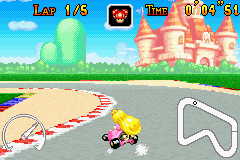 Mario Circuit 1
(Returning from Super Mario Kart)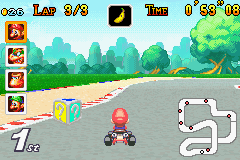 Mario Circuit 2
(Returning from Super Mario Kart)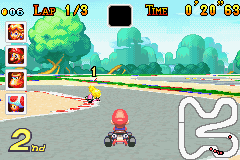 Mario Circuit 3
(Returning from Super Mario Kart)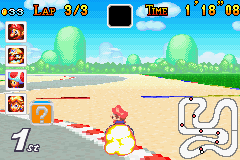 Mario Circuit 4
(Returning from Super Mario Kart)


Mario Kart: Double Dash!![edit]
In Mario Kart: Double Dash!!, there are once again three circuits in a similar order to in Mario Kart 64, but with Yoshi replacing Peach as the character with the most complicated circuit. The first two of the three circuits feature a Chain Chomp as an obstacle, and the latter two feature Piranha Plants in pipes.


Mario Kart DS[edit]
In Mario Kart DS, there are only two new circuit courses, the first of which is not character-based and is instead themed after its layout. However, five circuits from prior games return, including two separate Luigi Circuits.
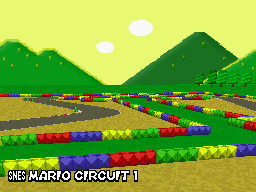 Mario Circuit 1
(Returning from Super Mario Kart)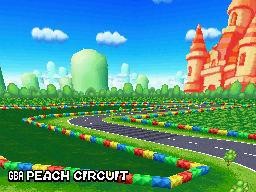 Peach Circuit
(Returning from Mario Kart: Super Circuit)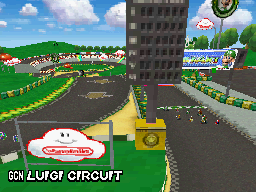 Luigi Circuit
(Returning from Mario Kart: Double Dash!!)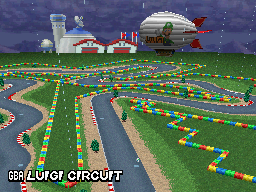 Luigi Circuit
(Returning from Mario Kart: Super Circuit)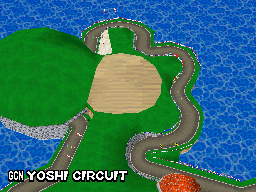 Yoshi Circuit
(Returning from Mario Kart: Double Dash!!)


Mario Kart Wii[edit]
Mario Kart Wii features a similar trio of circuits to Mario Kart 64 and Mario Kart: Double Dash!!, but with Daisy now being the character with the most complicated one. Unlike prior games, they do not all share the same music, as Daisy's differs from the other two. Additionally, three Mario Circuits from prior games return.
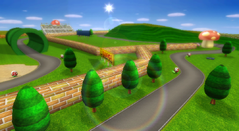 Mario Raceway
(Returning from Mario Kart 64)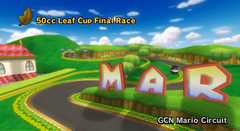 Mario Circuit
(Returning from Mario Kart: Double Dash!!)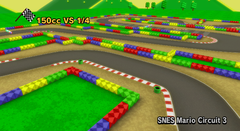 Mario Circuit 3
(Returning from Super Mario Kart)


Mario Kart 7[edit]
Mario Kart 7 has two new circuits, similar to Mario Kart DS, with the first being themed after Toad. Two circuits from prior games return.
In Dutch, Music Park is referred to as "Muziekcircuit" (Music Circuit), despite not being considered an actual circuit course.
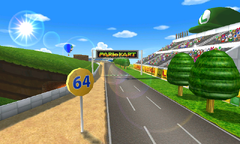 Luigi Raceway
(Returning from Mario Kart 64)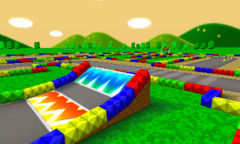 Mario Circuit 2
(Returning from Super Mario Kart)


Mario Kart Arcade GP DX[edit]
Mario Kart Arcade GP DX features Splash Circuit and its sister course Tropical Coast as beach-themed circuits that have a Mario theming. It also features a non-traditional circuit courses in Omatsuri Circuit (a sister course of Bon Dance Street), as well as PAC-MAN Stadium and its sister course NAMCO Circuit through an additional content update.
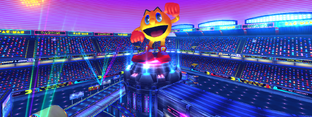 PAC-MAN Stadium
(DLC)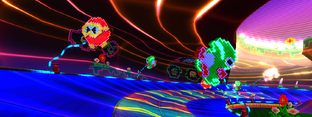 NAMCO Circuit
(DLC)


Mario Kart 8[edit]
Mario Kart 8 has two new circuits and is the first main game to have a traditional circuit course with a name that does not include the words "circuit" or "raceway", as the first is instead identified as a stadium. Two return from prior games, and a third returning circuit is added in the game's DLC (which is available by default in Mario Kart 8 Deluxe); the DLC also includes Hyrule Circuit, which despite its name is not treated as a traditional circuit course.
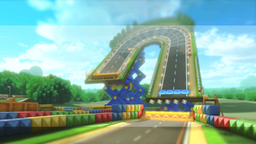 Mario Circuit
(Returning from Mario Kart: Super Circuit)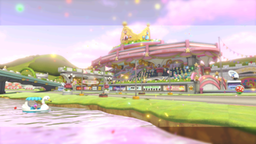 Royal Raceway
(Returning from Mario Kart 64)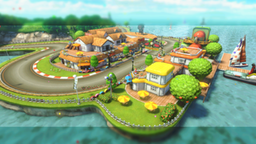 Yoshi Circuit
(Returning from Mario Kart: Double Dash!!; DLC)


Mario Kart 8 Deluxe – Booster Course Pass[edit]
Four returning circuits were added to Mario Kart 8 Deluxe via the Booster Course Pass, all of which share their designs with their respective appearance in Mario Kart Tour.
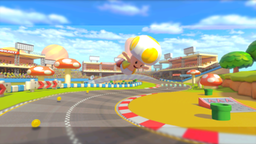 Toad Circuit
(Returning from Mario Kart 7)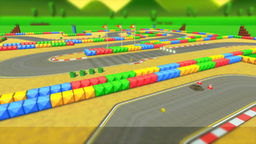 Mario Circuit 3
(Returning from Super Mario Kart)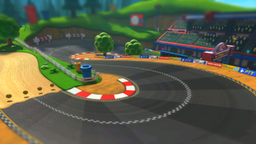 Mario Circuit
(Returning from Mario Kart DS)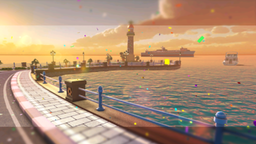 Daisy Circuit
(Returning from Mario Kart Wii)


Mario Kart Tour[edit]
13 circuits from across the series return at various points in Mario Kart Tour, with an additional "remixed" version of Mario Circuit 1 also appearing.
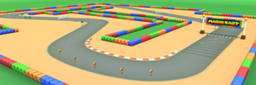 Mario Circuit 1
(Returning from Super Mario Kart)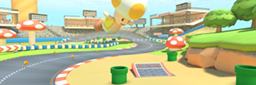 Toad Circuit
(Returning from Mario Kart 7)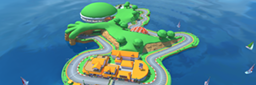 Yoshi Circuit
(Returning from Mario Kart: Double Dash!!)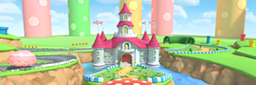 Mario Circuit
(Returning from Mario Kart 7)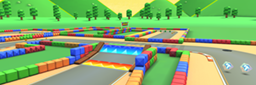 Mario Circuit 2
(Returning from Super Mario Kart)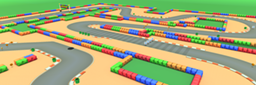 Mario Circuit 3
(Returning from Super Mario Kart)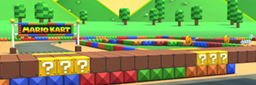 RMX Mario Circuit 1
(Inspired from Super Mario Kart)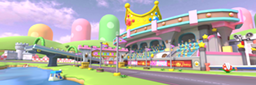 Royal Raceway
(Returning from Mario Kart 64)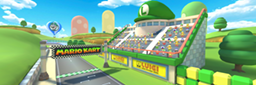 Luigi Raceway
(Returning from Mario Kart 64)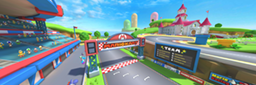 Mario Circuit
(Returning from Mario Kart DS)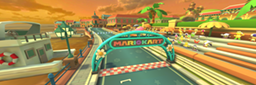 Daisy Circuit
(Returning from Mario Kart Wii)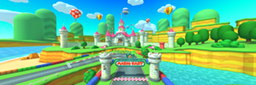 Peach Circuit
(Returning from Mario Kart: Super Circuit)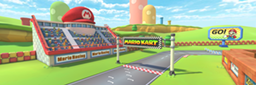 Mario Raceway
(Returning from Mario Kart 64)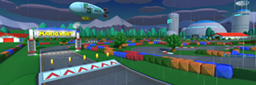 Luigi Circuit
(Returning from Mario Kart: Super Circuit)


Mario Kart World[edit]
Three circuits appear in Mario Kart World, one of which is identified as a stadium and appears in two separate cups, and another of which is an amalgamation of three of the four Mario Circuits from Super Mario Kart.
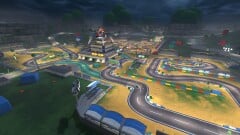 Mario Circuit
(Inspired from Super Mario Kart)


References[edit]
- ^ Mario Kart 64 US manual, page 31

