User:Wynn Liaw
| Wynn Liaw | |
 Wynn in 2026 | |
| Born | 2000s (age 17-26) |
| Super Mario–related role(s) | Patroller of the Super Mario Wiki (2021-2022, 2024-) |
| First appearance | 2007 |
| Latest appearance | 2026 |
| Relatives | Sister 
|
 |
smwm |
This is my user page. I joined this wiki because I wanted to contribute.
 Wynn Liaw |
|
|
| Game appearances |
|---|
| Mario Wiki Wikipedia |
| Special moves |
| Neutral: Throw fireball Side: Whack hammer Up: Up rocket Down: Break ground Final Smash: Summon sister |
| Battle entrance |
| Time machine |
I mainly upload files.
| Wynn Liaw's Userbox Tower | ||||||||||||||||||||||||
|---|---|---|---|---|---|---|---|---|---|---|---|---|---|---|---|---|---|---|---|---|---|---|---|---|
|


Pages:
Catch Up
After June 2021, I was inactive due to work. However, I now have pockets of free time.
Personal Images


Level
From this section onwards is about a level.
It has been decided that this section is outdated.
This section is under construction. Therefore, please excuse its informal appearance while it is being worked on. We hope to have it completed as soon as possible.
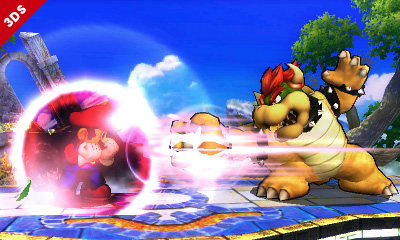
| Last Stand | |||||
|---|---|---|---|---|---|
| |||||
| World | Skyworld | ||||
| Game | Super Mario Maker 2 | ||||
| Game style | Super Smash Bros. Ultimate | ||||
| Theme | 
| ||||
| Difficulty | ★★★★ | ||||
| Objective | Survive the incoming attack. | ||||
| Time Limit | 100 years until The Legend of Zelda: Breath of the Wild | ||||
| Coin Rush limit | 100 seconds | ||||
| Enemy squad level | 1000000 | ||||
| Bosses | Foreman Spike Yoshi Donkey Kong Jr. Donkey Kong Boom Boom Pom Pom Larry Koopa Morton Koopa Jr. Wendy O. Koopa Iggy Koopa Roy Koopa Lemmy Koopa Ludwig von Koopa Bowser Jr. (Melee) King K. Rool Bowser Jr. (Junior Clown Car) Bowser Ganon Princess Zelda Link Wario Waluigi Princess Peach Luigi Mario Palutena Goal Pole | ||||
| Music tracks | Title Theme - Donkey Kong Country Donkey Kong / Donkey Kong Jr. Medley - Super Smash Bros. Ultimate | ||||
| |||||
The level begins with the player walking while the title theme from Donkey Kong Country plays. When the theme gets intense, the player arrives at the castle. The moment the player steps into the castle, the theme switches to Donkey Kong / Donkey Kong Jr. Medley from Super Smash Bros. Ultimate. The player is then given two Hammer Suits.
The final boss is the Goal Pole. To defeat it, the player must force it out of its base by pulling the base. Then, grab the flagpole. After this level, the player goes to Palutena's Temple and fight Palutena, Pit and Viridi.
Enemies
| Name | Count |
|---|---|
 Eggplant Man |
5 |
 Gotchawrench |
2 |
 Foreman Spike |
Boss |
 Yoshi |
Boss |
 Donkey Kong Jr. |
Boss |
 Barrel |
Thrown by Donkey Kong |
 Blue Barrel |
Thrown by Donkey Kong |
 Donkey Kong |
Boss |
 Boom Boom |
Boss |
 Pom Pom |
Boss |
 Larry Koopa |
Boss |
 Morton Koopa Jr. |
Boss |
 Wendy O. Koopa |
Boss |
 Iggy Koopa |
Boss |
 Roy Koopa |
Boss |
 Lemmy Koopa |
Boss |
 Ludwig von Koopa |
Boss |
 Bowser Jr. (Melee) |
Boss |
 King K. Rool |
Boss |
 Bowser Jr. (Junior Clown Car) |
Boss |
 Bowser |
Boss |
 Ganon |
Boss |
 Princess Zelda |
Boss |
 Link |
Boss |
 Goomba |
Spawned indefinitely from a pipe |
 Wario (Classic) |
Boss |
 Wario (WarioWare) |
Boss |
 Waluigi |
Boss |
 Princess Peach |
Boss |
 Mario |
Boss |
 Luigi |
Boss |
 Palutena |
Boss |
 Goal Pole |
Boss |
Palutena |
One of the fighters at Palutena's Temple |
 Pit |
One of the fighters at Palutena's Temple |
 Viridi |
One of the fighters at Palutena's Temple (guest) |
Sandbox
It has been decided that this section is outdated.
This section is under construction. Therefore, please excuse its informal appearance while it is being worked on. We hope to have it completed as soon as possible.
| Sandbox | |||||
|---|---|---|---|---|---|

| |||||
| Game | Super Mario Maker 2 | ||||
| Game style | Any | ||||
| Theme | Any | ||||
| Objective | Build things and try to survive. | ||||
| Boss | Other players. | ||||
| Music tracks | Build Mode Title Theme - Super Mario Maker Title Theme - Super Mario Maker - Super Smash Bros. 4 Title Theme - Super Mario Maker 2 Demolition Mode Stage Theme - Wrecking Crew In-game Music - Wrecking Crew '98 Wrecking Crew Medley - Super Smash Bros. 4 Wrecking Crew Retro Medley - Super Smash Bros. 4 Wrecking Crew Medley - Super Smash Bros. Ultimate | ||||
| |||||
In this level, the player can build anything they want. However, the player has to avoid nasty players while trying to survive. The player can change their character to a character from another game using the character importer which can be downloaded for free on this creator's website. The character imported will act exactly like his/her counterpart from his/her game. This level has trees that can be chopped down for wood. The player can also obtain wood by punching the tree. After getting wood, the player can then begin to craft materials. The player can play this level like Minecraft since the starting area has everything in Minecraft. The player can approach Mario for parts (however the player can change Mario's model). If Mario is not there, then the player can go to a place to talk and write commands, like the command to warp to a specific place, spawn something, delete something or someone and much more!
There is also another mode called "Demolition Mode", where the player can destroy another player's creation.
Characters
| Name | Count |
|---|---|
 Mario |
Master Builder |
 Luigi |
Assistant |
Gallery
Locations
 Lava area
 Talking and commands area


Examples given to the player


The Ultimate Fighting Game
- "SSBU" redirects here. For this game's Wii U predecessor, see Super Smash Bros. for Wii U.
| The Ultimate Fighting Game | |||||||||||||||||||||||
|---|---|---|---|---|---|---|---|---|---|---|---|---|---|---|---|---|---|---|---|---|---|---|---|

| |||||||||||||||||||||||
| Developer | Wynn Liaw | ||||||||||||||||||||||
| Publisher | Wynn Liaw | ||||||||||||||||||||||
| Platforms | macOS Microsoft Windows iOS Android | ||||||||||||||||||||||
| Release dates |  January 1, 1988  January 1, 1992 | ||||||||||||||||||||||
| Languages | Afrikaans Akan Albanian Amharic Arabic Armenian Assamese Aymara Azerbaijani Bambara Basque Belarusian Bengali Bhojpuri Bosnian Bulgarian Burmese Catalan Cebuano Chinese (China) Chinese (Taiwan) Corsican Croatian Czech Danish Divehi Dogri Dutch (Belgium) Dutch (Netherlands) English (United Kingdom) English (United States) Esperanto Estonian Ewe Filipino Finnish French (Canada) French (France) Galician Ganda Georgian German Greek Guarani Gujarati Haitian Creole Hausa Hawaiian Hebrew Hindi Hmong Hungarian Icelandic Igbo Ilocano Indonesian Irish Italian Japanese Javanese Kannada Kazakh Khmer Kinyarwanda Konkani Korean Krio Kurdish Kyrgyz Lao Latin Latvian Lingala Lithuanian Luxembourgish Macedonian Maithili Malagasy Malay Malayalam Maltese Māori Marathi Meitei Mizo Mongolian Nepali Norwegian Nyanja Odia Oromo Pashto Persian Polish Portuguese (Brazil) Portuguese (Portugal) Punjabi Quechua Romanian Russian Samoan Sanskrit Scottish Gaelic Sepedi Serbian Shona Sindhi Sinhala Slovak Slovenian Somali Sorani Sotho Spanish (Latin America) Spanish (Spain) Sundanese Swahili Swedish Tajik Tamil Tatar Telugu Thai Tigrinya Tsonga Turkish Turkmen Ukrainian Urdu Uyghur Uzbek Vietnamese Welsh West Frisian Xhosa Yiddish Yoruba Zulu | ||||||||||||||||||||||
| Genres | Fighting/Action | ||||||||||||||||||||||
| Ratings |
| ||||||||||||||||||||||
| Mode | 1–8 players | ||||||||||||||||||||||
| Format |  Game Card  Digital download | ||||||||||||||||||||||
| Input | |||||||||||||||||||||||
 - Everyone 10+
 - All ages
 - Twelve years and older
 - Twelve years and older
 - Twelve years and older
 - Ten years and older
 - All ages
 - Six years and older
 - Twelve years and older
 - Parental guidance
 - Ten to twelve years


Super Smash Bros. Ultimate is the fifth game in the Super Smash Bros. series, released for the Nintendo Switch. The game was announced through a teaser trailer in the March 2018 Nintendo Direct[1] and was released worldwide on December 7, 2018. The game features 103 base stages and 74 base playable characters (with more fighters and stages as downloadable content), the largest respective numbers in the series.
Super Smash Bros. Ultimate was made available for pre-order and pre-loading from the Nintendo eShop beginning November 1, 2018. The game takes up approximately 14.3 GB of the Nintendo Switch's storage when downloaded from the Nintendo eShop.
Super Smash Bros. Ultimate is the sixth (fifth if Super Smash Bros. for Nintendo 3DS and Super Smash Bros. for Wii U are counted as one game) Super Mario-related game to receive a PEGI 12+ rating in Europe, being preceded by the previous three Super Smash Bros. installments (Super Smash Bros. Brawl, Super Smash Bros. for Nintendo 3DS, and Super Smash Bros. for Wii U) and the Wii U Virtual Console releases of Super Mario 64 DS and New Super Mario Bros.
Gameplay
Super Smash Bros. Ultimate retains the series' basic gameplay elements, with several new mechanics and changes. As with previous installments, the objective of the game is to launch opponents off the stage. Players build each other's damage percentage through attacks, and the higher the percentage, the farther they fly when they are hit. This time, the damage display is in decimal notation, adding a tenth to the number. Decimals have always been used for damage calculations since Super Smash Bros. Melee, but the damage percentages were always displayed as an integer on-screen. Super Smash Bros. Ultimate is the first time that decimal notations are shown in-game. Additionally, when an opponent is launched, their launch speed is the fastest at the start, unlike in previous games in the series. During 1-on-1 battles, all fighters' attacks deal 1.2x their regular damage, which is done to "increase gameplay speed."[2] Additionally, characters can use any ground attack out of a run (e.g. standard attacks, tilt attacks, smash attacks), while any aerial attack can be used while climbing a ladder, officially known as a "ladder attack".
Three techniques are also introduced in Super Smash Bros. Ultimate: the Directional Air Dodge, Short-Hop Attack, and a new version of the Perfect Shield. The Directional Air Dodge, a technique carried over from Super Smash Bros. Melee, allows the player to dodge while moving in the direction they tilt  , which can also be used for recovery. However, if a player dodges excessively—whether in the air or on the ground—they become more vulnerable to attacks, with less intangibility and lower dodge speed. The Short-Hop Attack is performed by pressing the attack and jump buttons at the same time, allowing the player to hop a short distance off the ground while performing an air attack; however, all short-hopped aerial attacks deal 0.85x their regular damage (excluding special moves, and certain states such as Peach and Daisy's Floating Jump attacks and the Super Leaf item). The Perfect Shield can be used to block attacks without depleting the user's shield. However, unlike in past installments, where it is activated by pressing the shield button before an attack connects, the Perfect Shield is instead performed by releasing the shield button just as an opponent's attack lands, nullifying the attack.
During a match, the fighter that is in the lead occasionally emits a glimmer of light. If a match enters Sudden Death, unlike in previous games where Bob-ombs begin to drop after some time, the screen slowly zooms in on the center of the stage, shrinking the field of view and stage boundary and thereby making it easier for fighters to be KO'd. The Sudden Death mode is visually accompanied by flames that intensify as the screen zooms in on the stage. Bob-ombs still drop on the stage if enough time passes and no one is KO'd.
As with Super Smash Bros. for Wii U, Super Smash Bros. Ultimate also supports Nintendo GameCube Controllers.
Super Smash Bros. Ultimate is available in 11 different languages: Japanese, English, French, Spanish, German, Italian, Dutch, Russian, Simplified Chinese, Traditional Chinese, and Korean, all of which are fully voiced. However, the Chinese versions use the Japanese voice set, and some of the specific names (characters, stages, items, etc.) are also not translated and use their English names instead, probably due to copyright reasons (mostly for third-party games), or they were not intended to have official Chinese versions for the original games. Though, all of the DLC contents so far are fully localized in the Chinese versions. This is the second Super Smash Bros. game to have a Simplified Chinese localization (the first being the iQue Player release of the N64 Super Smash Bros.), and the first game to have a Traditional Chinese localization. The player can also change the dialect for the English, French, and Spanish languages by changing the "Region" setting in the System Settings for the console (though in the case of English, it only changes the names for certain characters, stages, etc., such as Duck Hunt being called "Duck