User:Mr. Sorbetti/Red Pokipede
| Red Pokipede | |||
|---|---|---|---|
 Screenshot from Super Mario Bros. Wonder | |||
| First appearance | Super Mario Bros. Wonder (2023) | ||
| Latest appearance | Super Mario Bros. Wonder – Nintendo Switch 2 Edition + Meetup in Bellabel Park (2026) | ||
| Variant of | Pokipede | ||
| |||
Red Pokipedes[1] are enemies in Super Mario Bros. Wonder. They are red-colored variants of Pokipedes that punch and move faster than Green Pokipedes and have the abilities to break Hard Blocks and jump off track ends. They can have a minimum of 3 segments and a maximum of 7, though they mostly appear with five segments. Red Pokipedes can be defeated by jumping on their single uncovered segment, hitting that segment with three fireballs, by hitting any part of their body with Drill Mario's drill hat, by being swallowed by a Yoshi, by attacking them with Elephant Mario's trunk, or by a Red POW Block shockwave.
They first appear in Pokipede Pass and return in Spelunking!. In Pokipede Pass, Red Pokipedes, alongside Green Pokipedes, are the featured enemies. Red Pokipedes appear in the second section of the level, where to get access to the Wonder Flower of the level, the player needs to wait for a Red Pokipede to destroy the Hard Blocks that are obstructing it. At the end of the level, to reach the top of the Flagpole, the player needs to climb a staircase made of Hard Blocks quickly before a Red Pokipede destroys them. In Spelunking! only two Red Pokipedes appear. The first one appears destroying some blocks to clear the path, and the second appears a little ahead, circling a rectangular platform.
Gallery
 A Red Pokipede jumping
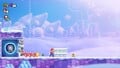 Screenshot from Super Mario Bros. Wonder
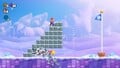 Screenshot from Super Mario Bros. Wonder
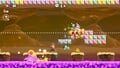 Screenshot from Super Mario Bros. Wonder


Names in other languages
| Language | Name | Meaning | Note(s) | Ref. |
|---|---|---|---|---|
| Japanese | あかヘビムシ Aka Hebimushi | Red Pokipede | [2] |
References
- ^ 2025. Super Mario Bros. Wonder. Mario Portal. Retrieved 6 Feb. 2026. (Archived September 13, 2025, 23:31:51 UTC via Wayback Machine.)
- ^ 2025. スーパーマリオブラザーズ ワンダー. Mario Portal (Japanese). Retrieved 23 Jan. 2025. (Archived September 4, 2025, 00:32:40 UTC via Wayback Machine.)

