Time Machine 2-gō
The title of this article is official, but it comes from a Japanese source.
If an acceptable English name is found, then the article should be moved to the new title.
| Time Machine 2-gō | |||
|---|---|---|---|

| |||
| First appearance | Super Mario Kodansha manga ("It's the nostalgic Dr. Mario. But he looks a little older, doesn't he?!") (1992) | ||
| Latest appearance | Super Mario Kodansha manga ("Mario faces off against the evil president Bowser in the future in a final showdown!") (1992) | ||
| Effect | Travel through time | ||
| |||
| |||
Time Machine 2-gō is the prototype of Dr. Mario Nakamatsu's Time Machine, which appears as Mario, Luigi, and Peach main method of transportation in the "Time Traveler" storyline of the Super Mario Kodansha manga. Like the main Time Machine, this one too is shaped like a gacha ball, with the upper half being made of glass. Unlike the main version, this prototype is not designed like a ball, but like a Yoshi's Egg.
After discovering Bowser stole the Time Machine to ruin Mario's reputation in the past, Dr. Nakamatsu entrusts Mario and his friends with the prototype and seven mini-inventions to chase the Koopa King through time, thanks to the time locator installed in the machine.
After the two time traveling groups crash-land in the Jurassic Era, Luigi and his group's Time Machine both land in a Pterodactyl's nest, and because of the shape of the Time Machine, the nest's owner mistakes Luigi for one of its babies.
The Time Machine prototype has no other relevant roles throughout the story, until the beginning of chapter 4, when the Time Machine loses a chip following Chibi Peach bashing on the console, causing the Time Machine 2-gō to crash in the Space Colony Koopa & Peach, forcing Mario to use the main Time Machine to return back to the present.
Gallery[edit]
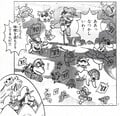 The Time Machine 2-gō going back in time
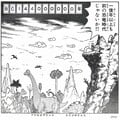 The Time Machine 2-gō in the Pterodactyl's nest
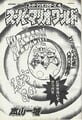 The Time Machine 2-gō in a time tunnel
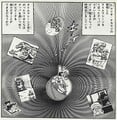 Peach and Luigi after the Time Machine with the prototype
 The Time Machine 2-gō breaks


Names in other languages[edit]
| Language | Name | Meaning | Note(s) | Ref. |
|---|---|---|---|---|
| Japanese | タイムマシーン2 Taimu Mashīn 2-gō | Time Machine #2 | [1] |
References[edit]
- ^ Motoyama, Kazuki (September 1, 1992). Deluxe BomBom. Japan: Kodansha (Japanese). ISBN T1016531090389. Page 238.

