Tottemo Oishikute Hoppe ga Ochite Shimau Kinomi
The title of this article is official, but it comes from a Japanese source.
If an acceptable English name is found, then the article should be moved to the new title.
| Tottemo Oishikute Hoppe ga Ochite Shimau Kinomi | |
|---|---|

| |
| Appears in | Super Mario Kodansha manga ("Defeat the Giant Blargg!") (1994) |
The Tottemo Oishikute Hoppe ga Ochite Shimau Kinomi is a magical fruit that makes one's mouth water profusely, that only grows once every century. It appears in the Mario & Wario manga of the Super Mario Kodansha series.
While fighting Wario, Mario makes the mistake of awakening the Giant Unbaba, starting a fiery cataclysm that will result in the end of the world. Chiyōrō-sama suggests using the Tottemo Oishikute Hoppe ga Ochite Shimau Kinomi in Fairy Land to remedy the situation. Once there, queen Alice informs them that they cannot part with their rare fruits, and, to avoid the end of the world, they will soon bubble up Fairy Land and take it to space. Mario and friends decide to stay with their planet, and so does one of the talking trees. Faithful in their accomplishment, it decides to offer them the fruit, although it needs to convey their will and feelings to properly bloom it. Mario and his friends oblige, but their will is not enough, but when Alice and the entire Fairy Land, that decided to give them a chance at saving the world, does the trick. After obtaining the fruit, Yoshi gulps it down, grows wings (hinting that the fruit is blue), and flies straight into the Giant Unbaba's mouth, killing it.
Gallery[edit]
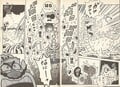 Yoshi's sacrifice

Names in other languages[edit]
| Language | Name | Meaning | Note(s) | Ref. |
|---|---|---|---|---|
| Japanese | とってもおいしくてホッペが Tottemo Oishikute Hoppe ga Ochite Shimau Kinomi | The tree fruit so delicious that it makes your mouth water | [1] |
References[edit]
- ^ Motoyama, Kazuki (5 Aug. 1994). Mario & Wario, Super Mario, vol. 24. Tokyo: Kodansha (Japanese). ISBN 4-06-319512-0. Page 67.

